
The memorandum of understanding with Iran to end the war, reopen the Strait of Hormuz, and restrain Tehran’s nuclear ambitions was revealed by senior U.S. officials on June 17.
The interim deal, which was read by a senior U.S. official in a call with reporters, requires Iran to immediately reopen the Strait of Hormuz without tolls during a 60-day period of negotiations.
Iran has also agreed to, at a minimum, downblend its stockpile of enriched uranium. The deal allows for potential future economic relief if Iran responds favorably to the United States’ demands.
The agreement would also allow Iran to sell its oil without restrictions. The deal provides for a 60-day window for negotiations on Iran’s nuclear program.
Additionally, once all parties sign and ratify the memorandum of understanding, the United States will begin removing its naval blockade around Iran, one official said.
The memorandum of understanding calls for the United States, along with regional partners, to develop a $300 billion fund for Iran’s reconstruction and economic development after the damage incurred by the war, a U.S. official said.
The plan won’t be implemented until after 60 days, and the United States will grant any licenses, waivers, or permissions required for the relevant financial transactions, according to the deal.
A U.S. official explained that the United States will not be directly funneling money into the reconstruction fund, but will rather permit sanctions relief if the Iranians comply with the deal.
This could take the form of a nation, such as the United Arab Emirates, building a power plant in Iran, the official added.
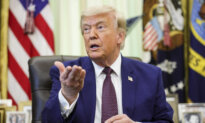
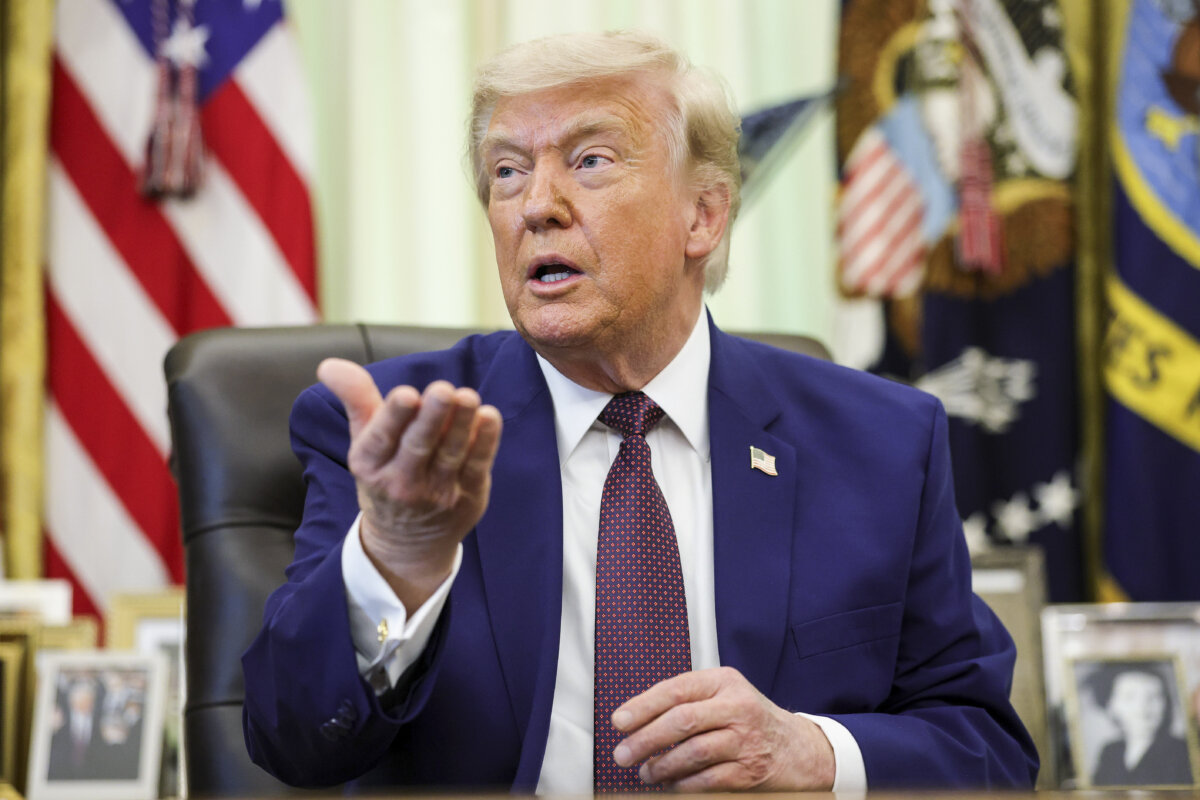
Speaking at the annual G7 summit in France on Wednesday, U.S. President Donald Trump said the memorandum will likely be signed by Thursday or Friday.
“We’re going to most likely sign a deal. [Iran wants] to sign a deal, and they’ve been acting very appropriately,” he said.
Trump warned that if negotiations collapse within 60 days, or if Iran doesn’t fulfill its end of the deal, “we go back to bombing.”
Iran’s Nuclear Program
The agreement also lays out an initial framework for sanctions relief in exchange for Iran halting its nuclear weapon program, with the details to be confirmed in a final deal.
It states that Iran reaffirms that it “shall not procure or develop nuclear weapons.”
A final deal with Iran will include the United States terminating both primary and secondary sanctions on Iran, within an agreed-upon schedule, if Tehran agrees to stop pursuing nuclear weapons and downblends its stockpile of enriched uranium, according to the memo.
If Iran doesn’t comply, refuses to downblend its uranium, or begins pursuing nuclear weapons, the United States will not grant sanctions relief, a U.S. official said.
The specifics of nuclear demands will be addressed in a final agreement with the United States, following 60 days of negotiations.
Additionally, the United States agrees not to impose new sanctions on Iran or increase its military presence in the region if Iran fulfills the nuclear demands, according to the memo.
Oil and Frozen Assets
Once the interim deal is signed, the United States will issue waivers for exports of Iranian crude oil and petrochemical products, as well as related services such as banking, insurance, and transportation.
A U.S. official said that the Trump administration believed that it didn’t make sense to continue sanctioning Iranian oil because the current system effectively allows China to buy this oil at a large discount.
The preliminary deal also provides for the release of frozen Iranian assets “upon the implementation” of the memorandum of understanding.
The U.S. official emphasized that Iran only gets access to the frozen funds and assets after brokering a final agreement with the United States. Its release will be contingent on Iran making good on nuclear demands, the official added.
Iran had asked for immediate access to the restricted funds and assets upon signing the initial deal, the official said, but eventually agreed that the release would be contingent upon successfully complying with the deal.
Correction: An earlier version of this article misstated the amount of money the United States will provide Iran for post-war construction. The Epoch Times regrets the error.
 Friends Read Free
Copy
Facebook
Tweet
Friends Read Free
Copy
Facebook
Tweet