
Commentary
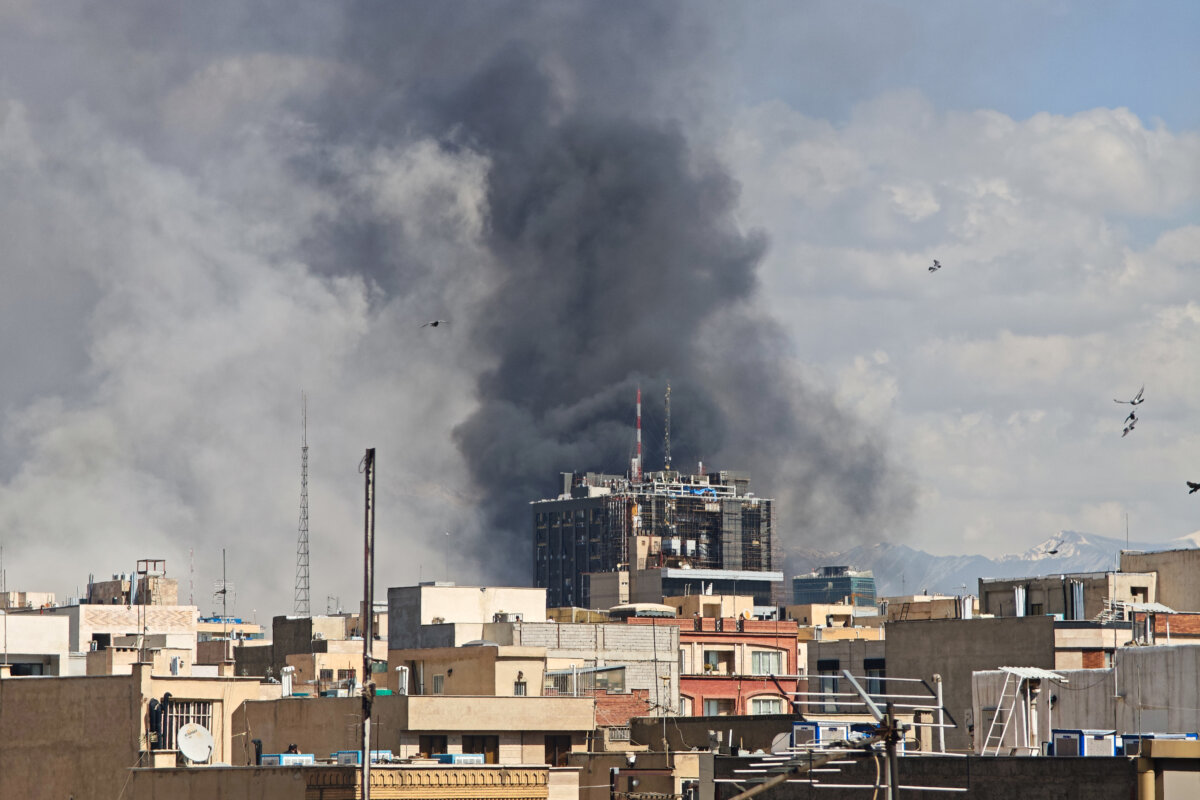
Last week, U.S. negotiations with Iran apparently broke down, and so the U.S. and Israel joined forces to attack Iran on Saturday. In his Saturday national address, President Trump said his goal is to eliminate Iran’s missiles, nuclear facilities and leadership – bombing the Ayatollah’s compound. In response, Iran retaliated with missile and drone attacks on Israel, Bahrain, Kuwait, Qatar, Saudi Arabia and the UAE.
President Trump then called on the Iranian people to take this opportunity as a once-in-a-generation chance to topple the Ayatollah’s regime. Specifically, Trump said, “When we are finished, take over your government. It will be yours to take,” and added, “America is backing you with overwhelming strength and devastating force. Now is the time to seize control of your destiny and to unleash the prosperous and glorious future that is within your reach. This is the moment for action. Do not let it pass.”
In the short term, the immediate reaction to this military action will likely be a rise in the U.S. dollar, gold, oil prices, and defense-related stocks like Elbit Systems Ltd. (ESLT), Howmet Aerospace Inc. (HWN), and Palantir Technologies Inc. (PLTR). Under no circumstances should the U.S. allow any long-term capture of American hostages – a move which fueled the end of Jimmy Carter’s presidency in 1980.
Beyond the initial attack, we’ll have to wait to see the outcome of this conflict.
Here are the most important developments recently and what they mean:
– The U.S. energy industry is quickly emerging as a winner from the military action against Iran. The Republican Guard in Iran has declared that the Strait of Hormuz is now closed for shipping. Qatar suspended its LNG exports for the first time in 30 years, so the U.S. dominance over LNG exports will likely increase. Brent crude oil prices are now $84 per barrel, and WTI crude oil prices are also surging, so many U.S. energy companies will likely reap windfall profits as Iran attacks energy infrastructure in Qatar and Saudi Arabia. The price of shipping is rising as routes get longer and insurance costs rise, so for the time being, war-related inflation has emerged.
– The U.S. State Department has closed its embassies in Kuwait and Saudi Arabia, plus told U.S. citizens to leave 14 countries in the Middle East. An intense bombing campaign of all Republican Guard facilities is apparently underway. When this bombing campaign is completed, Iran will have no Navy, missiles, or drones, plus all missile and drone facilities will be obliterated. This should help reduce the attacks on energy infrastructure and hopefully, energy prices will stabilize.
– The 10-year Treasury bond yield briefly fell below 4%, and mortgage rates are below 6%, which is the lowest rate since 2022. There is a flight to quality underway as some nervous investors flee stocks. AI derangement syndrome persists on the fears that unemployment will continue to soar as AI replaces workers. Although Nvidia’s founder, Jensen Huang, said that Wall Street was mistaken that AI was bad for software stocks, AI fears continue to perpetuate.
– The Financial Times reported that the private credit industry continues to lose its mojo as the Blue Owl fund freeze impedes other private credit companies like Ares Capital Management, Apollo Global Management, Blackstone, Blackrock and KKR. As an example, Blackstone’s flagship private credit fund, BCRED, has been hit with $1.7 billion in redemption requests in the first quarter, which represents 7.9% of its assets. Traditionally, Blackstone likes to limit its redemption requests to 5%, so if the redemption requests continue to accelerate, it is possible that Blackstone will follow Blue Owl and freeze redemptions. Naturally, another private credit freeze would likely cause a selling panic, so Blackstone is apparently going to try to meet all redemption requests for the time being.
– Interestingly, Ares Capital Management (ARES) has been providing financing to Oracle’s data center expansion, so I suspect that it will re-emerge as the private credit leader due to its obviously safer loans. In the meantime, if the Fed cuts key interest rates, it will help the private credit industry stabilize a bit, but for the time being, I do not expect central banks to try to save the private credit industry, which has a good working relationship with many big banks. However, if some big banks have to have more write-downs from the private credit industry’s woes, then it will get the attention of the Fed and other central bankers.
– The European Union (EU) is trying to take budget planning away from EU members with more than 115% debt as a percentage of GDP. This has reportedly made Italian Prime Minister Giorgia Meloni furious at Brussels and Germany when the budget planning originated. I stand by my prediction that Italy could become the 51st state, since the U.S. would assume the Italian debt and have Italy abandon the euro in favor of the U.S. dollar. As the value of the U.S. dollar continues to strengthen, this will make an Italian switch to the U.S. even more attractive, plus all tariffs against Italian products would be removed. Since approximately 40% of Americans have Italian heritage, Italy would be welcomed as the 51st state.
In the end, the Iran military action should remove major uncertainty in the world, and the stock market is expected to have a relief rally as new, pro-Western leadership in Iran emerges and crude oil exports resume. In any case, the recent volatility is creating opportunities for nimble investors. The underpinning remains a growing U.S. economy and strong earnings, which will eventually lead to higher equity prices.
*Views expressed in this article are opinions of the author and do not necessarily reflect the views of The Epoch Times.
 Friends Read Free
Copy
Facebook
Tweet
Friends Read Free
Copy
Facebook
Tweet