
Amid rising jet fuel costs and ticket prices, and with Spirit Airlines shutting down earlier this month, an aviation expert said carriers are increasingly competing on product rather than price to weather this difficult period, as consumers and businesses face hard choices.
In a recent episode of “Market Insider” on EpochTV, William Swelbar, a longtime aviation industry analyst and researcher, told host Siyamak Khorrami that airlines are facing a challenging environment.
“Spirit likely did not have a business plan that could sustain that kind of a cost shock,” he said, referring to higher jet fuel prices.
Spirit Airlines announced on May 2 that it would pause all operations immediately following months-long restructuring efforts. The company had expected to emerge from bankruptcy as early as this spring, but increasing financial strain and a sharp rise in fuel costs shut the door on that possibility.
According to the Energy Information Administration’s recent data, the U.S. jet fuel price was $4.113 per gallon on May 22, up by roughly 35 percent since Feb. 28, when the Iran war began.
Swelbar said a few more carriers are “on the weaker end of the spectrum,” but they are unlikely to face the same fate as Spirit Airlines in the “immediate term,” as they’ve secured additional liquidity in an attempt to navigate this period. However, he said, “time is not the friend of some airlines.”
New Directions
As jet fuel costs rise, airlines are passing those costs on to the consumer, but that’s still not enough, Swelbar said. Although some have taken to cutting flights by up to 5 percent to save, he said, their overall strategy is developing more creative ways to secure revenue.
“Passenger fares have never really covered the cost of operating an airline since the beginning,” Swelbar said.
“There’s always been something, another revenue stream out there, or an area of cost savings that’s able to cross-subsidize the difference between the revenue and the expense. Today it is about finding additional revenue streams, because we’re not competing on lower labor costs.”
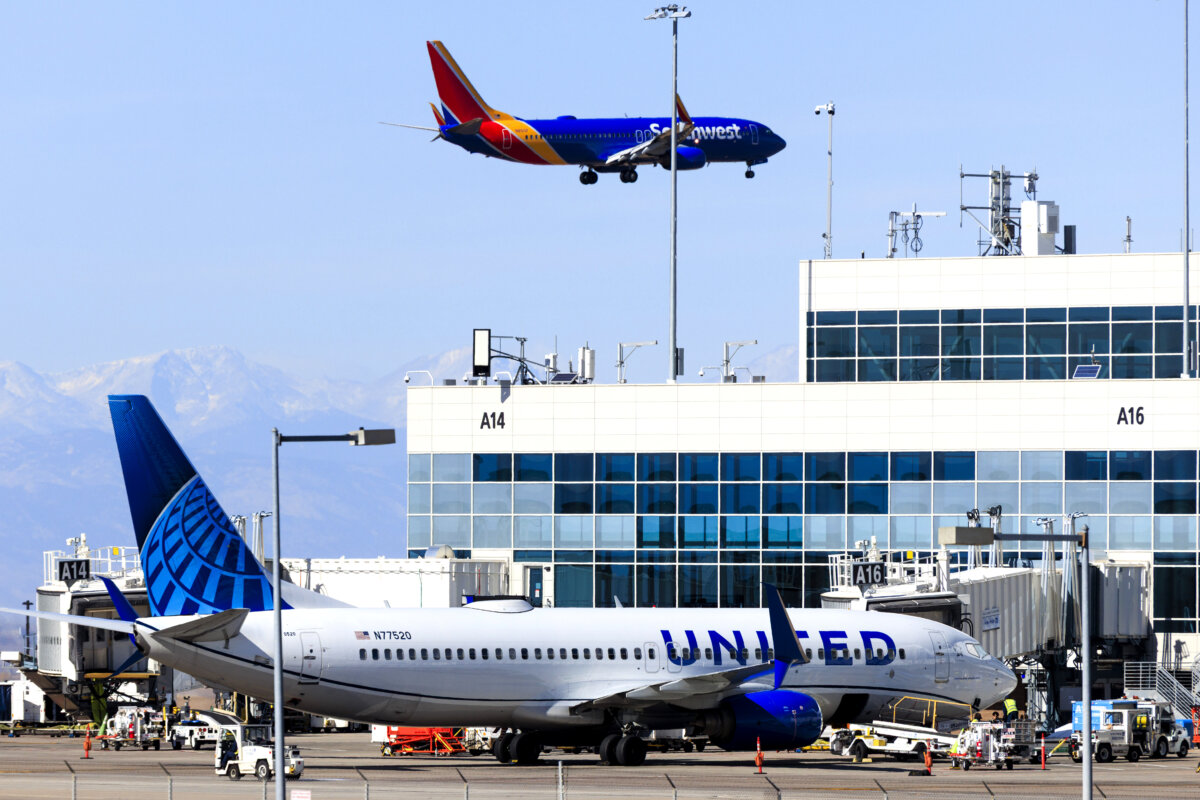
To remain successful, Swelbar said, some of the larger airlines have started to segment cabins by offering different seating products with various amenities. The most expensive seating is first class or business, but airlines including Delta, United, American, and Southwest are offering additional seating options such as premium economy and basic economy.
“Basic economy is really the equivalent product of what a Spirit, or a Frontier, or a Breeze offers to the marketplace every day—relatively few amenities, and really just basic transportation from A to B,” he said.
“So they have developed a product that competes more directly with the product that the ultra-low-cost carriers have used in the past, and that is a very different competitive weapon.”
Swelbar said Frontier has started adding first-class seats to its planes for those consumers willing to pay more for comfort and in-flight amenities.
“Today’s thinking is that airlines can upsell consumers to something better,” he said. “Everybody is doing the same, because segmenting the airplane cabin is proving to be very successful in finding additional revenue streams.”
Southwest, along with others, is catering to growing consumer demand for bigger, more roomy seats and onboard amenities, such as complimentary snacks and free entertainment.
“Southwest is really the classic case study here of an airline that has changed to match this new environment that competes on product and not just price,” Swelbar said.
Loyalty Programs
Additionally, Swelbar said, airline credit card programs are becoming more popular among all consumers. He said these programs generated billions of dollars in revenue for airlines offering loyalty programs. They allow travelers to earn miles or points that they can later redeem for flights, upgrades, hotel stays, or other merchandise.
“This is really the first time since deregulation that the industry has started to compete on product and not just price alone,” he said, referring to the passage of the Airline Deregulation Act in 1978. “This is a big change in competition, and it is fundamentally changing the industry for the better in my view.”
He said he expects the new approach to be an enduring one.
In the meantime, he said, when the Iran conflict finally ends, jet fuel prices will likely not immediately go down, as crude oil needs time to be refined into jet fuel. Swelbar said that once the Strait of Hormuz opens, there’s going to be more demand and a lot of inventory needed. As a result, there could be a greater demand than supply, and prices could remain elevated.
Tough Choices
Swelbar said that consumers have some tough decisions to make about what they’re willing to pay and whether they’ll spend more on fewer trips or make more trips at a lower cost with less legroom and amenities. He recommends establishing a relationship with one airline to take advantage of its loyalty programs.
“At some point, you know, discretionary income is going to matter again,” he said. “Consumers are probably going to want to use more of their travel budget to buy a higher-end product and enjoy a higher-end experience in their travel, and that’s at least what the airlines are betting on today.”
Nearing a Balance
Swelbar said that, from an investment perspective, the domestic airline market is nearing a balance between supply and demand, which could improve pricing.
He said that some carriers stand out as better investment opportunities. Southwest has a solid balance sheet, while Alaska Airlines benefits from strong customer loyalty, he said. He also mentioned Allegiant and Sun Country as emerging as quality providers “on the very low end of the product spectrum.” Allegiant and Sun Country announced in January that they would merge operations to strengthen their position in leisure travel.
An April 21 report from the American Customer Satisfaction Index showed that the U.S. airline industry recently scored a 76 out of 100 for consumer satisfaction. The rating was just one point shy of the 2024 all-time high. Airlines across the board received high marks for technology offerings such as in-flight internet access and improved flight information updates. Flyers, especially business travelers, also welcomed loyalty programs as a form of customer appreciation.
A May 21 YouGov survey ranked Delta as the most considered airline brand among U.S. travelers intending to travel in the next 12 months, followed by American, United, Southwest, and JetBlue.
 Friends Read Free
Copy
Facebook
Tweet
Friends Read Free
Copy
Facebook
Tweet