

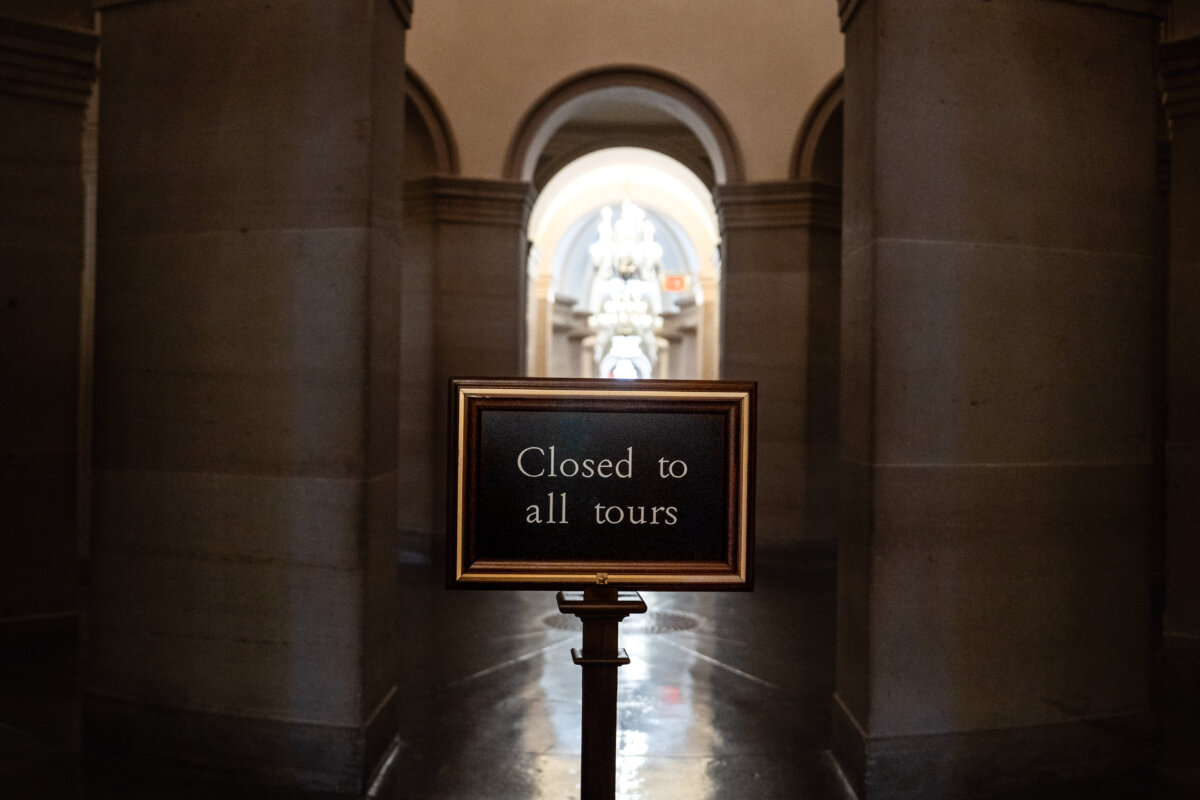
The U.S. government shutdown, now in its 10th day, has had little influence over consumer sentiment, according to a University of Michigan survey released on Oct. 10.
The October Consumer Sentiment Index came in at a higher-than-expected 55, down from 55.1 in September. The market consensus penciled in a reading of 54.2.
Improvements were observed in current personal finances and year-ahead business conditions. The index for current economic conditions ticked up to 61.0 from 60.4
This essentially offset the declines in expectations for future personal finances and current buying conditions for durables, says Joanne Hsu, the university’s director of consumer surveys. The index for consumer expectations dipped to 51.2 from 51.7.
“Overall, consumers perceive very few changes in the outlook for the economy from last month. Pocketbook issues like high prices and weakening job prospects remain at the forefront of consumers’ minds,” Hsu said. “At this time, consumers do not expect meaningful improvement in these factors.”
U.S. consumers’ inflation expectations inched lower to 4.6 percent from last month’s 4.7 percent. The long-run inflation outlook held steady at 3.7 percent.
“Inflation expectations for both time horizons are about midway between the readings seen a year ago and the highs seen this year in April and May in the wake of the initial announcements of major tariff changes,” Hsu said.
With the U.S. government shutdown continuing, there has been concern about a prolonged deadlock impacting consumer behavior in the near term.
Hsu noted in the University of Michigan’s survey that there is little evidence suggesting the federal government has impacted consumers’ views of the U.S. economy.
Erick Clark, CIO of Accuvest and portfolio manager for the LOGO ETF, says there will likely be a dichotomy between consumers and government employees.
“The average consumer probably doesn’t change any behavior on government shutdown other than those affected in government,” Clark said in a note emailed to The Epoch Times. “Government employees just got paid so the next issue will be around the 10/16 pay period – that will certainly change the behavior & sentiment of this cohort.”
Near-Term Sentiment
While sentiment has rebounded from spring lows, consumers continue to be cautious about current economic conditions.
It is not only the University of Michigan’s survey that has highlighted the trend.
The Conference Board’s September Consumer Confidence Index found a “sharp deterioration in consumers’ views,” with consumer confidence declining to the lowest level since April 2025. This included deteriorating assessments of business and labor market conditions.
According to Stephanie Guichard, senior economist of global indicators at The Conference Board, prices and inflation were the top issues influencing consumers’ views of the economy. While references to tariffs slipped, they remained elevated in write-in responses.
“Nonetheless, consumers’ average 12-month inflation expectations inched down, to 5.8 percent in September from 6.1 percent in August,” Guichard said in the report. “This is still notably above 5.0 percent, the level at the end of 2024.”
The New York Federal Reserve’s September Survey of Consumer Expectations suggests that many households do not expect to be better off in the year ahead.
Respondents anticipate inflation to be higher over the next 12 months, while spending growth expectations have receded.
Overall, consumers are still spending, although they are more cost-conscious than they may have previously been amid uncertainty, Clark said.
“Consumer sentiment has been generally much lower than normal given tariff uncertainty, higher inflation in real world goods and services, now AI driving job uncertainty,” he added.
Much of President Donald Trump’s sectoral and reciprocal global tariffs have been implemented. While the latest data indicate modest upticks in price pressures, the increases in aggregate inflation levels have been similarly modest.
The Cleveland Fed’s Inflation Nowcasting model estimates that the annual inflation rate for September will rise to 3 percent and then hold steady in the October report.
The government shutdown has created uncertainty as to whether the Bureau of Labor Statistics will release the Consumer Price Index (CPI), the Producer Price Index (PPI), and import and export prices.
Financial markets and policymakers may have to rely on private sector alternatives until the government reopens and federal agencies publish data.
The Truflation U.S. Inflation Index, which depends on a treasure trove of metrics, suggests inflation is at about 2.2 percent.
 Friends Read Free
Copy
Facebook
Tweet
Friends Read Free
Copy
Facebook
Tweet