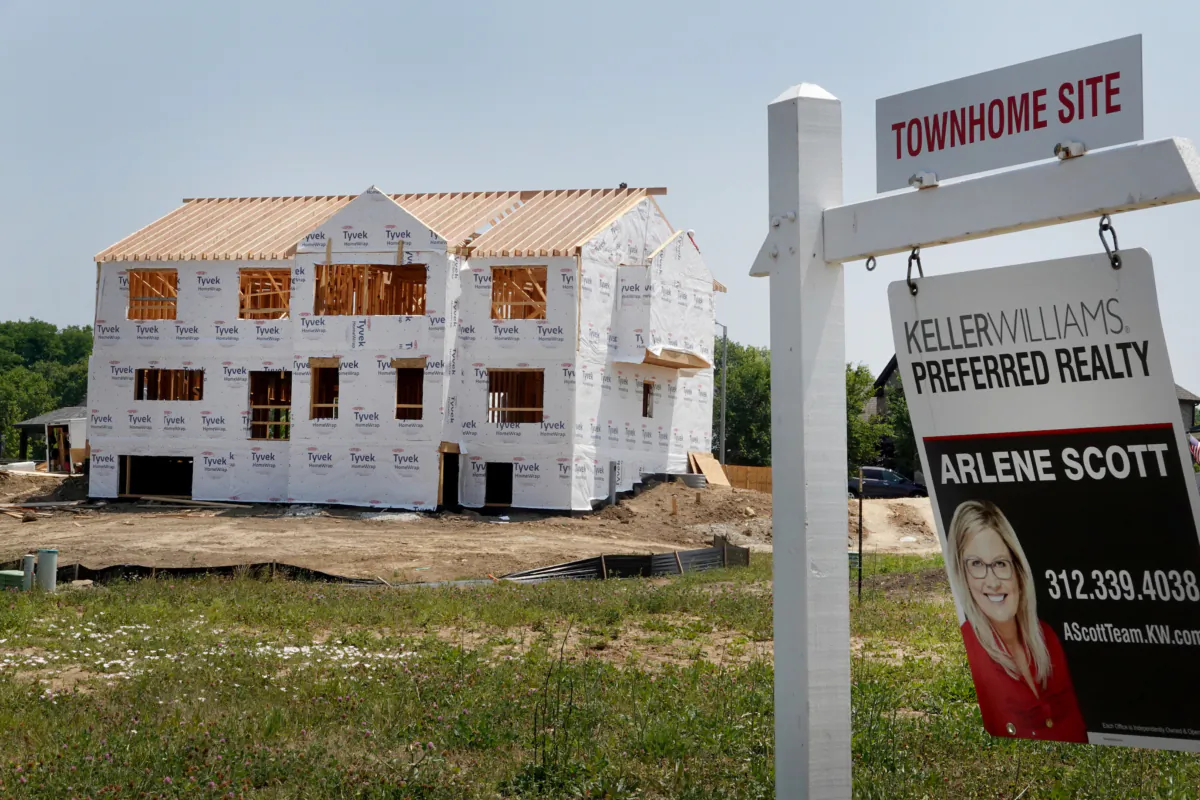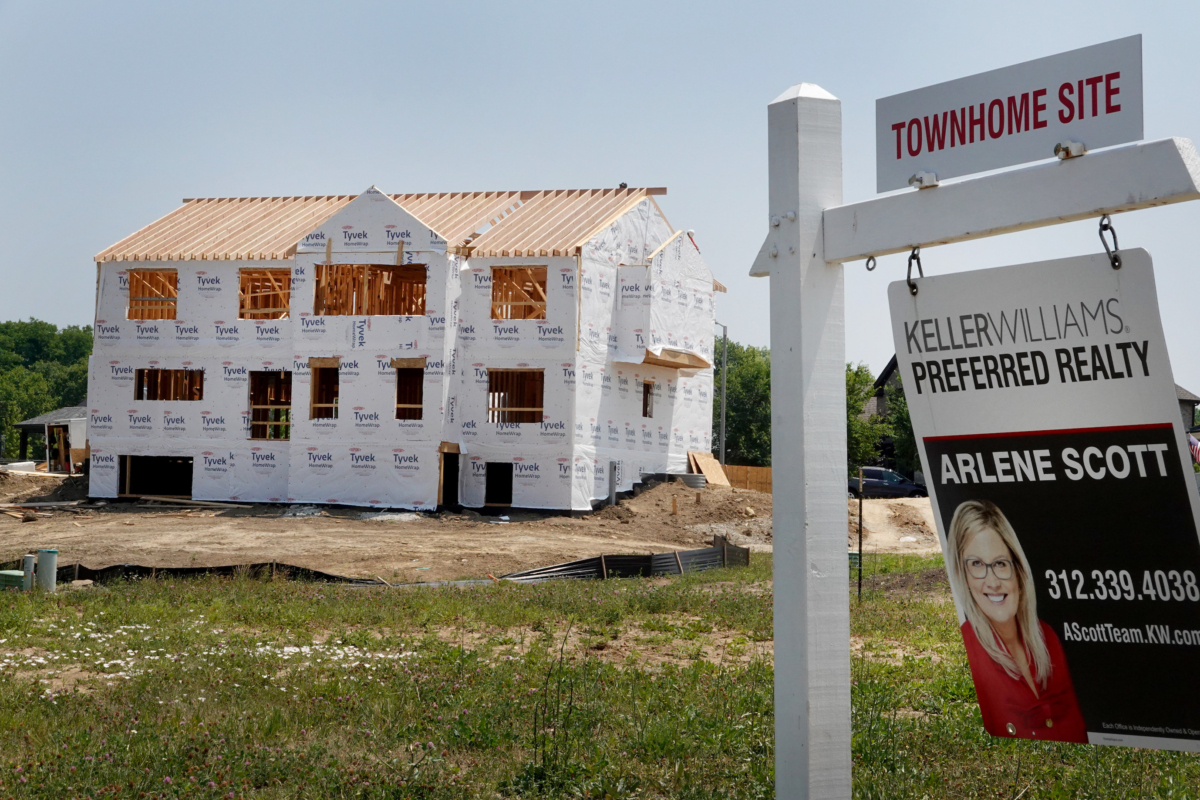

Typical U.S. monthly mortgage payments have surged from a year ago, driven by a rise in 30-year mortgage rates and housing prices, which is putting severe pressure on some homeowners.
The monthly mortgage payment on a typical home was $2,605 during the four weeks that ended July 30, up 19 percent from a year ago, according to Redfin on Aug. 4.
The latest figure is a jump from the historically high monthly mortgage payment of $2,637 from the beginning of last month.
Current conditions make the current housing market one of the most unaffordable in U.S. history, according to the Mortgage Bankers Association.
Home Prices Surge in First Half of 2023
The median U.S. home sales price went up 3.2 percent year over year at the end of July, to $380,250 for the biggest gain since November, according to the report.
The American Enterprise Institute (AEI) said in its July 2023 Housing Market Indicators report, that home prices could surge 6 percent by the end of the year and 7 percent in 2024.
“This is largely due to historically low supply, cooling yet still strong job numbers, low levels of foreclosures in most areas of the country, work from home, and continuing home price arbitrage opportunities,” AEI said.
Housing costs remain historically high due to elevated mortgage rates, as the average rate on a 30-year fixed mortgage rose to 6.9 percent this week, said Freddie Mac.
Redfin earlier predicted that the 30-year fixed mortgage rate would not fall again to 6 percent until the end of the year.
Mortgage rates have been affected by the Federal Reserve’s interest rate hikes, which are expected to remain elevated through the end of the year, as the central bank continues to combat inflation.
Analyst said affordability conditions were unlikely to ease until mortgage rates significantly eased, which is unlikely to happen anytime soon, due to the hawkish rate policies of the Fed.
Low Stock Worsening Housing Affordability
High rates have sidelined prospective buyers, but not as much as it has deterred would-be sellers.
Higher mortgage rates have discouraged homeowners from listing their properties for sale, as many purchased their homes under relatively lower rates, worsening the inventory shortage.
Compass CEO Robert Reffkin told CNBC that rates will need to fall to around 5 percent to unlock more inventory and put downward pressure on home prices.
“The issue we are seeing is that we need to have an unlock of inventory. It’s probably going to happen when mortgage rates get to 5, 5.5% in a sustainable level. At that point, I would expect there to be a flood of inventory in the market, and it’ll feel like the pandemic craze all over again,” Mr. Reffkin said.
The lack of existing housing has partially fueled the increase in home prices, by increasingly lopsiding supply and demand.
The total number of homes for sale is currently down 19 percent, the biggest drop in a year and a half, while new listings are down 21.3 percent.
Months of supply, the measure of the balance between housing supply and demand, rose to 2.9 months—the highest level since April.
Four to five months of supply is considered balanced, while a lower number indicates a sellers’ market conditions.
Redfin’s Homebuyer Demand Index, which estimates early-stage demand through requests for tours and other buying services from the real estate service, fell 4 percent from a year ago.
Mortgage purchase applications declined 3 percent from a week earlier, while purchase applications were down 26 percent year over year, according to the report.
Pending home sales fell 14.4 percent year over year, as the year-plus streak of double-digit declines continued.
 Friends Read Free
Copy
Facebook
Tweet
Friends Read Free
Copy
Facebook
Tweet