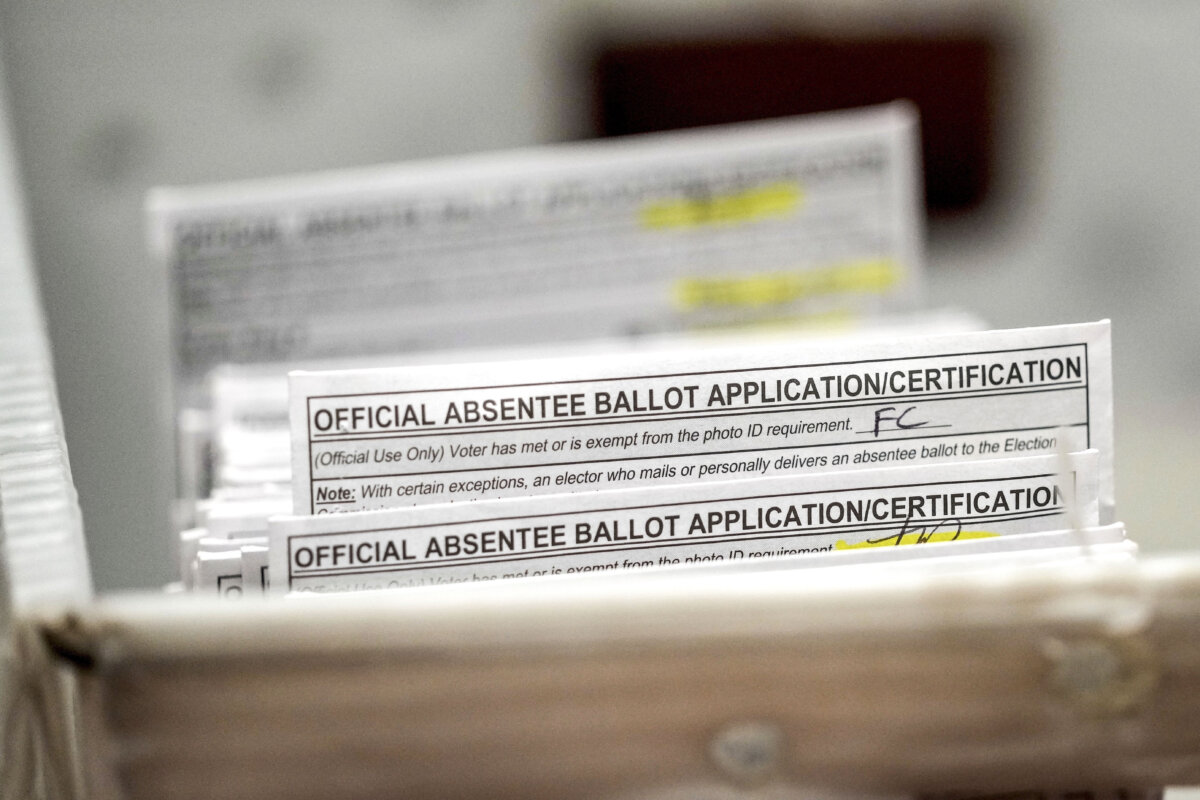

South Carolina violated the U.S. Constitution with its laws restricting the use of absentee voting by voters under 65, the U.S. Court of Appeals for the Fourth Circuit ruled on Tuesday.
The laws in question place distinctions on who can access a mail-in or absentee ballot and who cannot. People over 65 are given a specific carve-out in South Carolina election law, making it easiest for these voters to obtain absentee ballots.
However, voters under 65 have been more restricted in their access to such ballots. For these voters, obtaining an absentee ballot requires that they submit proof from their employer that they won’t be available on Election Day, that they are attending to a sick or disabled person, are jailed, or that they will be outside the county where they reside on Election Day.
In 2023, five voters in South Carolina brought suit, saying that the law violated their Equal Protection rights.
According to Judge Roger L. Gregory, writing for the three-judge panel, this discrepancy in the treatment of the two classes’ access to absentee ballots is constitutionally impermissible under the 26th Amendment, which lowered the minimum federal voting age from 21 to 18.
“Because the South Carolina statute at issue restricts access to ‘no excuse’ absentee-by-mail ballots to voters sixty-five years of age or older, we agree with Plaintiffs that it violates the Twenty-Sixth Amendment,” Gregory wrote in the decision.
Judges Pamela A. Harris and Julius N. Richardson also sat on the panel and joined in the opinion.
The judges rejected the effort to tie the issue to the 14th Amendment’s Equal Protection clause, affirming that the district court had ruled correctly that the provision wasn’t applicable to the case.
However, the court reversed the district court’s ruling in favor of South Carolina, ruling that the additional difficulties placed on voters under 65 in accessing absentee ballots constitute a violation of the 26th Amendment.
“As Defendants themselves recognize, having the option to cast an absentee-by-mail ballot increases the convenience and ease of voting,” Gregory wrote. “That means voting is harder for voters under age sixty-five than those age sixty-five and older — which constitutes an abridgement of the right to vote on the basis of age and contravenes the Twenty-Sixth Amendment.”
In their defense of the law, South Carolina election officials cited “administrability and election integrity.”
The court described these as “legitimate” interests, but said that the language of the 26th Amendment “unconditionally removes age-based allocation of voting opportunity from the set of permissible means” of accomplishing those goals.
Gregory wrote: “A state may pursue those interests lawfully—through age-neutral rules, or by limiting absentee-by-mail voting altogether. What it may not do is grant one class of adult citizens unconditional access to a voting method while denying it to another solely because of age.”
The court sent the issue back to the district court for further adjudication.
Referencing the proximity of the midterms, the ruling leaves it up to the lower courts to decide on the appropriate timeline for hearings on the matter.
That leaves it unclear whether any new absentee ballot rules in line with the decision will go into effect in South Carolina prior to the 2026 midterm elections, roughly 2 1/2 months away.
 Friends Read Free
Copy
Facebook
Tweet
Friends Read Free
Copy
Facebook
Tweet