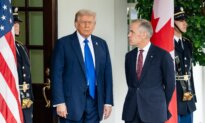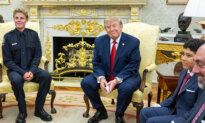

U.S. President Donald Trump says a preliminary trade deal made with Canada will benefit both countries, including by reducing some existing U.S. tariffs on Canadian goods, as the two sides work to finalize a deal before a three-day pause on new U.S. 50 percent tariffs expires.
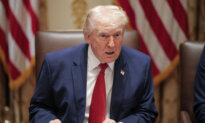
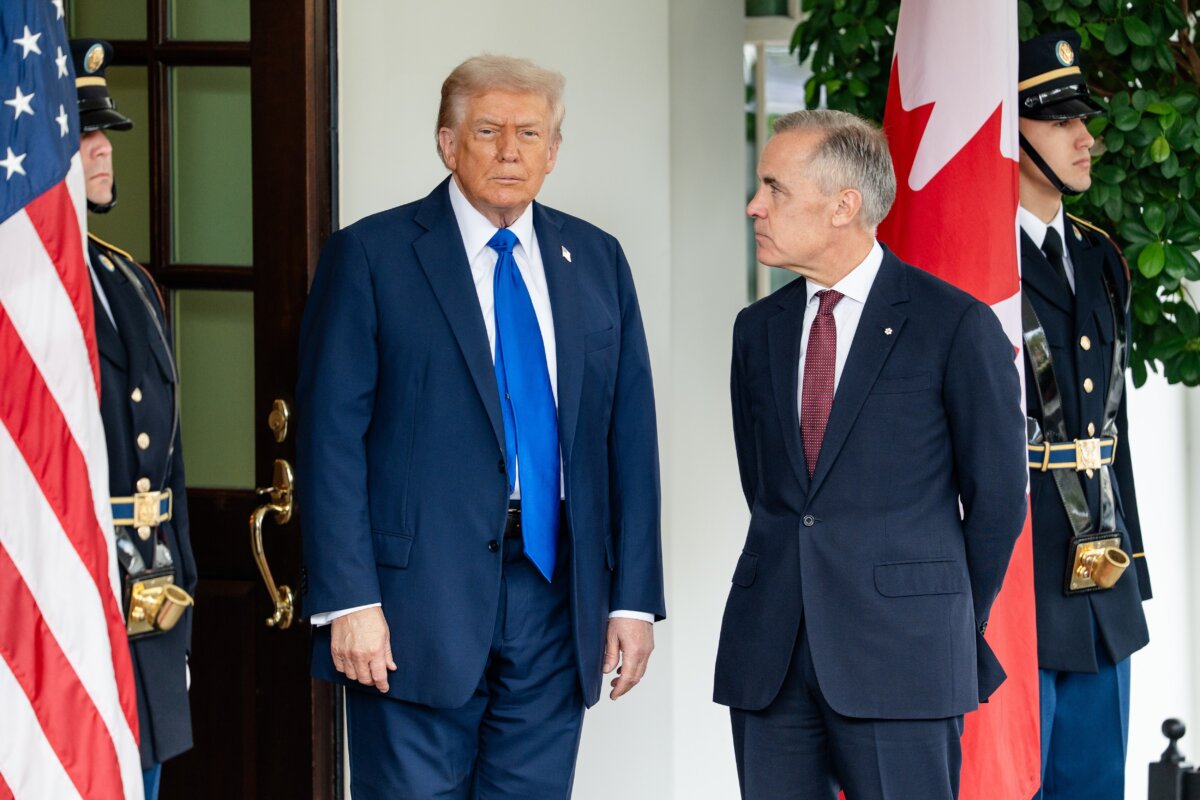
“We had a very good conversation with the prime minister last night, and we’ve come to a deal with Canada. … They called yesterday, and they gave us the points that we had to have. Very fair deal for both,” Trump told reporters in Washington on Aug 19.
Trump said Canadian tariffs “are going to be totally eviscerated, down to zero,” without clarifying the specific tariffs he was referring to, except by saying that American farmers and manufacturers in particular are going to be “thrilled” with the deal.
When asked by a reporter if the current U.S. tariffs on Canada would be lowered, Trump said, “we’re reducing it a little bit.”
Later in the day, when asked by reporters about U.S. steel and aluminum tariffs on Canada, Trump said the United States “may bring some of the tariffs down to a level where other countries are, because Canada was paying a higher tariff.”
“It was supposed to be a 50 percent straight across the board tariff. … And I delayed it at the request of Canada for three days so we can iron out the details,” he said.
Washington had said the latest 50 percent tariffs are in response to Canada’s supply management system as well as provincial bans on U.S. alcohol sales and Canada’s counter-tariffs on U.S. autos.
Prime Minister Mark Carney congratulated Canada-U.S. Trade Minister Dominic LeBlanc and U.S. Trade Representative Jamieson Greer on Aug. 19, citing “significant progress” made in the trade negotiations.
Carney said on X that Canada had entered into negotiations with the “best overall” trade terms with the United States of any country and that Ottawa was now working toward an agreement which would reinforce that “Canadian advantage” and provide greater certainty for future trade.
Trump had announced on the night of Aug. 18, just hours before 50 percent tariffs were set to kick in on dozens of Canadian goods, that he had paused them for a three-day period, “based on the fact that Canada and the U.S.A., subject to the finalization of documents, have a DEAL!”
Trump also added in his Truth Social post that the Keystone XL Pipeline, which had been cancelled by former U.S. President Joe Biden back in 2021, “may be awoken from the grave.” Trump signed a presidential permit in April authorizing a 1,038-kilometre pipeline in Montana and Wyoming that could revive parts of the infrastructure associated with the cancelled Keystone XL project.
Provincial US Alcohol Ban
Nova Scotia Premier Tim Houston said on Aug. 20 that Carney asked the provinces to resume selling U.S. alcohol as he briefed them on the latest agreement with the United States.
Houston said he would be willing to do that in his province.
“Of course, it’s pending a final deal,” he said.
Supply Management
LeBlanc and Greer addressed reporters on Aug. 19 outside the Office of the United States Trade Representative, with Greer saying Washington was “very happy with where we ended up.” Greer said he was “confident” the two countries had reached an agreement to protect American workers and supply chains as well as “strengthen the North American economy.”
“While we certainly, I think, have eliminated some of the irritants that we’ve had over the past year, we also are taking a strong foot forward,” Greer said.
LeBlanc said Ottawa wants to protect Canada’s supply management system in the final agreement, saying the government “needed to ensure that the supply management regime remained entirely intact” and that he was “confident that that’s the case.”
The Liberal government has repeatedly said that Canada’s supply management system—which regulates the production and importation of dairy, eggs, and poultry to stabilize prices and which can entail high tariffs—will be protected in trade negotiations with the United States.
Washington has repeatedly cited Canada’s supply management system as a trade irritant. The United States said the 50 percent tariffs were a response to what it described as Canada’s “discriminatory” treatment of U.S. dairy and alcohol products as well as Ottawa’s tariffs on U.S. automobiles.
While Canada had lifted most of its retaliatory tariffs on the United States back in September 2025, it retained counter-tariffs on certain U.S. goods in response to Washington’s sectoral tariffs on automobiles, steel, and aluminum. Ottawa has argued that those sectoral tariffs violated the terms of the Canada-United States-Mexico Agreement.
Opposition Parties React
Conservative Leader Pierre Poilievre told reporters in Prince Edward Island that the Tories were “relieved” to hear of the three-day delay of U.S. tariffs and that they are “looking forward to seeing the new, excellent deal that is being finalized—one we expect and we believe should include an end to tariffs on Canadians.”
Poilievre criticized the government for “making so many concessions” before the deal was finalized, such as rescinding the Digital Services Tax, directing the CRTC to review and eliminate the Online Streaming Act, and agreeing to an updated deal on the Gordie Howe International bridge that increased benefits for the United States.
Bloc Québécois Leader Yves-François Blanchet said on X that his party was concerned that Ottawa will “make new concessions on the back of Quebec’s economy,” in reference to supply management. Blanchet said the system is essential for “thousands of Quebec family businesses” and for the quality and pricing of dairy products.
“Thus, I formally request today that the Prime Minister present a situation report to the party leaders in the House of Commons regarding the state of the negotiations with the White House,” Blanchet said.
NDP Leader Avi Lewis said in a statement that Carney should not grant any more concessions to Washington that would “further undermine” Canada’s economic independence. He also said the revival of the Keystone XL pipeline is a “concession that makes no sense whatsoever – for our economy, our sovereignty, or the climate.”
Carney will be chairing a first ministers’ meeting later today, where he will likely update Canada’s premiers on the trade negotiations.
 Friends Read Free
Copy
Facebook
Tweet
Friends Read Free
Copy
Facebook
Tweet