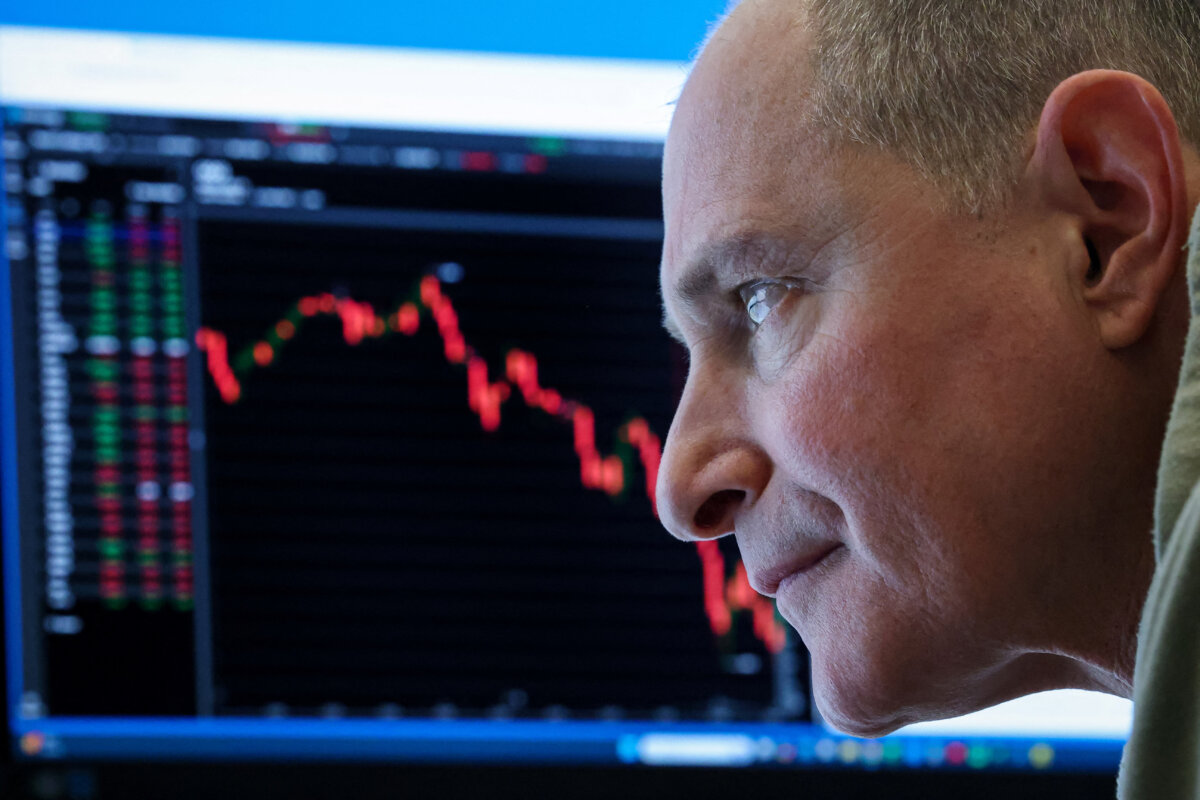

U.S. investors keep borrowing money to buy the dip or take part in new stock market highs.
Margin debt—loans taken out by investors from brokerage firms to buy stocks—climbed to a record high of $1.279 trillion in January, according to data from the Financial Industry Regulatory Authority (FINRA).
This is up more than 4 percent from December and 36 percent from the same time a year ago.
Fear of missing out on the stock market boom has fueled borrowing since the end of the bear market in mid-2023. This strategy can amplify gains and losses.
While margin debt can allow traders to take advantage of opportunities in the equities arena, it also can present risks to investors when the market stages a sharp reversal, says Torsten Slok, chief economist at Apollo Global Management.
“With margin debt at record highs, any downturn in stocks risks turning into a sharper correction as leveraged investors are forced to sell into falling markets,” Slok said in a note to The Epoch Times.
Because FINRA data do not categorize margin debt by investor type—retail or institutional—it can be challenging to determine who is borrowing and how systemic the problem could become.
Active money managers or traders could, for example, take out short-term loans to rebalance portfolios and buy high-quality stocks that may have been abandoned during selloffs.
Still, over the last 26 years, all-time high margin debt levels have generally preceded sharp downturns in the U.S. stock market.
In February 2000, for example, U.S. margin debt climbed above $284 billion for the first time. Just a month later, the dot-com bubble burst, and the market collapsed.
In the lead‑up to the global financial crisis of 2008–09, margin debt surged to a record $416 billion. In the months that followed, the stock market plunged in one of the most severe crashes in history.
The Federal Reserve has taken notice of the increase in leverage, although its research centered on the financial sector as a whole.
“While banks and broker-dealers have maintained solid capital positions, leverage for some other types of financial entities—such as hedge funds and life insurers—was elevated relative to historical standards,” the central bank wrote in its November Financial Stability Report.
“When taken together, the overall level of vulnerability due to financial-sector leverage was notable.”
Case of Bulls and Bears
Optimists and pessimists can use this data to tout their outlooks on the stock market. It also can be viewed as a measure of risk appetite and investor sentiment.
Bears will state that rising margin debt signals excessive speculation and momentum chasing. It can also be a case of “irrational exuberance,” a term coined by former Federal Reserve Chair Alan Greenspan in the 1990s, in which investors become too optimistic and drive asset prices above their fundamental value.
Bulls will say that ballooning margin debt suggests growing confidence that stocks will keep rising.
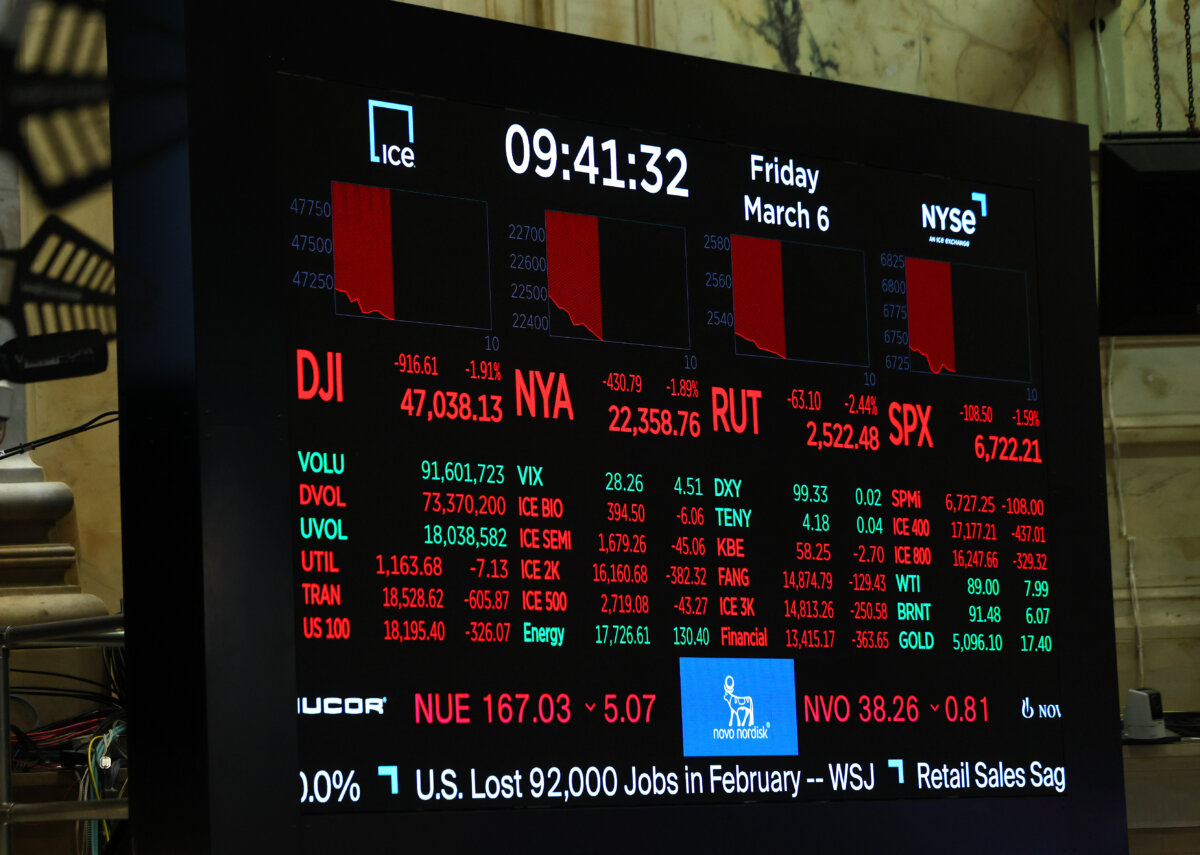
Markets have come under pressure this year, fueled by a flurry of headwinds, including fading artificial intelligence (AI) euphoria, struggles in the private credit industry, and the war in Iran.
So far this year, the blue-chip Dow Jones Industrial Average and the broader S&P 500 are down about 1 percent. The tech-driven Nasdaq Composite Index has slipped around 2.5 percent.
A sell-off can accelerate when traders are overleveraged and face a margin call.
Margin calls occur when a trader’s account falls below the maintenance margin requirement, forcing brokerage firms to demand that investors replenish their accounts or liquidate funds.
So, when a margin call requires asset sales, leveraged positions—stocks, precious metals, or cryptocurrencies—will face heightened selling pressure.
Federal Reserve regulations allow investors to generally borrow up to 50 percent of the security’s initial cost. Some firms stick to this initial requirement, while others maintain stricter limits.
Ultimately, leverage is back in the spotlight again, says Hung Tran, nonresident senior fellow at the Atlantic Council’s GeoEconomics Center.
“Elevated leverage increases the fragility of financial institutions and markets and amplifies the severity of potential market corrections,” Tran said in a Jan. 22 analysis.
As a result, he notes, private investors need to adopt a cautious approach to reduce their exposure and soften the impact of future market disruptions.
 Friends Read Free
Copy
Facebook
Tweet
Friends Read Free
Copy
Facebook
Tweet