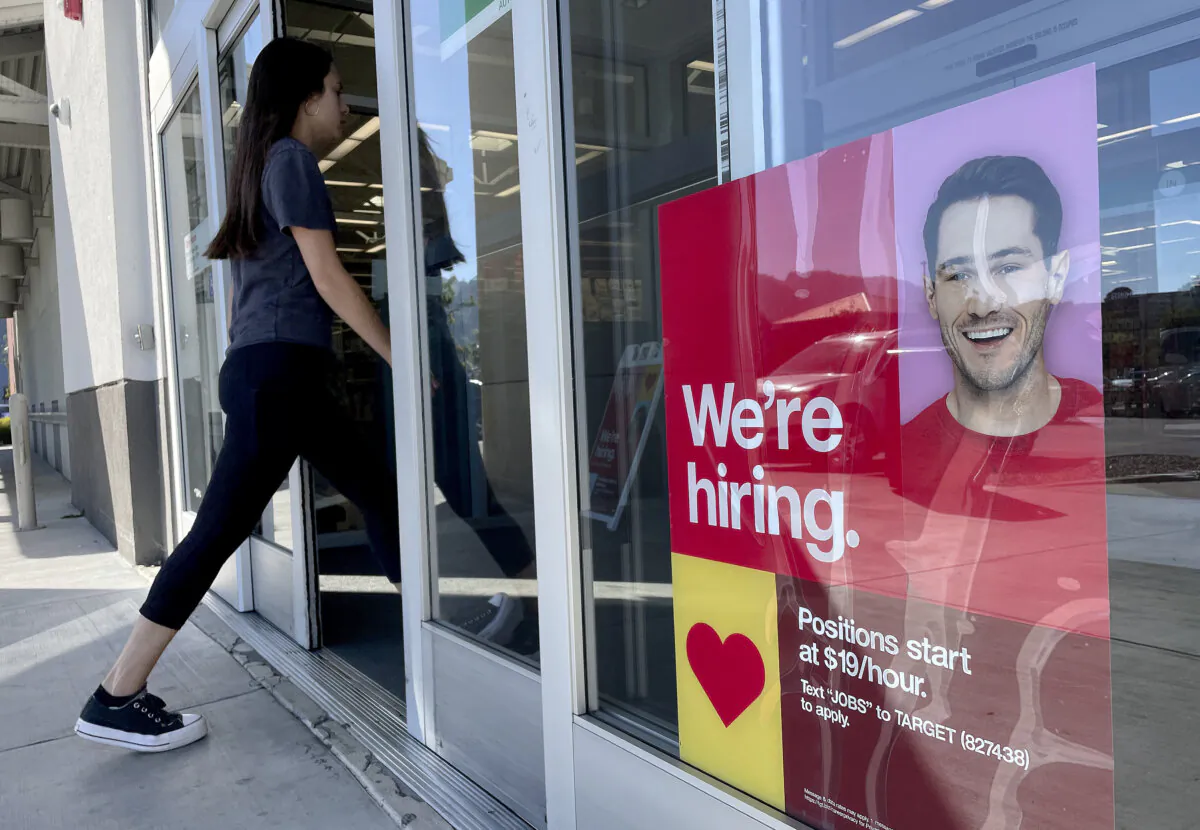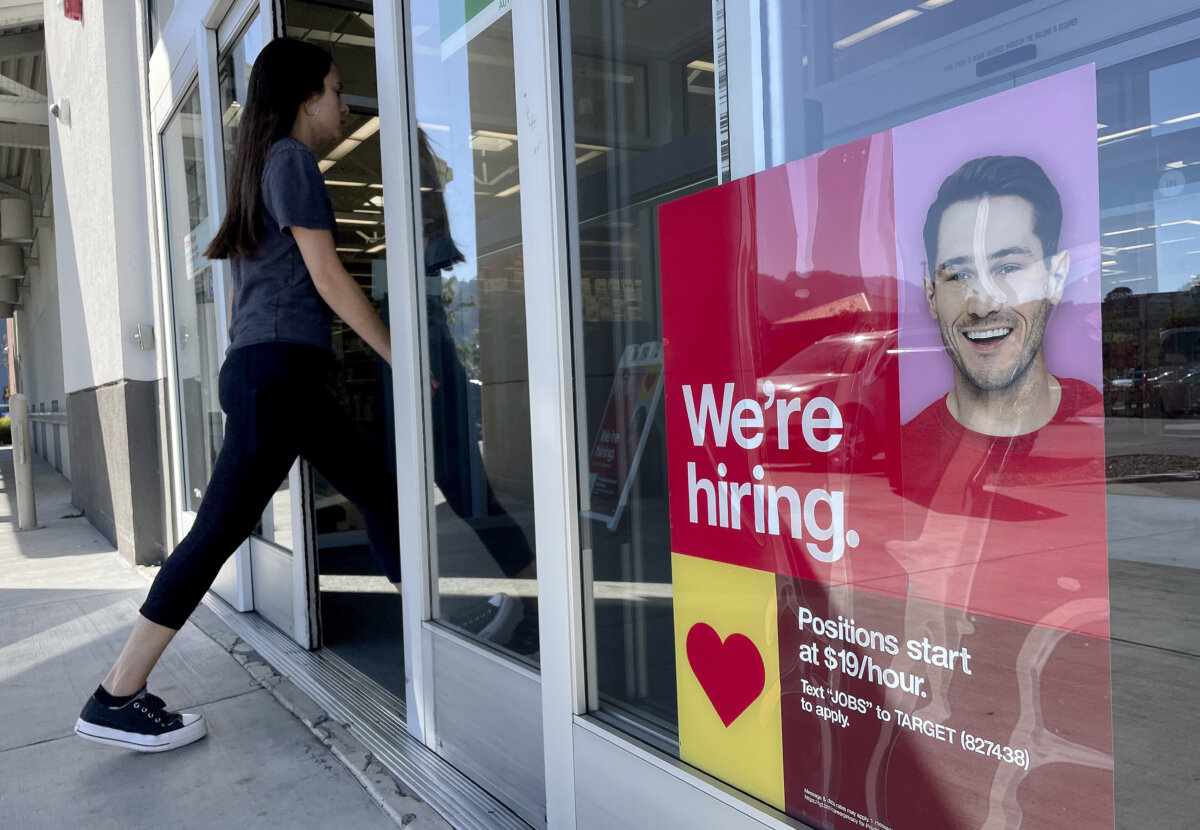

U.S. job growth was revised lower for the year ending in March, indicating a slightly weaker labor market as the economy navigated President Donald Trump’s expansive trade agenda and higher-for-longer interest rates.
Payrolls were overstated by 79,000 in the 12 months ending in March 2026, the Bureau of Labor Statistics said on Aug. 28.
Prior to these revisions, the Bureau of Labor Statistics reported that the U.S. economy had created 272,000 jobs during this 12-month span.
Downward revisions were driven entirely by the private sector, as payrolls were overstated by 178,000. This was led by retail (negative 155,000), private education and health services (negative 96,000), and financial activities (negative 76,000).
Government employment growth, however, was understated by 99,000 last year.
Bureau officials use more comprehensive information from the Quarterly Census of Employment and Wages—a dataset compiled from state unemployment insurance records—to produce the annual benchmark revisions.
By relying on these figures, economists can correct biases, remove inaccuracies, and depend on in-depth details from more than 11 million businesses.
“The preliminary benchmark revision reflects the difference between two independently derived employment counts, each subject to their own sources of error,” the bureau said. “It serves as a preliminary measure of the total error in CES employment estimates from March 2025 to March 2026.”
These benchmark revisions have garnered significant attention in recent years due to their substantial downward adjustments to nonfarm payrolls.
Last year’s changes showed payrolls had been overstated by 898,000 jobs. The two prior benchmark updates also came in negative, with the federal agency ultimately finding 266,000 fewer jobs in 2023 and 589,000 fewer in 2024 than initially reported.
Economists have pointed to various reasons for the enormous revisions since the pandemic, mainly low response rates and errors in the birth-death model.
The Current Employment Statistics response rate—a monthly survey of approximately 631,000 establishments used for the nonfarm payrolls report—sits at around 43 percent, down from as high as 65 percent almost a decade ago.
The birth-death model is a statistical adjustment that accounts for new businesses opening (births) and existing businesses closing (deaths).
The bureau completed a modest methodological update earlier this year, changing forecasts of residual job gains or losses from firms’ openings and closings after the main adjustment had already been applied.
To usher in potential reforms to the bureau, Trump fired Commissioner Erika McEntarfer last summer. Her successor, Brett Matsumoto, who previously served on the White House Council of Economic Advisers, was confirmed by the Senate this month.
Despite Trump arguing that the employment figures were “manipulated for political purposes,” Matsumoto does not think this is the case.
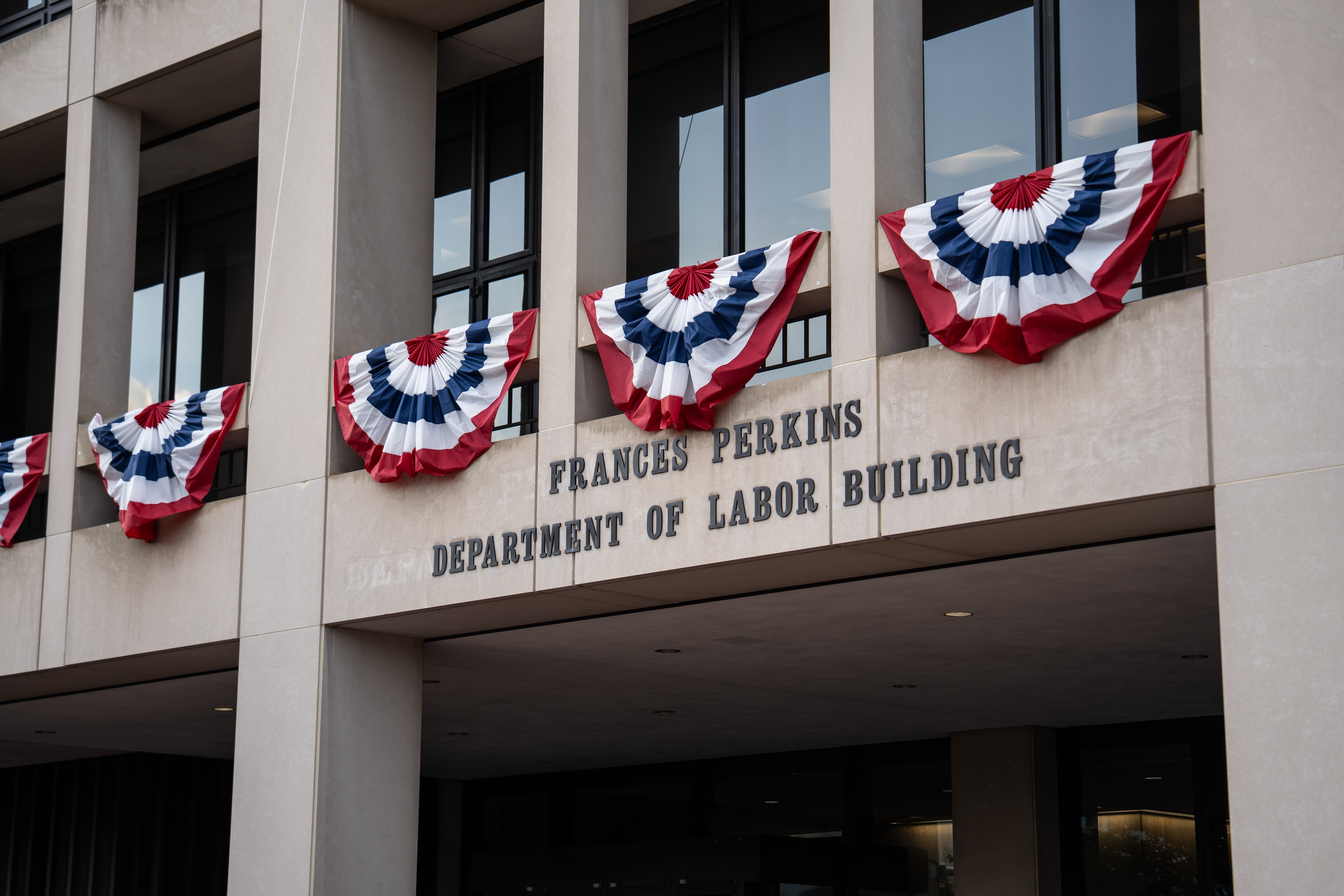 The U.S. Department of Labor in Washington on Sept. 9, 2025. (Madalina Kilroy/The Epoch Times)
“I do agree that fulfilling the mission of the BLS to accurately measure this data does require independence from political interference, and if confirmed, I fully commit to maintaining the integrity and independence of the BLS.”
The final report will have additional revisions and will be published in February 2027.
August Jobs Report
These revisions come ahead of next week’s August jobs report.
The U.S. labor market is looking to rebound after last month’s surprise loss of 23,000 jobs.
Looking ahead, the consensus forecast suggests 45,000 jobs were added in August, but the unemployment rate ticked up to 4.2 percent.
A growing concern in the labor market is the sharp drop in workforce participation amid the White House’s immigration policy reforms and Baby Boomers’ retirements. This has been a key factor in keeping the jobless rate low.
“For now, the labor market seems healthy enough to keep unemployment low,” Jeffrey Roach, chief economist at LPL Financial, said in an emailed note to The Epoch Times.
While job conditions have been entrenched in a “low fire, low hire” state for more than a year, some indicators suggest hiring could be gaining momentum heading into the fall.
Private employers have been steadily boosting employment, and surveyed small businesses say they plan to expand hiring efforts in the coming months.
Ultimately, however, these numbers are unlikely to persuade the Federal Reserve to shift away from its focus on inflation.
Fed Chairman Kevin Warsh and his colleagues have focused on elevated prices.
But investors largely expect the central bank to hold rates steady at the September Federal Open Market Committee meeting.
Reuters contributed to this report.
 Friends Read Free
Copy
Facebook
Tweet
Friends Read Free
Copy
Facebook
Tweet