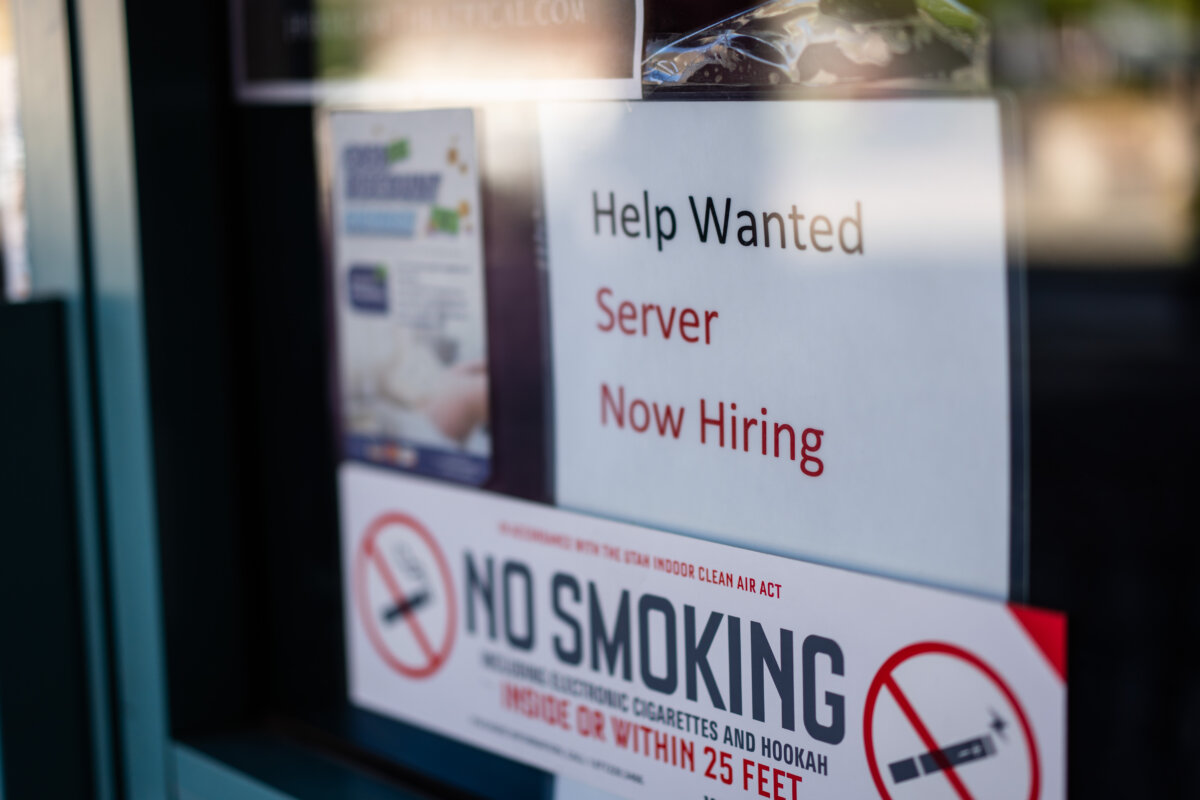

The number of Americans claiming unemployment benefits ticked up marginally, as the U.S. labor market remains resilient amid economic uncertainty.
Initial jobless claims rose by 5,000 to 215,000 for the week ending on May 23, according to new Department of Labor data released on May 28.
Economists had forecast a tepid 1,000 increase.
Weekly unemployment claims continue to hover near historically low levels and are firmly below averages observed a year ago.
While employment conditions face fundamental shifts—lower immigration and smaller labor force participation—various measurements suggest that the job market has been stable in recent months.
“The number of individuals applying for unemployment insurance benefits last week remained low, indicating the labor market is stable despite a falling hiring rate,” Jeffrey Roach, chief economist for LPL Financial, told The Epoch Times in an emailed note.
Despite major companies dominating the headlines with planned job cuts recently, layoffs have been relatively low.
This can be seen in the four-week average, which removes week-to-week volatility. This number rose to a smaller-than-expected 209,000.
At the same time, various figures indicate that hiring momentum could be picking up steam heading into the summer.
In the four weeks ending on May 9, private employers added an average of 35,750 jobs per week, according to payroll processor ADP.
Although hiring slowed for the first time in three weeks, private-sector job creation has been elevated since late March.
Continuing jobless claims—the number of out-of-work individuals currently receiving unemployment benefits—remained below 1.8 million for the eighth consecutive week.
Recurring claims did, however, rise to 1.79 million from 1.77 million in the previous week.
Economists use this as a proxy for gauging the labor market’s health and the difficulty or ease that workers may have in finding new employment opportunities.
It can also indicate that Americans are exhausting their jobless benefits, as many states cap eligibility at 26 weeks.
Data and Trends
A fresh tranche of labor market data will be released next week, including job openings, layoffs, and total nonfarm payrolls for May.
Early forecasts from Trading Economics suggest that the economy likely added 102,000 new jobs this month. The unemployment rate, however, might have ticked up to 4.4 percent.
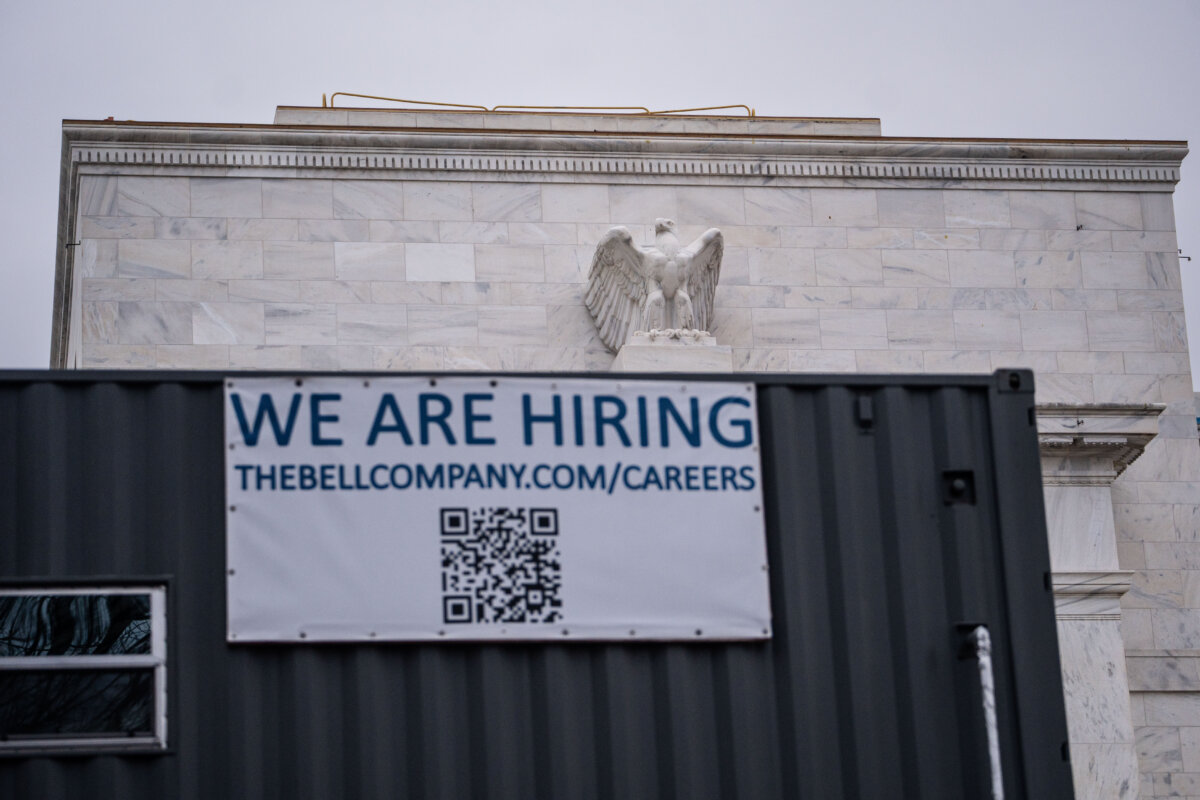
These numbers will be key for the Federal Reserve ahead of its June 16–June 17 policy meeting.
While recent indicators suggest that monetary officials will be concentrating on inflation, new employment data could confirm whether the labor market is robust or needs support.
“I am focusing heavily on inflation. I’m not ignoring at all the labor market. We need to pay attention to both sides, but the labor market is in decent shape right now, while inflation is simply much too high,” Minneapolis Fed President Neel Kashkari told CNBC on May 28.
Investors expect the Fed to stay on hold and potentially consider a rate hike later this year.
“The Fed and its new Chair, Kevin Warsh, are in a difficult spot,” Josh Rubin, client portfolio manager at Thornburg Investment Management, said in a note emailed to The Epoch Times.
“It’s going to be tough to argue for rate cuts with a straight face in the current environment.”
The dynamics of the labor market have changed over the past year because of the current administration’s various policy changes.
The unemployment rate is at a historically low level, and the new Fed chairman indicated during his Senate confirmation hearing that the labor market is at full employment.
The jobless rate could hold steady for the foreseeable future, as the breakeven rate—the number of new jobs needed to keep the unemployment rate low—is much lower than in previous years.
Estimates may vary, but Dallas Fed economists suggest that the breakeven rate is close to zero.
But public consternation about employment has been widespread, particularly with the rise of artificial intelligence (AI), which is fueling economic growth.
The numbers have been mixed.
A May 14 paper by the New York Fed, for example, found that AI exposure showed little correlation with declines in job postings.
Still, more economists are optimistic about the positive impact AI will have, including on workers.
“AI is likely to reshape rather than simply eliminate jobs, with efficiency gains potentially increasing demand for AI-enabled work while raising the premium on adaptability and human judgment,” Roach said.
Inflation and Growth
Economists devoured a new batch of data, showing slower growth and higher inflation.
The U.S. GDP was revised lower to 1.6 percent, from the Bureau of Economic Analysis’s initial estimate of 2 percent.
At the same time, durable goods orders popped by 7.9 percent in April, much higher than the consensus estimate of 3.5 percent.
March’s reading was also raised to 1.3 percent from 0.8 percent.
But consumers may be apprehensive about opening their wallets amid renewed inflationary pressures.
April’s annual inflation rate—using the Fed’s preferred gauge, the main personal consumption expenditures (PCE) price index—edged up to 3.8 percent from 3.5 percent. Core PCE inflation, which strips out the volatile energy and food categories, ticked up to 3.3 percent from 3.2 percent.
Personal income and consumer spending came in at zero percent and 0.5 percent, respectively, last month.
 Friends Read Free
Copy
Facebook
Tweet
Friends Read Free
Copy
Facebook
Tweet