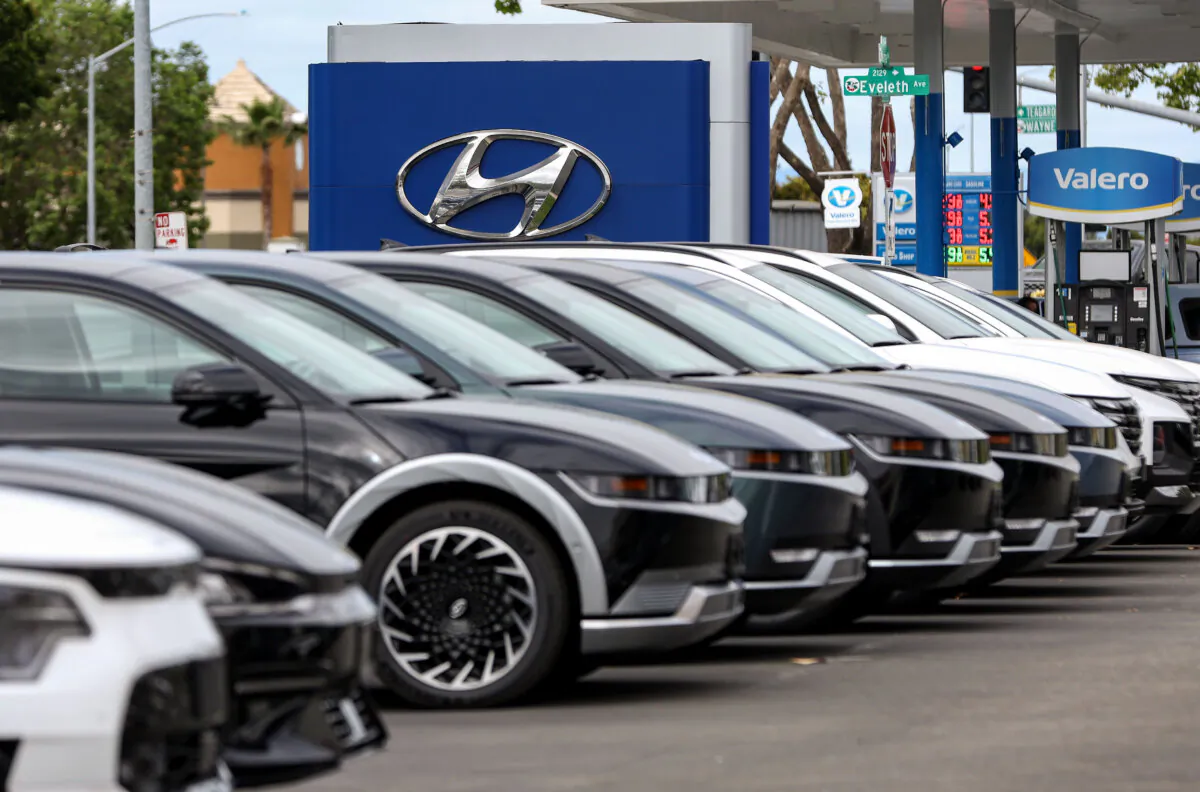

The U.S. tariff on South Korean automobiles will be lowered to 15 percent retroactively to Nov. 1, Commerce Secretary Howard Lutnick said.
In a Dec. 1 statement posted on X, Lutnick said the White House will also remove import duties on airplane parts and “unstack” South Korea’s reciprocal tariff rate to match Japan and the European Union.
The move followed South Korea’s introduction of parliamentary legislation to codify the government’s investment commitments to the United States.
“The Republic of Korea has officially moved to implement their strategic-investment legislation in parliament,” Lutnick said on the social media platform. “This key step ensures U.S. industry and workers will see the full benefit of POTUS’s trade deal with Korea.”
Lutnick said Seoul’s investments will bolster the U.S. economy and strengthen domestic jobs.
South Korea’s KOSPI Composite Index—the nation’s primary stock market benchmark—climbed more than 1 percent on the news. Benchmark indexes across Asia-Pacific financial markets were mostly in the green, including Japan’s Nikkei, which rose about 0.4 percent.
Shares of South Korean automakers Kia and Hyundai rallied 3 percent and 4 percent, respectively.
This year, shares of U.S. automakers Ford and General Motors have surged 36 percent and 42 percent, respectively. Tesla Motors has climbed about 13 percent.
Reshoring automobile manufacturing has played a critical role in the president’s trade agenda, which has imposed 25 percent levies on imported passenger vehicles, light trucks, and car parts.
In July, President Donald Trump announced a preliminary trade agreement with South Korea.
Officials agreed to invest $350 billion in U.S. industries, such as advanced manufacturing and shipbuilding, and purchase $100 billion in energy products. In response, Washington said it would lower tariffs on South Korean goods to 15 percent, from 25 percent.
The deal was finalized last month.
The announcement comes as South Korea has been wrestling with elevated inflation.
New government data released on Dec. 1 showed that the country’s annual inflation rate rose to 2.4 percent in November, driven by higher food and services prices. This was unchanged from the previous month.
On a monthly basis, consumer inflation fell 0.2 percent last month, down from the 0.3 percent increase in October.
This supported the Bank of Korea’s decision to keep interest rates unchanged. Last week, the central bank left the key policy rate at 2.5 percent for the fourth consecutive meeting, signaling that monetary policymakers might be inching closer to the end of their current easing cycle.
Trump Trade Developments
Also on Dec. 1, the United States and the United Kingdom reached a major trade deal regarding pharmaceuticals.
The British government agreed to increase the prices it pays for new medicines by 25 percent. In exchange, the administration said it would exempt UK-made pharmaceuticals, drug ingredients, and medical technology from Section 232 and future Section 301 tariffs for three years.
“For too long, American patients have been forced to subsidize prescription drugs and biologics in other developed countries by paying a significant premium for the same products in ours,” U.S. Trade Representative Jamieson Greer said in a statement.
He suggested that similar reviews of pharmaceutical pricing practices could be conducted with other major trading partners.
This move is part of the administration’s broader crackdown on what it argues are foreign governments exploiting the United States by negotiating lower drug prices through national health systems, leaving American consumers to pay more.
Greer, meanwhile, later confirmed that the Trade Representative’s Office will hold a public hearing from Dec. 3 to Dec. 5 in preparation for the first six-year joint review of the United States–Mexico–Canada Agreement in July.
The hearings will feature a long list of economists, policy analysts, leaders of industry associations and trade groups, and business executives.
Lawrence Wilson contributed to this report.
 Friends Read Free
Copy
Facebook
Tweet
Friends Read Free
Copy
Facebook
Tweet