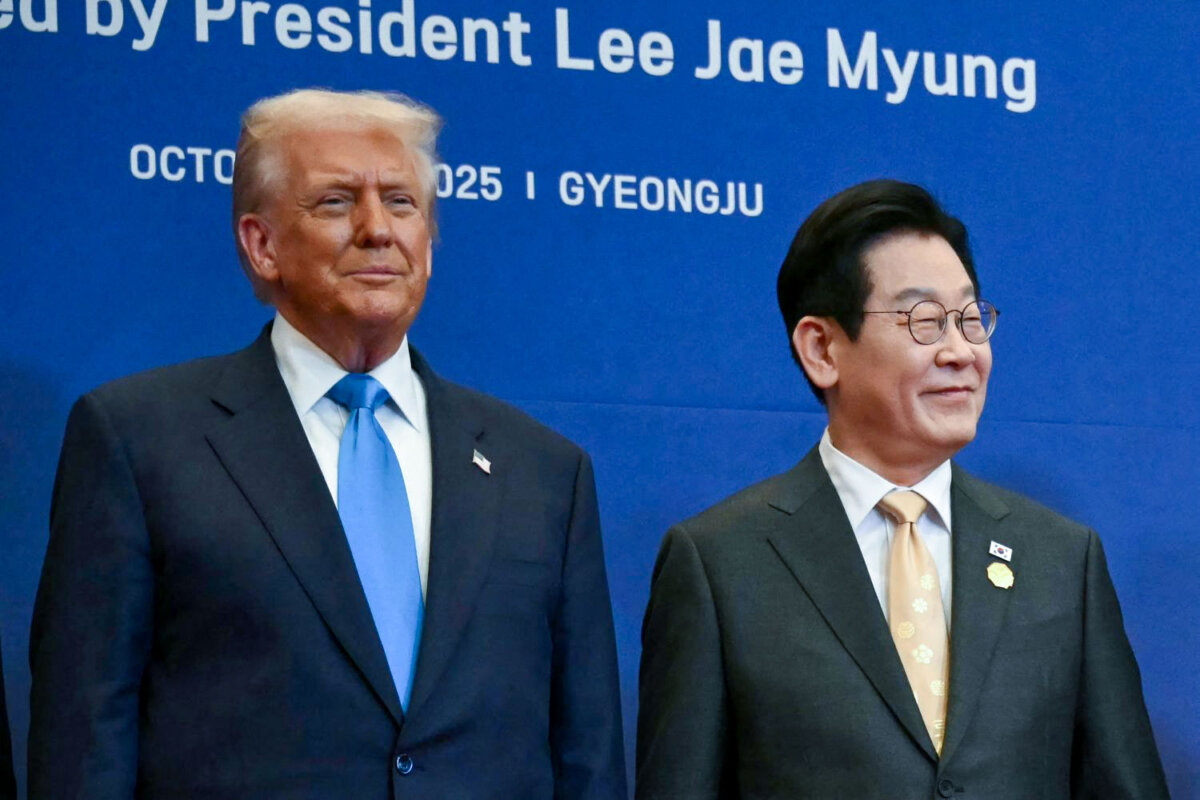

South Korean President Lee Jae-myung said his government and the U.S. administration have finalized a comprehensive joint fact sheet outlining trade and national security agreements between the two nations, following his meeting with U.S. President Donald Trump last month.
The agreement marks the start of joint ventures in shipbuilding, artificial intelligence, and the nuclear sector between the two countries, Lee told a televised briefing.
He said South Korea will also build nuclear-propelled submarines, a development designed to enhance maritime deterrence against North Korean aggression and broader Indo-Pacific tensions.
The released fact sheet is based on the outcomes of the summit between Lee and Trump, which took place in Gyeongju during the Asia-Pacific Economic Cooperation forum last month.
The meeting between the two leaders also resulted in a new tariff regime, with import levies decreasing from 25 percent to 15 percent, to invigorate bilateral commerce while safeguarding American industrial interests.
South Korean officials earlier explained that a delay in finalizing the announcement was due to discussions over the details of Washington’s approval of nuclear-powered submarine production.
Trump, on Oct. 29, said the new agreement, which represents a policy change for the United States in sharing nuclear submarine propulsion technologies, is a modernization of a longstanding military alliance.
“Our Military Alliance is stronger than ever before and, based on that, I have given them approval to build a Nuclear Powered Submarine, rather than the old fashioned, and far less nimble, diesel powered Submarines that they have now. A great trip, with a great President of South Korea!” Trump wrote on Truth Social.
Trump also announced that South Korea would invest $350 billion in the United States. That includes $150 billion for shipbuilding, with another $200 billion in investments to be made under an upcoming deal that’s expected to be signed. Those investments come after Korean Air in August announced a purchase order for 103 Boeing aircraft, totaling around $36 billion.
North Korea Issues Threats
The finalization of the agreement comes amid threats from North Korea.
Last week, North Korean Defense Minister No Kwang-chol said that North Korea would “show more offensive action” against its foes, citing the arrival of a U.S. aircraft carrier in South Korea and security discussions between Washington and Seoul.
One day before Kwang-chol’s remarks, North Korea fired a ballistic missile toward its eastern waters, according to South Korea and Japan.
The minister’s comments came after a visit by Secretary of War Pete Hegseth to South Korea, as well as the arrival of nuclear-powered aircraft carrier the USS George Washington in the port city of Busan, South Korea, on Nov. 5.
South Korea stated in early November that its pursuit of nuclear-powered submarines is “not to generate more of an arms race.”
South Korea’s presidential chief of staff, Kang Hoon-Sik, informed reporters that the development is “the result of persuading China and the U.S. that North Korea has announced [its own] nuclear submarines and we need to prepare correspondingly.”
Ahead of his visit to South Korea, Trump—who met with North Korean leader Kim Jong Un three times during his first term—said he was open to another meeting.
In September, Kim said a meeting could take place if the United States dropped the demand for Pyongyang to abandon its nuclear arsenal.
North Korea currently has about 50 nuclear warheads, according to the Federation of American Scientists.
Reuters and Evgenia Filimianova contributed to this report.
 Friends Read Free
Copy
Facebook
Tweet
Friends Read Free
Copy
Facebook
Tweet