
South Korea’s presidential chief of staff said on Nov. 3 that the country’s pursuit of nuclear-powered submarines is “not to generate more of an arms race.”
Kang Hoon-Sik told reporters that the move is “the result of persuading China and the U.S. that North Korea has announced [its own] nuclear submarines and we need to prepare correspondingly.”
On Oct. 29, U.S. President Donald Trump announced that the United States will share sensitive nuclear propulsion technology to allow its ally to build its own nuclear-powered submarines, in order to be prepared to counter regional threats.
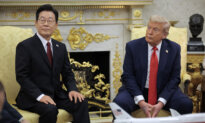
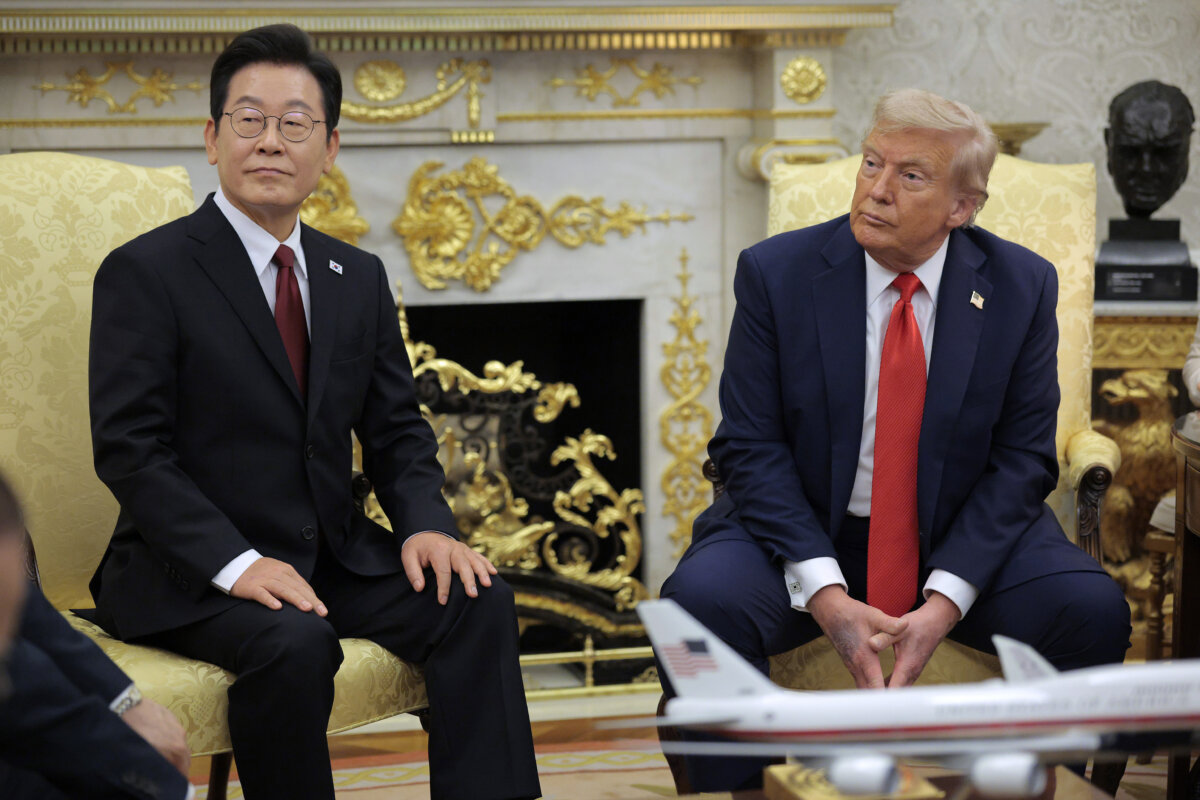
The announcement followed a summit between Trump and South Korean President Lee Jae Myung.
Trump wrote on Truth Social that he had given Seoul approval to build a nuclear-powered submarine, “rather than the old fashioned, and far less nimble, diesel powered Submarines that they have now.”
Trump also praised the U.S. military alliance with South Korea, which he said was “stronger than ever before.”
South Korea has committed $150 billion in U.S. shipbuilding investments, with the submarine slated for construction at the Hanwha Philly Shipyard, which is owned by South Korean conglomerate Hanwha Group.
“South Korea will be building its Nuclear Powered Submarine in the Philadelphia Shipyards, right here in the good ol’ U.S.A. Shipbuilding in our Country will soon be making a BIG COMEBACK. Stay tuned!!!” Trump said in a follow-up post on Truth Social.
No Calls for Nuclear-Armed Submarines
Ahead of the announcement, Lee had stressed that obtaining nuclear-armed submarines was not Seoul’s intention.
“We don’t mean to build nuclear-armed submarines, but because diesel submarines are less capable of submerged navigation, there are restrictions on tracking North Korean or Chinese submarines,” the South Korean president told Trump on Oct. 29.
“So if you allow us to supply fuel … if we build several submarines equipped with conventional weapons … the U.S. military’s burden could be significantly reduced.”
Trump met with Lee in Gyeongju, South Korea, during his trip to Asia, where discussions centered on enhancing defense capabilities and promoting economic cooperation.
As South Korea faces ongoing threats from North Korea’s developing nuclear and missile programs, experts have been debating whether or not the country should arm itself with nuclear weapons.
Nuclear-powered submarines have better underwater endurance, enabling them to conduct extended patrols and track adversarial vessels without needing to surface regularly, unlike diesel-powered models.
The move represents a departure from Washington’s strict controls on nuclear propulsion technology, which were previously shared only with close allies, such as those in the AUKUS pact, of which Australia and the UK are a part.
However, Trump has downplayed the strategic importance of AUKUS, saying U.S. military might is enough to counter any threats from China.
Hegseth in South Korea
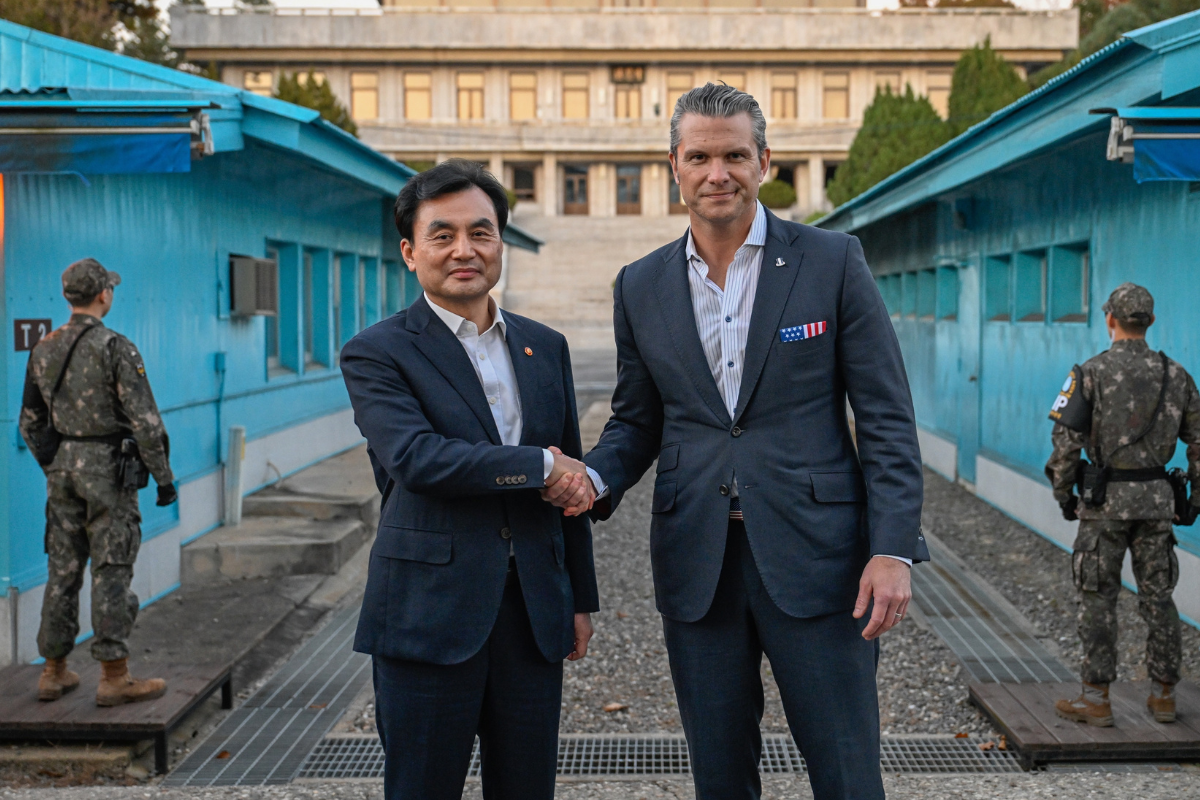
Secretary of War Pete Hegseth was in South Korea on Nov. 3, where he visited the demilitarized zone (DMZ) along the border with North Korea.
Hegseth is due to attend the annual Security Consultative Meeting on Nov. 4 in Seoul with his South Korean counterpart, Ahn Gyu-back. They are expected to discuss cyber and missile defense, as well as regional security, including defense readiness against Pyongyang.
In recent months, Seoul has pulled back on some of its military and other activities to de-escalate tensions with Pyongyang, including stopping its “Voice of Freedom” radio program broadcasts.
“Voice of Freedom” aired items aimed at informing North Koreans about life outside of the isolated communist state, including South Korea’s economic development and K-pop culture.
On Aug. 15, in a speech marking the 80th anniversary of the end of Japanese colonial rule, Lee announced that his government would reinstate a 2018 agreement with North Korea to scale back certain military activities along the border, saying that it would help “prevent accidental clashes between the South and the North, and build military trust.”
The 2018 Comprehensive Military Agreement was a de-escalation measure that halted some military activities between the two countries. The pact included measures such as imposing no-fly zones, ending military drills near the DMZ, and maintaining hotlines.
Kimberly Hayek and Reuters contributed to this report.
 Friends Read Free
Copy
Facebook
Tweet
Friends Read Free
Copy
Facebook
Tweet