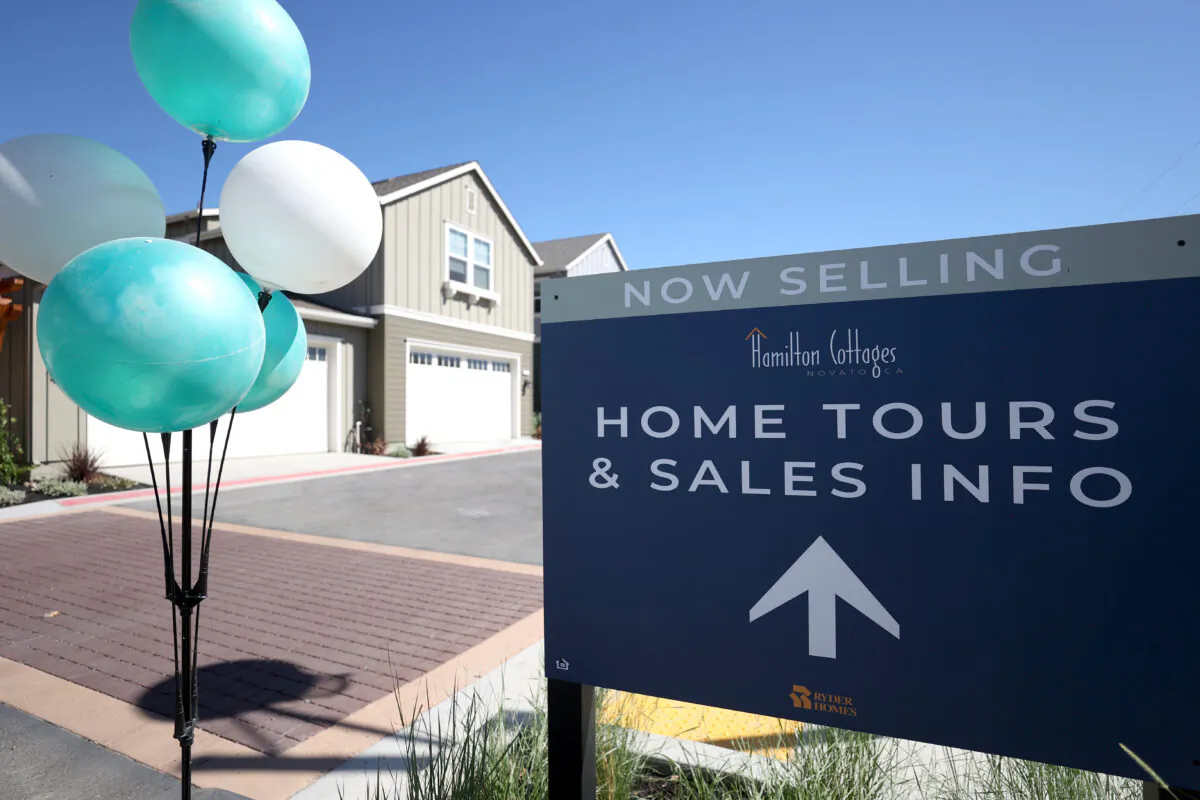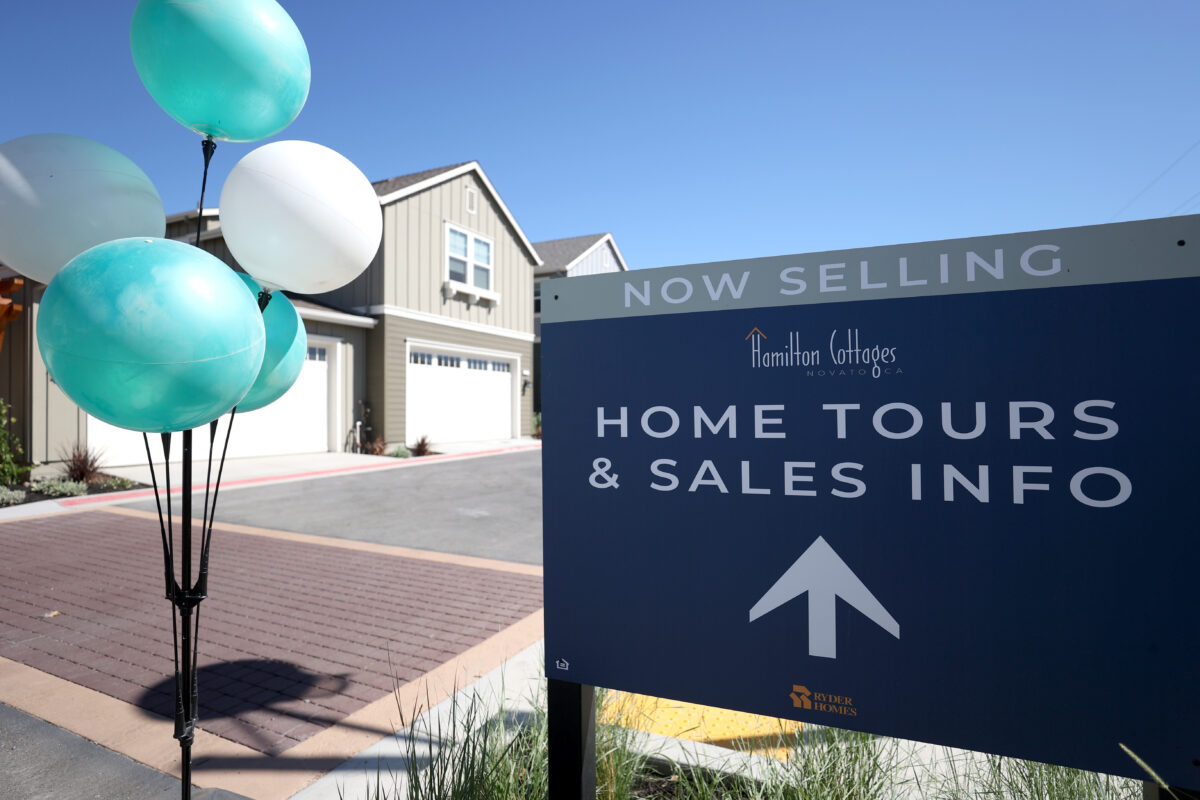

Sales of new homes in the United States fell by double digits in May, as concerns about the nation’s housing market continue to keep potential buyers on the sidelines.
The Department of Housing and Urban Development (HUD) and the Census Bureau reported on June 25 that sales of new single-family homes in May were at a seasonally adjusted annual rate of 623,000. That’s down 13.7 percent from the April rate of 722,000 and 6.3 percent below the May 2024 rate of 665,000.
The seasonally adjusted estimate of new homes for sale at the end of May was 507,000—1.4 percent higher than April’s 500,000 and 8.1 percent above the May 2024 estimate of 469,000.
This indicates a supply of 9.8 months at the current sales pace, the highest level in three years. The months’ supply is 18.1 percent above April’s 8.3 months and 15.3 percent higher than May 2024’s 8.5 months.
Despite the decline in sales volume, the median sales price of new homes sold in May was $426,600, up 3.7 percent from April’s $411,400 and 3 percent higher than the year-ago median of $414,300. The average sales price in May was $522,200, an increase of 2.2 percent from April’s $511,200 and 4.6 percent above the $499,300 average in May 2024.
The closely watched monthly residential sales data compiled by HUD and the Census Bureau follows other key housing reports, which also suggest the U.S. housing market is facing strong headwinds. On June 24, a major Wall Street economic indicator showed that U.S. home prices experienced their slowest growth in two years during the crucial spring selling season.
The monthly S&P CoreLogic Case-Shiller Index revealed that U.S. home prices increased by 2.7 percent year over year in April 2025, compared to a 3.4 percent gain in March. The S&P Dow Jones Indices calculate the average single-family home prices across the United States, based on changes in prices over the past three months.
On June 23, the National Association of Realtors (NAR) reported that existing home sales rose in May after two months of decline, with all regions except the West showing gains. Nationwide, there was a 0.8 percent increase in total existing home sales month over month, reaching a seasonally adjusted annual rate of 4.03 million. This figure was significantly higher than the 3.95 million home sales forecast by a survey of economists across the United States, according to FactSet.
Seattle-based real estate data analytics firm Redfin also reported in its opening session for the week that the U.S. median home sales price reached a record $440,997 in May, but grew by only 0.7 percent year over year, the slowest increase in two years. Redfin recently predicted that home prices will start declining on a year-over-year basis by the end of 2025.
Despite warning signs across the nation’s housing market, some economists and analysts agree that it takes several months of data to identify trustworthy trends. In a June 10 research note, Bank of America Institute’s senior economist David Tinsley wrote that consumer spending fell in May across different categories, reflecting lower gasoline expenses, some payback from earlier tariff-related “buying ahead,” and the impact of relatively bad weather.
Tinsley highlighted a recent Bank of America survey that found older age groups to be relatively more concerned about general inflation, while younger consumers appear to be relatively more worried about broader economic issues, such as housing prices and unemployment rates.
“Of course, this makes sense as younger age groups are more likely to be looking for a new home and dependent on the labor market for their income. Conversely, older age groups may have already paid off their mortgages and are closer to retirement, if not already retired,” Tinsley wrote.
“So it could be that heightened economic anxieties (including those around the labor market and persistently high mortgage rates) are more so impacting the young.”
 Friends Read Free
Copy
Facebook
Tweet
Friends Read Free
Copy
Facebook
Tweet