
Higher energy prices raised producer prices in March, but the jump undershot economists’ expectations, suggesting less underlying pressure than anticipated.
The producer price index—a measure of prices businesses pay for goods and services—jumped by 0.5 percent in March, according to new Bureau of Labor Statistics data released on April 14.
It came in below the consensus forecast of a 1.1 percent rise.
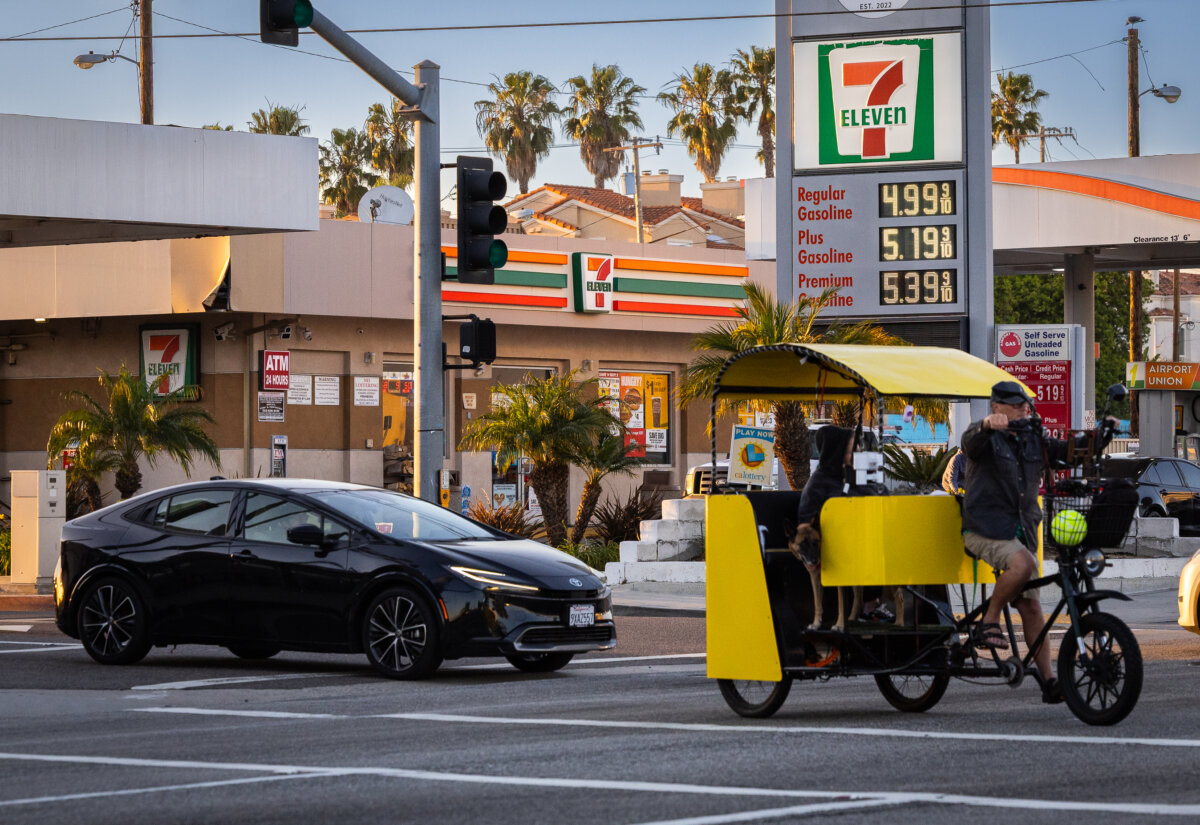
March’s increase was driven entirely by the 1.6 percent jump in final demand goods, the largest since August 2023. Most of this can be traced to higher energy costs, particularly an almost 16 percent spike in gasoline prices.
Other goods also edged up, including diesel and jet fuel, home heating oil, meats, and basic organic chemicals. Conversely, the indexes for fresh and dry vegetables and natural gas declined.
The bureau revised February’s reading down to 0.5 percent from the initial 0.7 percent.
Economists use the producer price index as a pipeline indicator of inflation because firms eventually pass these costs on to customers.
Market watchers paid extra attention to the March report as it could help determine the inflationary fallout from the war in Iran, now in its seventh week.
For now, structural inflation appears to be intact.
Core wholesale inflation, which removes the volatile energy and food categories, ticked up by a less-than-expected 0.1 percent from the downwardly revised 0.3 percent.
Additionally, wholesale inflation excluding food, energy, and trade rose just by 0.2 percent.
Wartime Inflation
March’s consumer price index report suggested that underlying inflation was holding steady.
Core inflation came in below expectations at 2.6 percent and edged higher by 0.2 percent monthly.
Looking ahead to the April data, the Cleveland Federal Reserve’s Nowcasting model estimates core inflation will hold steady at 2.6 percent.
Whether this can continue to be the case is unclear, as various business surveys suggest companies are enduring higher input costs and grappling with various price pressures.
The Institute for Supply Management’s manufacturing and services purchasing managers’ indexes—monthly surveys of executives—show U.S. companies incurring higher costs.
In addition to wrestling with President Donald Trump’s sweeping global tariffs, companies will now have to grapple with surging global energy prices, from $100 oil to $4 gasoline.
While this will impact headline inflation, economic observers are uncertain whether it will eventually filter through the broader U.S. economy and influence structural inflation.
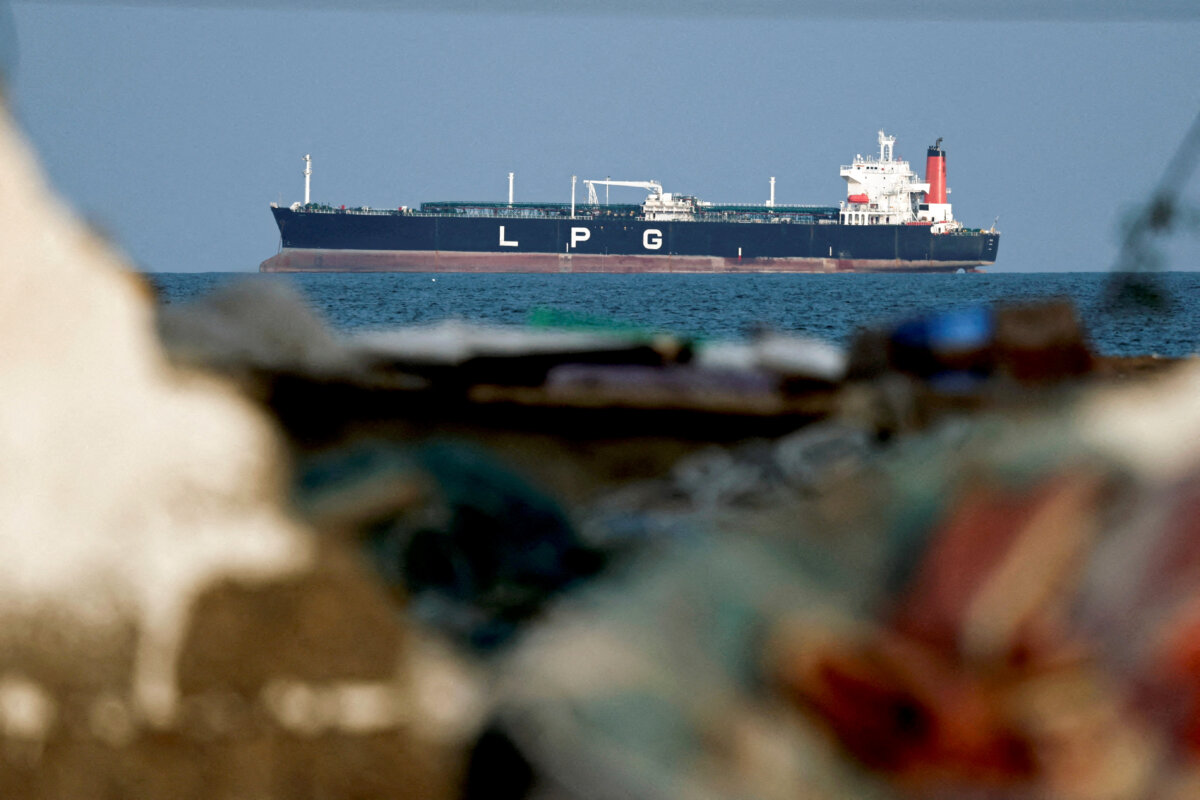
Dallas Federal Reserve economists projected an impact of as much as 0.49 percentage points if the Strait of Hormuz—a vital global chokepoint that handles about a fifth of the world’s oil shipments—were to be closed for three quarters.
One concern, they say, would be the effects of higher household inflation expectations
“A question of great interest to policymakers and market participants is to what extent recent and future retail gasoline price increases driven by this geopolitical event will raise headline and possibly core inflation,” the regional central bank economists said in a recent paper.
“There is also concern that these gasoline price increases may raise household inflation expectations, amplifying the direct impact of higher gasoline prices.”
Since the outbreak of the war in Iran, there has been a divergence between short- and long-term inflation expectations.
This was seen in the University of Michigan’s preliminary April consumer sentiment index. The one-year inflation outlook rose to 4.8 percent, while the five-year forecast remained more subdued at 3.4 percent.
A chorus of monetary policymakers agrees that inflation expectations are well-anchored.
Speaking at a Hoover Institution event on April 10, Fed Governor Stephen Miran argued that inflation is “pretty much unaffected” over the next 12 to 18 months.
“What happens with an oil price is it lifts the price level pretty immediately because it feeds through into gas prices and other stuff immediately,” Miran said. “But then, unless there are second-round effects, you don’t have inflation as a result of oil 12 to 18 months out.”
The U.S. central bank is not expected to lower interest rates anytime soon.
Futures market data suggest investors anticipate the Fed will reduce the benchmark federal funds rate by a quarter point in July 2027, according to the CME FedWatch Tool.
 Friends Read Free
Copy
Facebook
Tweet
Friends Read Free
Copy
Facebook
Tweet