
News Analysis
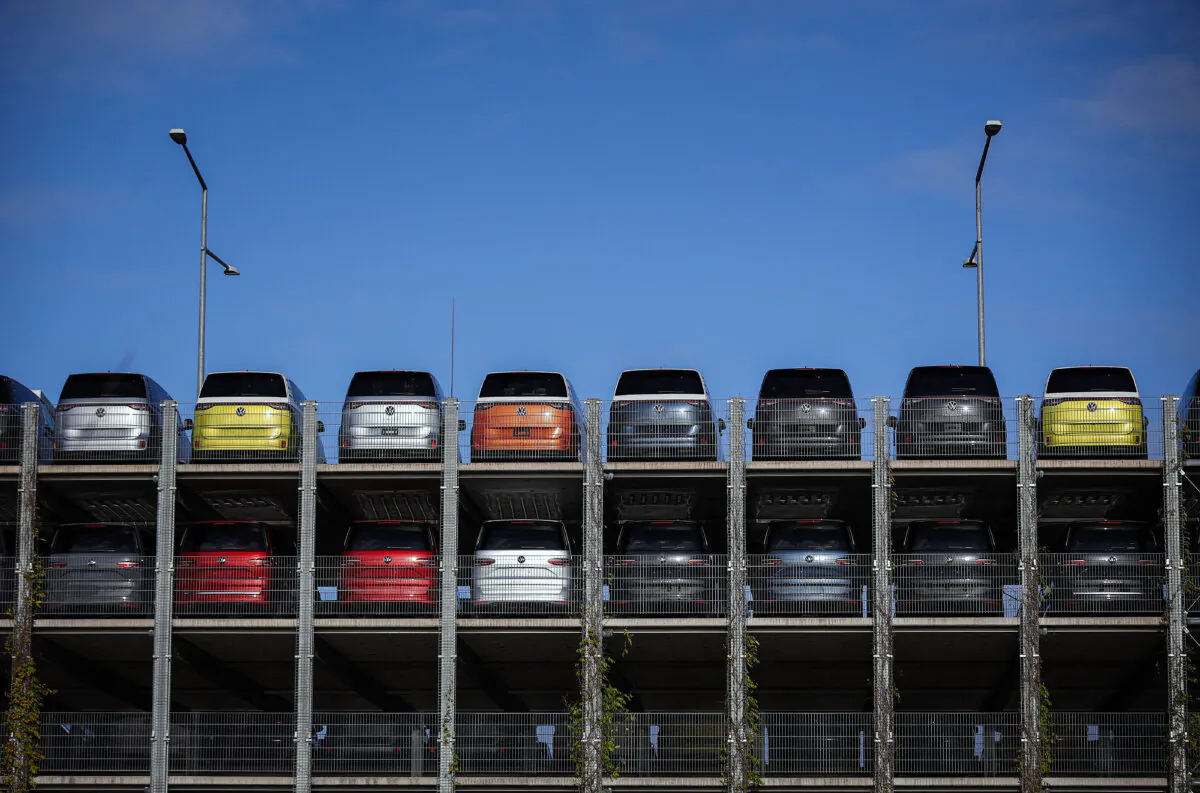
The Volkswagen group has joined Ford and other legacy vehicle manufacturers to introduce low-end budget electric vehicle (EV) models to compete head to head with low-priced zero-emission vehicles (ZEVs) from China that have flooded the European vehicle market.
Europe’s largest auto company announced on Sept. 3 the transfer of the familiar designations of combustion-engine models to its all-electric ID. family models, and the addition of budget models.
The first budget model, the ID. Polo—also known as the ID. 2all—will hit the market in 2026.
“Our model names are firmly anchored in people’s minds,” Thomas Schäfer, CEO of the Volkswagen brand and head of the Brand Group Core and member of the group board of management, said in a statement following the unveiling of the new EV series.
“They stand for a strong brand and embody characteristics such as quality, timeless design, and technologies for all. That’s why we’re moving our well-known names into the future. The ID. Polo is just the beginning.”
Volkswagen’s strategy to transfer more of its traditional brand names to the electric portfolio will pull together the electric and combustion engine vehicles, making customer choices within the brand’s lineup easier.
Meanwhile, Volkswagen’s addition of smaller and more compact electric vehicle models to its portfolio, such as the ID. Polo and ID. Cross, is a sign that the carmaker is responding to a new market reality, where consumers increasingly favor budget cars, as evidenced by the rapid growth of China’s ZEV car sales in Europe.
According to estimates from the U.S. International Trade Commission, China’s EV sales to Europe have grown exponentially, with exports soaring by more than 1,000 percent from 2018 to 2023, with Chinese brands accounting for about 10 percent of the European Union market in mid-2025.
To keep up with the growing European demand for electric vehicles, China’s ZE manufacturers have been accelerating their overseas investment, with BYD announcing plans to construct a new energy vehicle (NEV)—China’s term for ZEVs—production facility in Szeged, Hungary.
That raises questions as to whether the legacy European vehicle manufacturer may be getting too late in the game. In addition, the company didn’t offer any indication regarding the price of its budget EV models to determine whether it can beat the Chinese competition.
Rich Pleeth, founder of Finmile, doubts whether VW has what it takes to fend off Chinese competition.
“Chinese cars now come full of technology, and VW needs to think like a tech company, not like a car company. They have to look at shedding legacy inefficiency. Chinese EVs are already cheap and packed with features; BYD, MG, NIO, and Cherry are producing cars that drivers want to drive with technology to suit,” he told The Epoch Times.
Melanie Musson, an auto industry expert with AutoInsurance.org, takes an optimistic view.
“Volkswagen’s newly unveiled EV has tremendous potential to become the go-to budget EV in Europe. China specializes in inexpensive manufacturing, but it’s also known for its inferior quality. Volkswagen can capitalize on the low-budget market by creating something that lasts and is free from hazardous chemicals in the seats and interiors,” she told The Epoch Times.
Musson held that it’s challenging for European manufacturers to compete with Chinese counterparts because European workers have protections and pay standards that Chinese workers don’t.
“Still, this could be a great opportunity for Volkswagen and the European market,” she said.
VW isn’t the only legacy vehicle manufacturer making its foray into the budget EV market to compete against Chinese EVs, though those rivals have yet to break into the U.S. market.
A couple of months ago, Ford Motor Company, for example, unveiled its Universal EV Platform, which will produce a new generation of electric vehicles, starting with a pickup truck, expected to launch in 2027, at a starting price of approximately $30,000. It will be built with fewer parts and a modified, more efficient assembly process, resulting in a lower cost base that allows the automobile pioneer to compete effectively with low-cost global EV manufacturers, such as China’s BYD.
“We think it is prudent for Ford to plan for an electric future, but unlike the original Model T moment that revolutionized mass manufacturing a century ago, Ford is still playing catch-up when it comes to electric vehicle production. We believe the future of EV profitability remains a ‘show me’ story at Ford,” Jay Cushing, senior bond analyst at Gimme Credit, told The Epoch Times.
“In the meantime, Ford faces the more immediate challenge of stabilizing legacy vehicle profits amid an increasingly challenging tariff and macro backdrop.”
 Friends Read Free
Copy
Facebook
Tweet
Friends Read Free
Copy
Facebook
Tweet