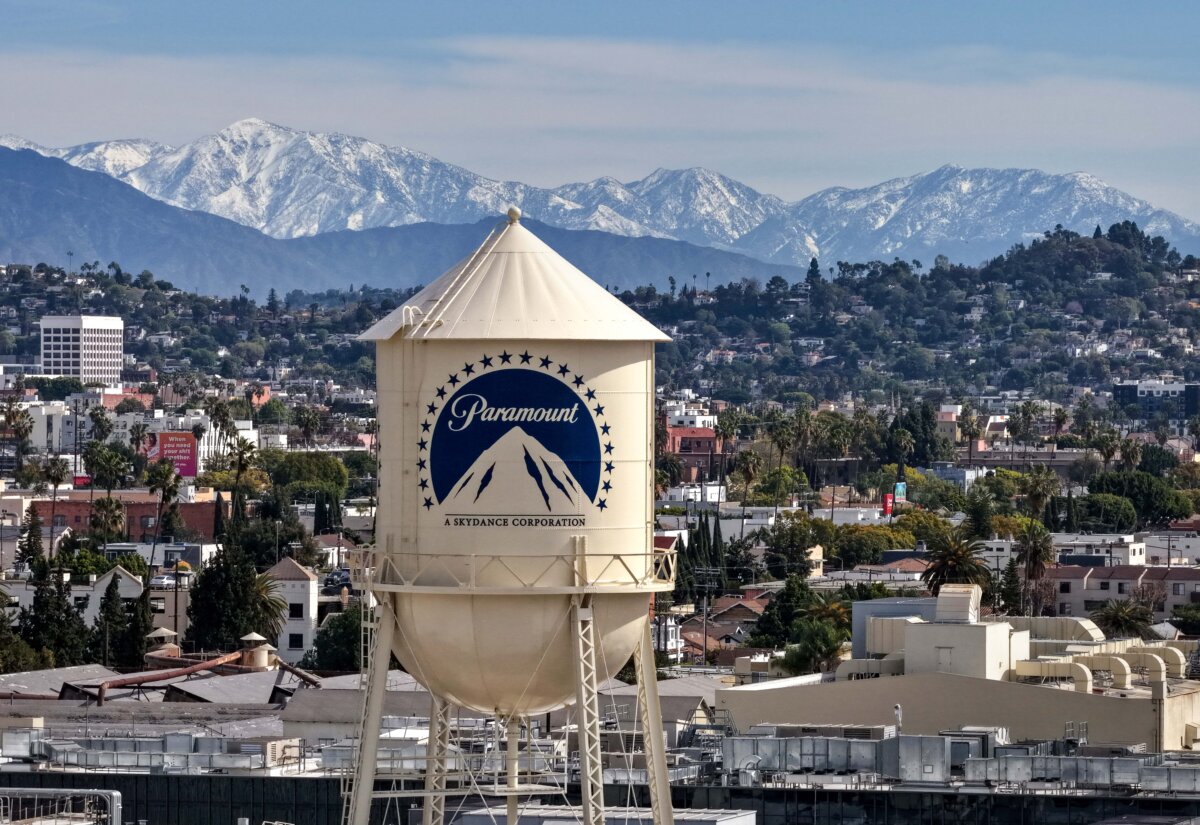

Shareholders of Warner Bros. Discovery overwhelmingly approved Paramount Skydance’s $110 billion acquisition, according to a company statement.
In a special April 23 meeting, Warner Bros. stockholders agreed to support the merger, following months of intense bidding between Paramount and streaming giant Netflix.
Preliminary tallies indicate that Warner Bros. investors voted by a wide margin to approve the merger agreement with Paramount.
The results will be finalized once the independent inspector of elections certifies the numbers. The company will submit the official vote totals to the Securities and Exchange Commission in a Form 8‑K filing.
“We appreciate the support and confidence our stockholders have placed in us to unlock the full value of our world-class entertainment portfolio,” said Samuel A. Di Piazza Jr., chair of the Warner Bros. Discovery board of directors.
“With Paramount, we look forward to creating an exceptional combined company that will expand consumer choice and benefit the global creative talent community.”
Paramount’s final offer for the legacy entertainment empire was an all-cash bid of $31 per share. It also contained several provisions, including an accelerated ticking fee of 25 cents per share per quarter if the deal is not closed by Sept. 30 and a regulatory termination fee of $7 billion.
Netflix eventually walked away and received a $2.8 billion termination fee from Paramount. Netflix co-CEO Ted Sarandos called Paramount an “irrational” bidder and said the company preferred not to overpay for the studio and HBO Max streaming service.
Still, the new deal was widely expected to be approved as the company’s board and various proxy advisory firms encouraged shareholders to support the merger.
David Zaslav, president and CEO of Warner Bros., said the stockholder approval helps the transaction move one step closer to creating value for investors and the industry.
“We will continue to work with Paramount to complete the remaining steps in this process that will create a leading, next-generation media and entertainment company,” he said in a statement.
Balance Sheets and Consolidation
However, scores of actors, writers, and directors signed an open letter this month opposing the deal.
The group warned against further consolidation in the media industry and the reduction of competition.
“Our industry is already under severe strain, in large part due to prior waves of consolidation,” the letter, which has received more than 4,000 signatures to date, states.
“We have witnessed a steep decline in the number of films produced and released, alongside a narrowing of the kinds of stories that are financed and distributed.
“Increasingly, a small number of powerful entities determine what gets made—and on what terms—leaving creators and independent businesses with fewer viable paths to sustain their work.”
Glenn Close, Bryan Cranston, Jane Fonda, Cynthia Nixon, and Ben Stiller were among the signatories.
Some market observers, including John Belton, portfolio manager at Gabelli Funds, are also not exactly keen on Warner Bros. and Paramount coming together, citing their balance sheets.
“I think these media companies, particularly Paramount and Warner [Bros.], especially after this deal, are going to have very stretched balance sheets,” Belton said in a note emailed to The Epoch Times.

During a March 2 conference call with analysts, it was revealed that a Paramount–Warner Bros. merger would create a company with about $79 billion in net debt. Paramount aims to achieve $6 billion in cost savings without affecting labor, real estate, content creation, or other assets.
Paramount (PSKY) share prices have struggled this year, sliding by about 14 percent to below $12.
Abandoning its pursuit of Warner Bros. has also been bullish for Netflix, as the platform has recovered this year’s losses. Netflix (NFLX) share prices are now up by about 3 percent year to date.
An intense bidding war helped resuscitate the Warner Bros. stock. After trading at about $7 a year ago, shares have rocketed by more than 200 percent to above $27.
Regulatory Challenges
The next hurdle to overcome for Paramount and Warner Bros. could be regulatory approval—at home and abroad.
The UK’s antitrust watchdog, for example, plans to launch an investigation into the merger soon.
“The film and TV industries contribute billions to our economy, so it’s important we assess whether deals between studios may harm competition,” a spokesperson for the Competition and Markets Authority told Reuters in a statement. “We expect to launch our phase [one] investigation in the coming weeks.”
Sen. Elizabeth Warren (D-Mass.) and a dozen other Democratic colleagues urged the Department of Justice and the Treasury Department to scrutinize the merger for antitrust and national security risks.
“Congress has a responsibility to ensure that merger enforcement in concentrated creative industries—particularly transactions involving substantial foreign capital—is conducted rigorously and in strict adherence to federal law,” the lawmakers said in the March 12 letter.
Alden Abbott, the Federal Trade Commission’s chief legal officer during President Donald Trump’s first term, said the regulatory scrutiny is “much ado about nothing.”
In an April 13 blog post, Abbott noted that the transactions do not present anticompetitive harm and provide “plausible efficiencies to strengthen competition against larger, well-capitalized rivals.”
“Ongoing monitoring makes sense as the industry evolves,” he said. “But based on current evidence, the case for intervention looks weak.”
Federal Communications Commission Chairman Brendan Carr told CNBC in March that the Paramount–Warner Bros. deal appears “cleaner” than the Netflix alternative.
“If there’s any [Federal Communications Commission] role at all, it’ll be a pretty minimal role,” Carr said. “And I think this is a good deal, and I think it should get through pretty quickly.”
The transaction is projected to be completed in the third quarter of 2026.
Kimberly Hayek, Jackson Richman, and Reuters contributed to this report.
 Friends Read Free
Copy
Facebook
Tweet
Friends Read Free
Copy
Facebook
Tweet