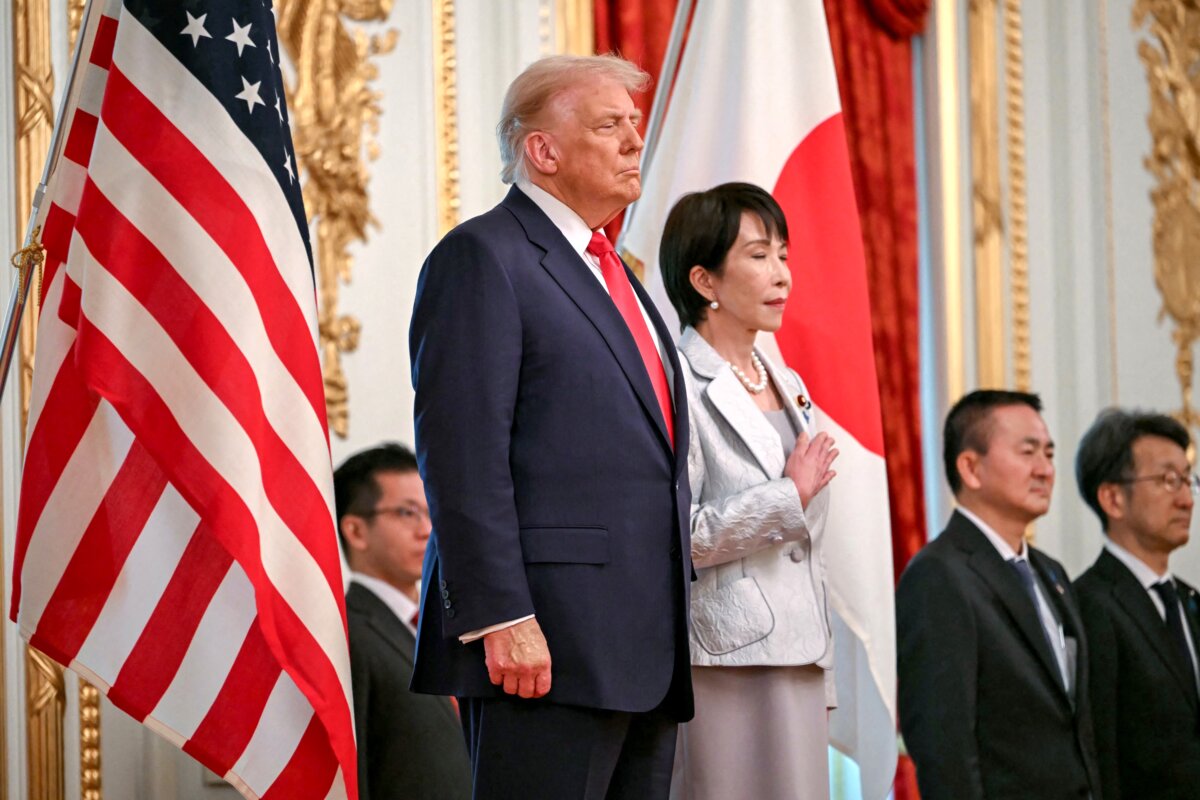

As Beijing intensifies its intimidation campaign against Tokyo for the Japanese prime minister’s comments regarding Taiwan, experts say this aggression is instead pushing Japan to accelerate its defense modernization and deepen its security ties with Washington.
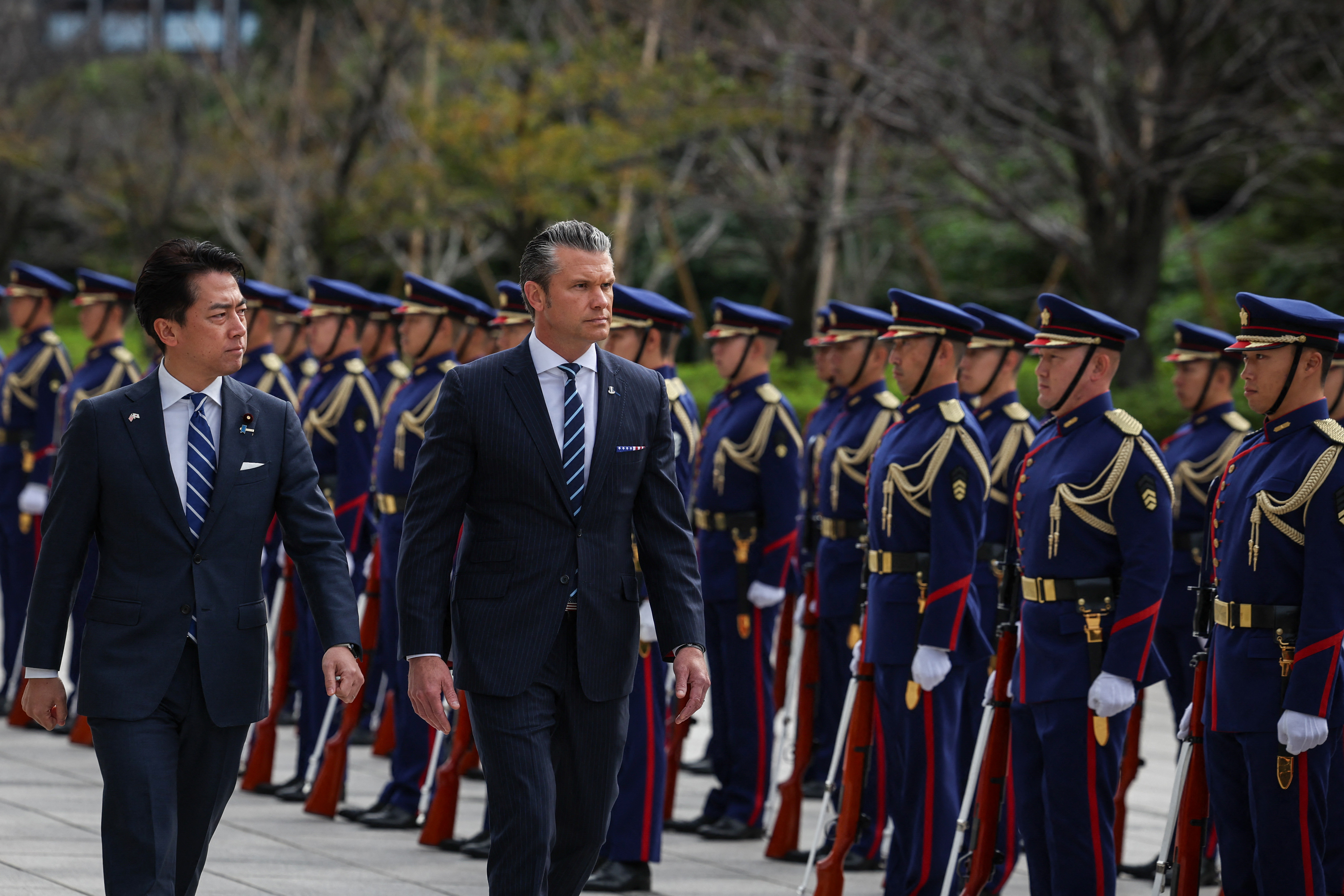
Japan’s Defense Minister Shinjiro Koizumi said on Dec. 10 that Beijing failed to provide “sufficient information” to ensure safety when notifying Tokyo that its military drills would begin, according to a Jiji Press report.
Koizumi’s comments followed incidents on Dec. 6 in which Chinese fighter jets that took off from Chinese carrier Liaoning intermittently locked their radars on Japanese aircraft near Okinawa. Japanese Prime Minister Sanae Takaichi called the actions “extremely regrettable.”
These maneuvers constitute one of the latest aggressive gray zone tactics from Beijing in response to Takaichi’s remarks on Taiwan, further escalating friction between the two neighbors following the abrupt cancellation of several Japanese cultural events in China and a blanket ban on Japanese seafood imports.
Calculated Brinkmanship
Cheng Chin-mo, an associate professor at the Department of Diplomacy and International Relations at Tamkang University in Taiwan, said that these operations are calculated moves to challenge Japan’s sovereignty over Okinawa by amplifying narratives questioning the island group’s status while signaling the high strategic significance of the area to the Chinese Communist Party (CCP).
“Okinawa functions as the critical junction between Japan and Taiwan, hosting major U.S. air bases less than one hour’s flight from Taiwan, meaning Beijing’s encroachment in this strategic location signifies a direct provocation testing the United States–Japan alliance,” Cheng told The Epoch Times.
Cheng said that by exploiting local grievances against the American troop presence, the Chinese regime aims to deepen divisions between Okinawa and Tokyo and exert intense political pressure on the Japanese government, a strategy he said is designed to deflect attention from the party’s deepening domestic crises.
“The CCP is facing an imminent collapse, or at least a significant crisis in its economy and society, while internal political struggles have led to purges of high-ranking officers, so conducting gray zone operations against Okinawa helps vent domestic nationalist sentiment and divert attention,” said Cheng.
Robert Eldridge, director of North Asia for the Global Risk Mitigation Foundation in Hawaii, warned that Beijing’s “one step before firing” brinkmanship represents a deliberate strategic gambit intended to throw the new Takaichi administration off balance.
“Not only vis-à-vis Taiwan, but now the Senkakus and Okinawa, China has been increasing military pressure, trying to see how far they can go, and then when they do that, they create a new status quo,” Eldridge told The Epoch Times.
Economic and Military Coercion
Eldridge said that Beijing’s trajectory is bound to be escalatory and dangerous, describing the potential scope of its actions as “unlimited” and likely spearheaded by economic coercion.
“It will use its economic influence within Japan to cause chaos because there are approximately 1 million Chinese living there,” Eldridge predicted. “Other forms of economic warfare include cutting off imports from Japan, particularly agricultural and seafood products, and [restricting] exports from China [to Japan], disrupting the supply chain in the Japanese economy, particularly manufacturing.”
Beyond trade disruptions, Eldridge pointed to Beijing’s continued use of legal warfare as a deliberate strategy that will misinterpret Japan’s defensive posture and undermine its territorial boundaries.
“It’s attempting to delegitimize Japan’s territory by claiming there is an independence movement in Okinawa,” he said. “It’s calling into question Japan’s ownership of Okinawa. This is cognitive warfare, certainly gray zone stuff.”
The pressure campaign has extended to joint military operations. On Dec. 9, China and Russia conducted a joint bomber patrol around Japan, with two Chinese H-6 bombers linking up with two Russian Tu-95 nuclear-capable bombers in the East China Sea—a development that analysts say signals further escalation ahead.
Pointing to such joint operations, Cheng anticipated that Beijing would only continue to intensify its gray zone aggression, potentially escalating to a blockade-style encirclement of Japan—similar to the large-scale military drills launched in 2022 around Taiwan following then-U.S. House Speaker Nancy Pelosi’s visit.
“In such a scenario, they will likely deploy military assets along Japan’s territorial waters to threaten Tokyo, replicating that model of intimidation,” Cheng said. “While I believe China will exercise restraint to avoid a war, they will use these encirclement drills to seek any opportunity for provocation and continuously pressure Japan.”
Strategic Backlash
Beijing’s escalations have drawn condemnation from Washington. A State Department spokesperson stated on Dec. 9 that China’s actions “are not conducive to regional peace and stability,” emphasizing that the U.S.–Japan alliance remains “stronger and more united than ever.”
Saho Matsumoto, a professor at Nihon University’s College of International Relations in Japan, noted that Beijing is highly sensitive to how it is perceived by the international community—particularly the Global South—and fears being labeled a disrupter.
“Japan could use this incident to show that China is the one causing trouble and disturbing stability, not us,” Matsumoto told The Epoch Times. “We Japanese are trying to do every possible thing to maintain Indo-Pacific stability.”
Cheng said that Beijing’s action is inadvertently strengthening the U.S.–Japan security alliance and accelerating Japan’s defense modernization.
“The most concrete example of this tightened military cooperation is the Dec. 10 U.S.–Japan joint air drills, marking the first assertion of U.S. military presence since China commenced its regional exercises last week,” Cheng said.
“Furthermore, Japan may move beyond its traditional self-defense constraints; the more the CCP escalates regional military threats, the more it will drive the U.S. and Japan to bolster their military deployments.”
Taking a more hardline stance, Eldridge advocated for a total strategic severance, arguing that the free world must actively dismantle the financial engine that powers Beijing’s global ambitions.
“We need to cut off China’s ability to expand economically because that allows it to expand politically, diplomatically, and militarily,” he said. “In the 1980s, U.S. President Ronald Reagan described the Soviet Union as the ‘Evil Empire,’ but the [CCP] is the modern-day Evil Empire. And the Communist Party of China needs to be destroyed.”
 Friends Read Free
Copy
Facebook
Tweet
Friends Read Free
Copy
Facebook
Tweet