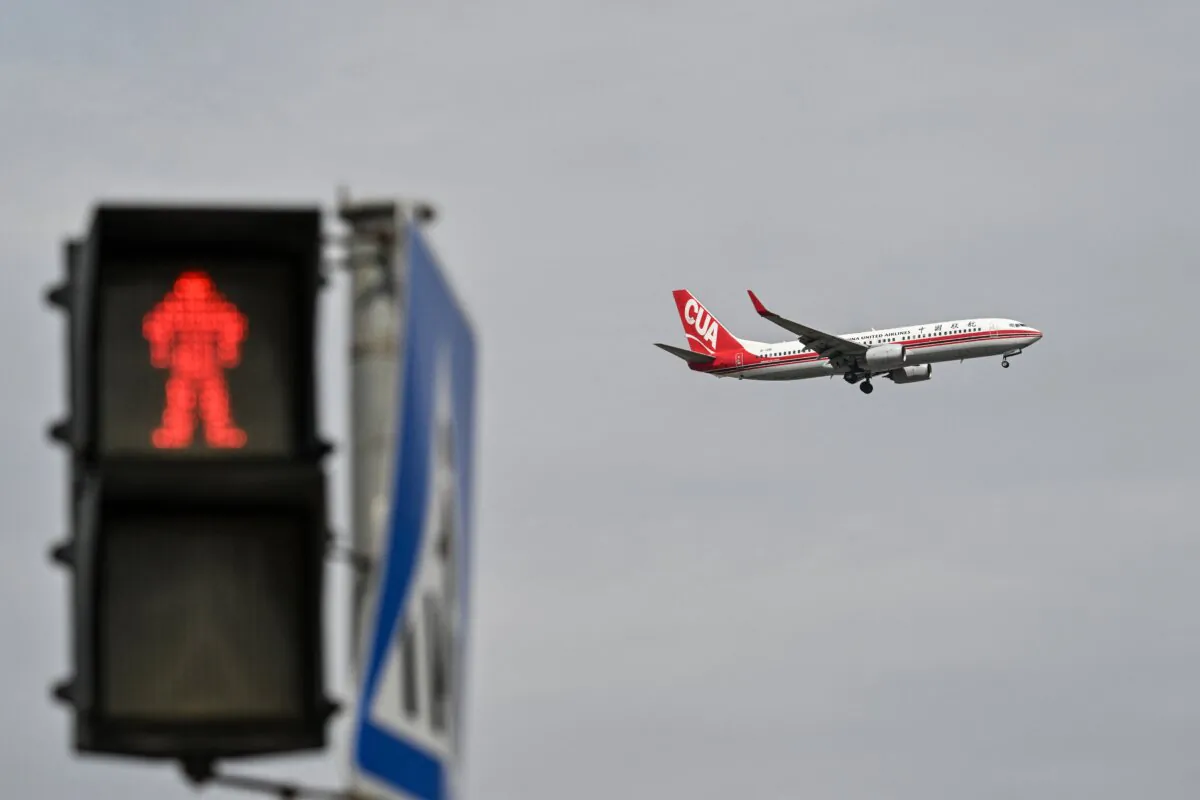

China will import 200 Boeing aircraft as part of limited trade agreements reached after last week’s Trump–Xi summit, the Chinese commerce ministry announced on Wednesday.
The ministry said the United States will provide sufficient guarantees for engine and parts supply under the deal. It described the purchases as following commercial principles and airline needs.
“According to the important consensus reached by the two heads of state, Chinese airlines will introduce 200 Boeing aircraft according to their own air transport development needs on a commercial basis,” the ministry’s readout stated.
The two sides also agreed on measures to improve market access for some agricultural products. China will restore registration for qualified U.S. beef importers, resume poultry imports from certain U.S. states, and speed up reviews for some U.S. beef companies, it said.
In return, the United States committed to lifting automatic detention measures on Chinese dairy products in place since 2008 and to make progress on similar restrictions affecting three categories of Chinese aquatic products. It also approved trial imports of certain bonsai products from China.
A White House fact sheet released on May 17 said China will purchase at least $17 billion per year of U.S. agricultural products in 2026 (prorated), 2027, and 2028, beyond existing soybean commitments. The Chinese statement did not mention this dollar figure.
The agreements include discussions on reciprocal tariff reductions.
Both sides will consider tariff cuts on goods worth at least $30 billion each under a new trade council mechanism, the Chinese ministry said. Products agreed upon could eventually face most-favored-nation rates or lower.
The ministry expressed hope that U.S. tariffs on Chinese goods will not exceed levels set in last year’s Kuala Lumpur arrangement and that further unilateral tariffs will be removed in future talks.
On rare earths and export controls, the two sides held discussions and will jointly address legitimate concerns. China said it applies controls in line with its laws and reviews civilian-use applications.
The deals follow President Donald Trump’s visit to Beijing from May 13 to 15. The Chinese ministry described the outcome as positive consensus from preparatory talks in South Korea and the leaders’ meetings.
The White House presented the steps as delivering for American workers, farmers, and industry. It highlighted the creation of U.S.–China Boards of Trade and Investment, which will facilitate economic cooperation.
These steps build on a trade truce agreed in Kuala Lumpur in October last year, which paused certain tariffs and restrictions until this November.
The Chinese side said both countries discussed extending that arrangement.
The latest announcements focus on specific areas of aviation and agriculture rather than a broad resolution of trade tensions. Further details on implementation are expected through the new bilateral councils.
 Friends Read Free
Copy
Facebook
Tweet
Friends Read Free
Copy
Facebook
Tweet