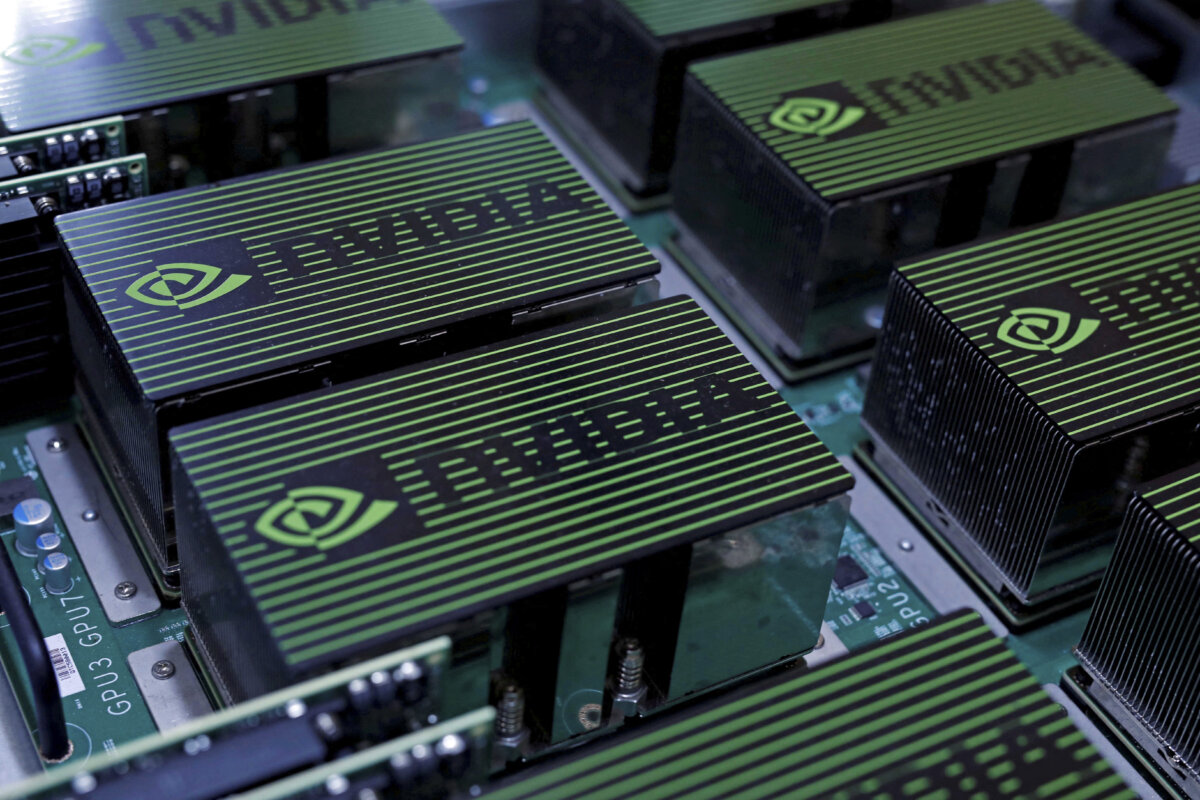

The Chinese communist regime continues to acquire advanced artificial intelligence (AI) chips through other countries despite new guidance from the U.S. Department of Commerce to restrict its access, according to insiders within the Chinese regime’s system who spoke with The Epoch Times.
The U.S. Department of Commerce and the department’s Bureau of Industry and Security (BIS) issued guidance on May 31 to enforce license requirements for exporting advanced AI chips to entities headquartered in China with entities located outside China.
“BIS issued guidance clarifying export license requirements that have been in place since 2023,” a bureau spokesperson said. “BIS will continue to enforce export controls rigorously to safeguard critical American technology.”
The new guidance is aimed at closing a loophole through which Chinese companies acquire advanced AI chips such as Nvidia’s Blackwell series via their overseas subsidiaries in Malaysia or Singapore, among other countries.
The number of AI chips that have already been exported to China is estimated to be in the hundreds of thousands by industry professionals.
Former State Department official Chris McGuire, an expert on technology and national security, wrote in a social media post on May 31 that the loophole allowed the overseas subsidiaries of Chinese companies to buy Nvidia Blackwell chips without a license.
“This is a HUGE problem,” he wrote. “Chinese companies have been buying these chips, very likely at scale.”
The United States has curbed advanced AI chip exports to China in recent years primarily for national security reasons. The U.S. restrictions aim to prevent the Chinese regime from using cutting-edge American semiconductors, such as those from Nvidia and AMD, to strengthen its military, develop advanced autonomous weapons, and improve intelligence and surveillance networks.
Previously, U.S. President Donald Trump had authorized Nvidia to sell its less advanced H200 series chips to China; however, the Chinese authorities have yet to approve Chinese enterprises’ procurement or importation of these chips.
CCP’s Ways to Bypass US Restrictions
Zhong Nan, an insider with close ties to China’s Ministry of Commerce who used a pseudonym out of fear of reprisal, told The Epoch Times that despite the latest U.S. restriction, the Chinese regime is still attempting to procure H200 chips and more advanced series through overseas channels.
“In reality, it remains possible to bypass U.S. export controls and acquire H200 chips and higher-end ones from abroad, albeit in limited quantities,” he said.
“Currently, these smuggled high-end chips are primarily directed toward state-designated technology enterprises for use in artificial intelligence [research and development]. The chips restricted by the United States this time were the H100 and A100 models, which are in the highest demand; while there is certainly a need for the H200, the demand for it is not as great as for the former two. What they truly desire most is the B200 chip.”
McGuire wrote in his post that the guidance closes the loophole, but leaves another open. That loophole drops the requirement that Taiwan-based Taiwan Semiconductor Manufacturing Co. (TSMC) and other foundries conduct extra due diligence to ensure that the high-end AI chips they are making are not for Chinese front companies. He wrote that the issue was not fixed by the guidance.
Wang He, a U.S.-based China analyst, told The Epoch Times that the ruling Chinese Communist Party (CCP) is always “seizing every opportunity” to get what it wants.
“Even if this loophole in the U.S. policy did not exist, the CCP would still manage to acquire a significant number of U.S. chips through large-scale smuggling,” Wang said. “Therefore, the actual effectiveness of the U.S. government’s restriction on advanced chips to China is not as great as the administration imagines.”
The Chinese authorities may “turn a blind eye” on the Chinese regime’s ban on the import of the H200 series, allowing Chinese companies to continue acquiring H200 chips through various means, said Su Tzu-yun, researcher and director of the Division of Defense Strategy and Resources at Taiwan’s Institute for National Defense and Security Research.
“Although the H200 series chips are no longer the most cutting-edge available, they remain beneficial for China’s domestic sector,” Su told The Epoch Times. “Specifically, their advanced computing power enables the Chinese companies to enhance the capabilities of their software models.”
An insider within the CCP system in Beijing, who requested anonymity out of fear of reprisal, told The Epoch Times that the CCP is not approving the import of H200 chips not because China has no need for them, but because Beijing is unwilling to let the outside world see that China’s AI development remains dependent on U.S. chips.
“More than 20 companies have already applied to the CCP’s Ministry of Commerce to purchase chips,” the insider said. “The H100 and A100 chips are highly sought-after commodities. Currently, they are being imported primarily through Hong Kong.”
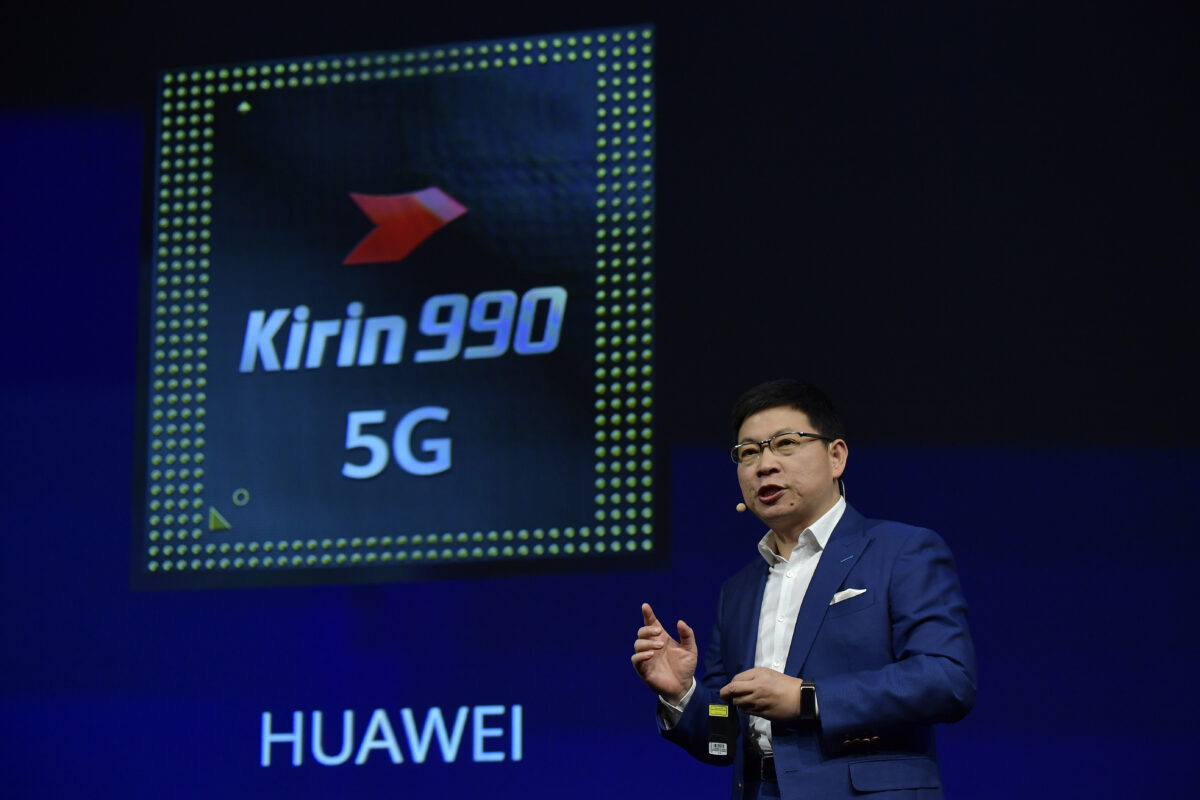
The CCP has not approved the procurement of the H200 chips, stating that the regime wants to promote domestic research and development, while the Chinese telecommunications giant Huawei has unveiled its “Tao’s Law” AI chips.
Su said that “Tao’s Law” is basically an old technology: “Taiwan’s TSMC utilized it as early as 10 years ago.”
He said China’s domestically produced chips still suffer from numerous technological shortcomings.
“Huawei is currently hamstrung by manufacturing process limitations,” Su said. “While it may attempt to mislead the market by touting a ‘Tao’s Law,’ the fact that the CCP’s illicit smuggling of chips through Southeast Asia and even from Japan or Taiwan demonstrates that its current domestic chip production can only compensate for a lack of computing power through sheer volume.”
Jiang Peili, a technician at a Chinese technology company who used a pseudonym out of fear of reprisal, told The Epoch Times that the CCP is shifting its development focus toward the field of AI, leading to an ever-increasing demand for chips. However, in terms of materials science and manufacturing processes, China still lags behind TSMC, Samsung, and SK Hynix by more than 15 years, and its product yield rates remain low, he said.
“When China manufactures a seven-nanometer chip, the yield rate stands at a mere 50 percent, making it more practical to simply purchase American chips instead,” Jiang said.
“Yet, in CCP leader Xi Jinping’s view, this economically inefficient undertaking is the indispensable path to developing China’s semiconductor industry. However, many of the materials required for chip manufacturing must still be imported from other countries. For example, if Japan were to cut off supplies, wouldn’t those materials be unobtainable as well?”
In addition, the CCP has sought to catch up with the United States by recruiting American technology professionals and AI engineers via LinkedIn and other channels in recent years, according to international media reports.
During the first half of this year, the CCP recruited a cohort of AI talent from the United States and Europe through high-paying offers and enlisted personnel from related industries such as chip manufacturing, packaging, and materials, encouraging them to bring their wives and children to China, Jiang said.
To entice these AI professionals to move to China, he said, “They are offered a comprehensive, one-stop service designed to look after the families of high-end foreign talent, including employment assistance for spouses, placement of children in international schools, and free medical care for them.”
Su said the U.S. strategy is to curb the pace of the CCP’s progress in the software sector, thereby maintaining a technological gap relative to Beijing.
“The United States currently aims to freeze the CCP at its present level, rendering it unable to advance,” Su said. “Meanwhile, the United States and other democratic nations, continuously leveraging TSMC’s technology, keep pulling further ahead to widen the distance.”
Zhou Yu, Cheng Wen, Yi Ru, and Reuters contributed to this report.
 Friends Read Free
Copy
Facebook
Tweet
Friends Read Free
Copy
Facebook
Tweet