
China’s long-running effort to revive domestic consumption is showing fresh signs of strain, as merchants and residents in major cities say consumers are spending less, avoiding discretionary purchases, and increasingly turning to cheaper alternatives amid mounting economic uncertainty.
Official data appears to reflect the broader pullback in consumer activity.
Chinese media outlet Economic Daily on May 25 cited figures from the People’s Bank of China showing that the number of credit cards and combined debit-credit cards fell to 687 million by the end of the first quarter of 2026, down 9 million from the end of 2025. After peaking at 807 million cards in the third quarter of 2022, the total has declined for 14 consecutive quarters, falling by roughly 120 million cards over more than three years, and has returned to levels last seen in 2018.
Business owners and residents in Shanghai and Chengdu say that weakening consumer confidence is spreading beyond isolated sectors and becoming more visible in everyday life, from quieter supermarkets to declining clothing sales and shuttered retail shops.
Several business owners and a scholar spoke to The Epoch Times on condition of anonymity or only publishing their surnames out of fear of reprisal.
“The issue is that people no longer feel secure enough to spend money,” a Chinese financial scholar told the publication. “China’s so-called internal circulation strategy cannot function simply through slogans.”
“Internal circulation” refers to the regime’s strategy of promoting domestic consumption of goods, seeking to reduce reliance on foreign trade and exports.
Weak Consumer Spending
A garment wholesaler in Shanghai, surnamed Liu, told The Epoch Times that sales have weakened noticeably since the Lunar New Year holidays.
“Jeans used to sell very well because most young people liked them,” Liu said. “But over the past three or four months, sales volume has dropped about 30 percent compared to the same period last year.”
He said younger consumers have become increasingly cautious about spending, forcing many clothing manufacturers to reduce production or outsource orders to smaller factories.
“Young people are far less willing to spend money than before,” he said.
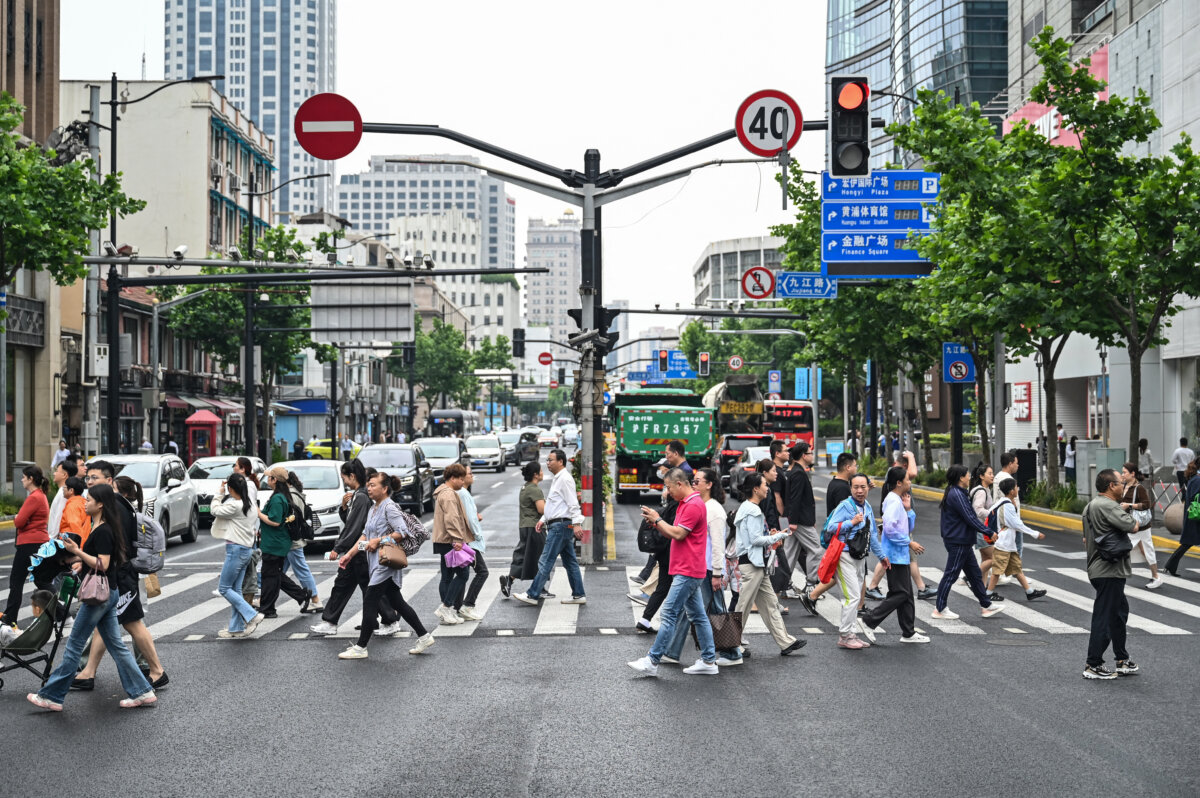
A resident of Shanghai’s Huangpu District, surnamed Chen, told The Epoch Times that large supermarkets that once attracted crowds now appear noticeably quieter.
“I rarely go to big supermarkets anymore,” Chen said. “In the past, checkout lines were always long. Now there are only a handful of customers.”
She said many people have shifted toward cheaper neighborhood vendors and outdoor roadside markets.
“People who used to buy vegetables at supermarkets now go to small street shops instead,” she said. “Near my home, many clothing stores have closed and turned into vegetable shops. Vegetables are cheap, and those businesses are doing well.”
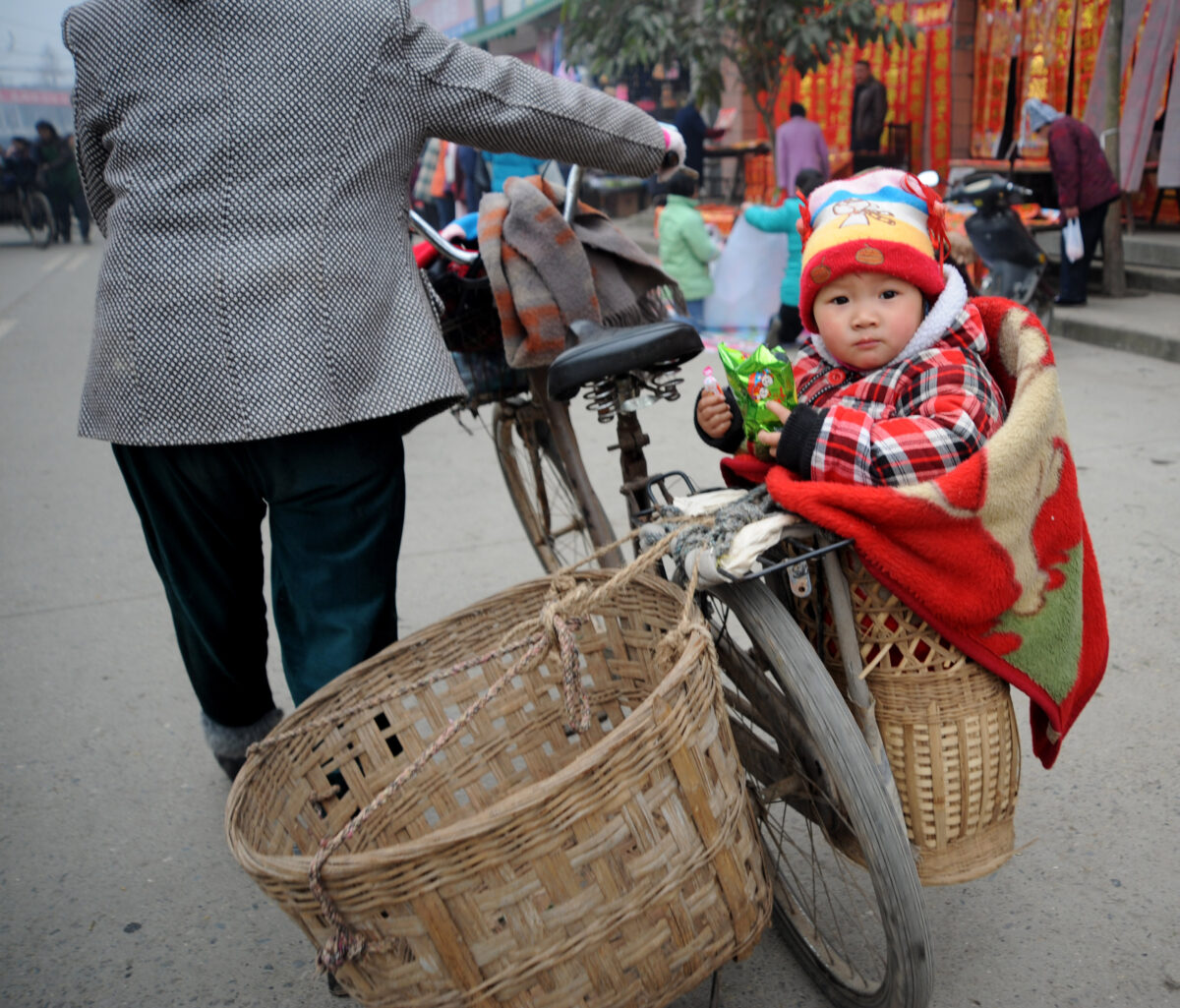
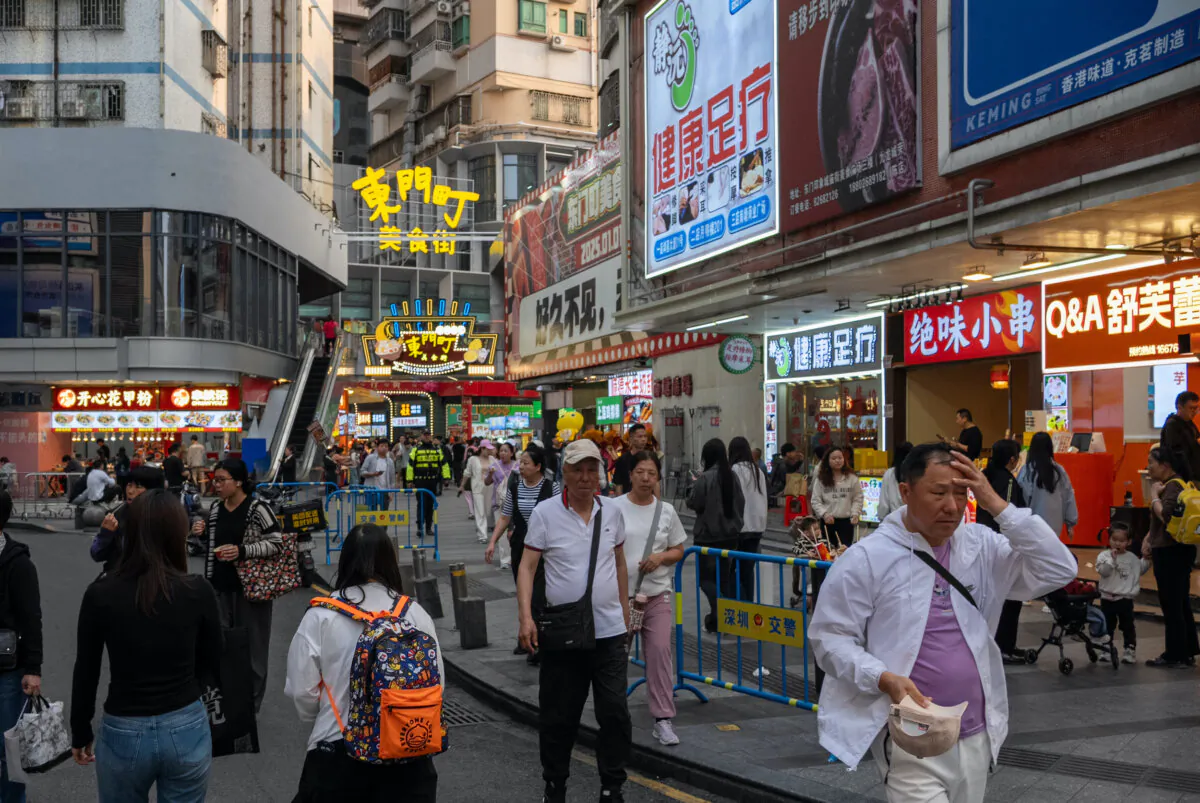
In Chengdu, China, residents say foot traffic has not translated into stronger spending.
A local resident surnamed He told The Epoch Times that one of Chengdu’s busiest commercial districts is crowded on the surface but weak in actual sales.
“It still looks busy because many people are walking around,” he said. “But once you enter the stores, you realize most people are just browsing. Very few are actually buying anything.”
He added that online shopping e-commerce platforms such as Taobao and JD.com have squeezed traditional retailers out of business.
Regime Emphasis on Domestic Spending
In recent years, the Chinese regime has repeatedly emphasized boosting domestic demand and strengthening what Beijing calls the “domestic circulation” economy—a strategy designed to rely more heavily on internal consumption while reducing dependence on foreign markets.
The Chinese financial scholar said Beijing’s domestic consumption strategy depends on stable incomes and public confidence in the future—conditions that he believes are deteriorating.
“[People] need to believe that tomorrow won’t be worse than today,” he said.
He pointed to worsening employment conditions for university graduates, saying that highly educated young people are increasingly struggling to find stable work.
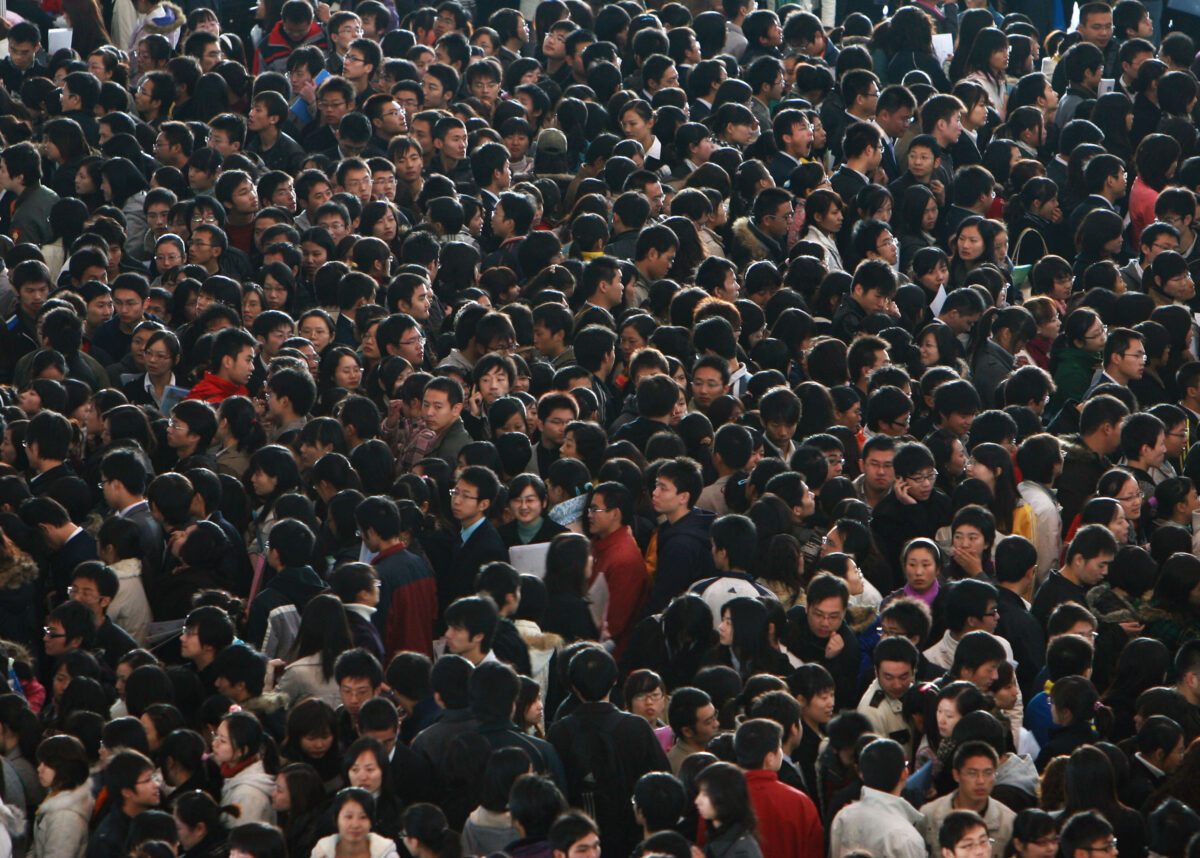
“A Ph.D. graduate ends up delivering food, while college graduates send out hundreds of resumes without finding jobs that match their qualifications,” the scholar said.
Chinese state media Xinhua News Agency reported that the country is expected to produce 12.7 million university graduates this year, adding further pressure to an already strained labor market.
“How are these young people supposed to feel confident enough to spend?” the scholar said. “The Chinese Communist Party (CCP) wants consumers to drive growth, but it has trapped itself in a dead end.”
The scholar said the CCP has spent years promoting domestic consumption without addressing deeper structural problems, including low household income shares, inadequate social welfare protections, instability in the property sector, and deteriorating employment conditions.
“The core of domestic circulation is not simply encouraging people to spend more money,” he said.
“It’s making sure people actually have the ability and confidence to spend.
“If income distribution remains unchanged, social welfare burdens continue to rise, and local governments keep extracting money from the people and businesses through fines, taxes, medical insurance, and social security payments, then consumer spending will remain very difficult to revive.”
Wang Xin contributed to this report.
 Friends Read Free
Copy
Facebook
Tweet
Friends Read Free
Copy
Facebook
Tweet