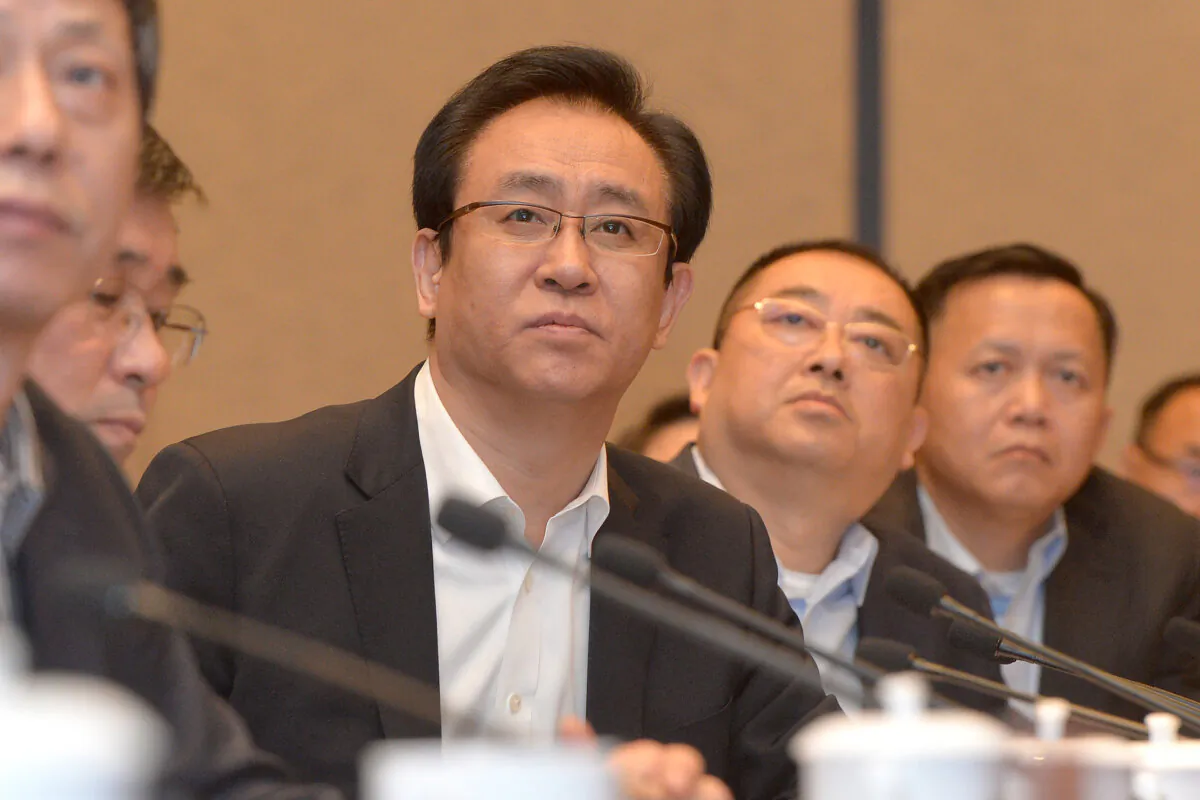

The chairman of the world’s most-indebted property developer has pleaded guilty to a litany of charges, including illegal fundraising and bribery, after a two-day trial at a mainland Chinese court, according to state media.
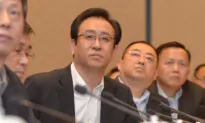
Xu Jiayin, founder of Evergrande Group, was accused of illegally taking public deposits, illegally issuing loans, fraudulently issuing securities, and illegally disclosing material information, among other charges, state media Xinhua reported on April 14.
After the trial on April 13 and April 14, Xu, also known as Hui Ka Yan in Cantonese, “pleaded guilty and expressed remorse” at an intermediate court in Shenzhen, a southern Chinese city bordering Hong Kong, according to Xinhua.
Xu, who has been placed under police control since 2023, faces a maximum life sentence and the confiscation of his property. The court will deliver the final verdict later, Xinhua said, without specifying the sentencing date.
Xu’s company, Evergrande Group, also faced allegations, including fraudulently issuing securities.
The trial came five years after Evergrande’s liquidity trouble became public and against the backdrop of a spiraling real estate crisis in China that has dragged down economic growth.
Once a leading homebuilder in China, Evergrande defaulted in late 2021 as the country’s property sector slowed down and Chinese regulators tightened borrowing rules.
When a Hong Kong court ordered liquidation in January 2024, the real estate developer was saddled with more than $300 billion of debt. Evergrande was delisted from the Hong Kong Stock Exchange in August 2025.
Property Tycoon
Born in a rural village in the central Chinese province of Henan, Xu began his career as a technician at a state-owned steel factory after finishing college. That was in the early 1980s, a time when China was still under a rigid state-planned economy.
As the communist regime gradually opened up its market and eased controls, Xu, like many other Chinese, moved to the southern coastal province of Guangdong, where he worked as a salesperson before founding Evergrande in 1996.
In his first project, Xu borrowed 3 million yuan (about $440,000) from the bank to purchase land, then started selling homes once construction began, according to a 2010 report by People’s Daily, the official newspaper of the Chinese Communist Party (CCP). Within a day, he had sold more than 300 apartments and raked in 80 million yuan (about $11.7 million), allowing him to finance the next project, according to the report.
That strategy fueled Evergrande’s rapid expansion. By the end of 2009, Evergrande had dozens of projects across 25 major Chinese cities, according to the company’s official website.
In 2017, Xu was crowned as China’s richest person, with a net worth of $42.5 billion, according to Forbes.
According to some China observers, Xu’s rise—and subsequent downfall—may be tied to power struggles within the CCP’s top ranks.
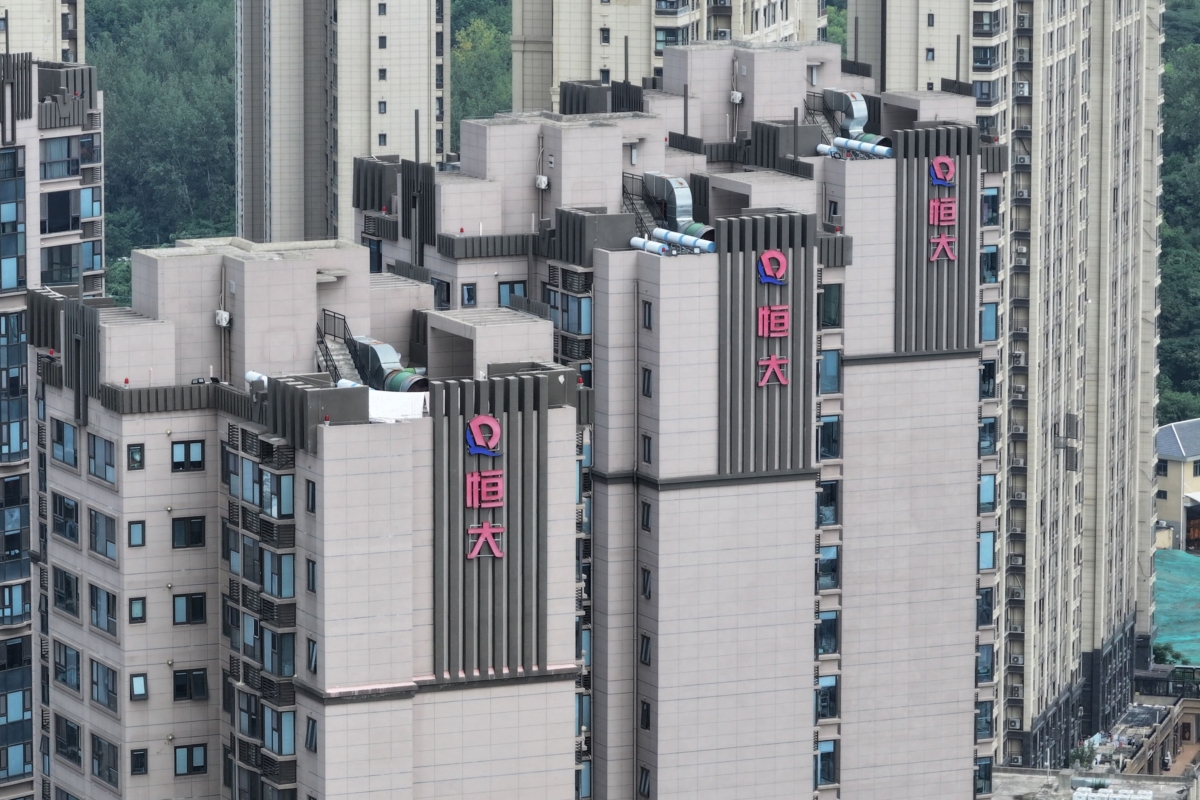
Evergrande’s exponential rise in the past two decades couldn’t have come without a “strong backer” providing benefits, financing, “a lot of convenience,” and political safety, Tang Jingyuan, a China affairs commentator, previously told The Epoch Times.
Without such backers, private enterprises are “strangled” under the CCP’s economic system, according to Tang, also a contributor to the publication.
Some China watchers, including Yuan Hongbing, a former law professor at Peking University who maintains contacts with the CCP’s upper echelons, have identified a backer as former Chinese deputy leader Zeng Qinghong, an influential member of the Party elite associated with a political faction led by Jiang Zemin, the late former CCP leader.
Zeng’s power and influence had brought his family great wealth and dominated major agencies and industries, including propaganda, banking, technology, and real estate. When Xi Jinping became head of the CCP in 2012, Zeng was part of the faction that criticized the new leader’s policies, which made him a target of Xi’s anti-corruption campaign.
The CCP’s crackdown on the property market began in 2016, tightening lending standards and causing hundreds of companies to go bankrupt. Despite these measures, Evergrande continued to borrow heavily, increasing its debt. In 2020, new regulations were introduced, and the company was no longer able to borrow, leaving it overwhelmed by its debt.
The fate of the developer and its 67-year-old chairman has been closely watched by numerous Chinese buyers, many of whom are left with unfinished apartments—homes that they spent their entire families’ savings on and took out huge loans to buy.
“How will you address those unfinished buildings?” a user from the northern province of Liaoning asked on Weibo, a Chinese social media platform, on April 14 in response to the news of Xu’s trial.
Another user commented, “I feel so sorry for those who emptied three generations’ savings to buy a home.”
Catherine Yang contributed to this report.
 Friends Read Free
Copy
Facebook
Tweet
Friends Read Free
Copy
Facebook
Tweet