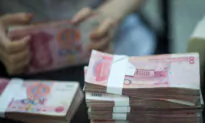

As the Chinese regime launches a new nationwide campaign to crack down on misconduct in government procurement, analysts and an industry insider say the effort highlights deep-rooted corruption and collusion embedded within the Chinese Communist Party’s (CCP’s) administrative system.
China’s Ministry of Finance, Ministry of Public Security, and State Administration for Market Regulation jointly announced on June 17 a 2026 special campaign targeting four categories of violations in government procurement, according to an official notice in Chinese state media People’s Daily. The measures focus on discriminatory bidding requirements, improper fees charged by procurement agencies, the submission of fraudulent documents by suppliers, and bid-rigging schemes.
The campaign marks the third consecutive year that Beijing has carried out a nationwide cleanup of government procurement practices. Although the regime describes 2026 as the final year of a three-year rectification program, the continued focus on the same categories of violations suggests that longstanding problems remain unresolved.
The official notice places procurement officials, intermediary agencies, and suppliers under scrutiny simultaneously, indicating that the regime believes irregularities exist throughout the procurement process—from project design and bidding procedures to document verification and contract awards.
Procurement and Political Power
Among the violations highlighted in the notice are procurement requirements that favor local businesses or specific suppliers. The notice cited cases in which bidders were excluded based on factors such as company registration location, ownership structure, years of operation, business size, or financial indicators.
Officials described such practices as discriminatory treatment. An analyst said this trend reflects a broader pattern of local governments using procurement authority to protect local interests and channel public funds toward favored businesses.
China-based analysts and an industry insider spoke to The Epoch Times on condition of anonymity out of fear of reprisal.
A Fujian-based finance scholar told the publication that government procurement in China is less a market-driven process than a mechanism through which political power directs the flow of public funds.
“Under the CCP, government procurement is not a genuinely open market,” he said. “It is a process in which fiscal resources are redistributed through administrative power.”
According to the scholar, winning contracts often depends less on competitive pricing or product quality than on the interests of those controlling procurement decisions.
“Whether a company wins a contract is often determined by how much individuals can benefit,” he said. “A set of office furniture purchased through government procurement can cost many times the market price.”
The scholar also revealed that the Ministry of Finance and the Ministry of Public Security began reviewing historical procurement cases late last year, examining alleged collusion between local agencies and suppliers.
He said some infrastructure projects had been inflated dramatically above market value.
“A bus shelter that should cost 300,000 yuan [$44,300] could be reported as costing 4 million yuan [$590,000],” he said. “[Authorities] have been looking back more than a decade and have already detained many people, although little has appeared in news reports.”
Bid-Rigging Networks
The regime’s notice also cited a range of other procurement violations, including agencies charging improper fees, failing to return bid deposits on time, and suppliers submitting fraudulent testing reports, certification documents, contract records, and declarations regarding small-business status.
Regime authorities further identified signs of collusive bidding, including nearly identical bid documents, deposits transferred from the same accounts, and bids prepared by the same organizations or individuals.
The notice stated that criminal cases involving bid rigging would be referred for prosecution.
An industry insider familiar with China’s public bidding system told The Epoch Times that bid rigging has long evolved into a well-established operating model within government procurement.
“Regulators are not completely unaware of what’s happening,” he said. “In many cases, they have tolerated it for years.”
According to the insider, procurement positions are highly sought after because they provide opportunities for corruption.
“Some projects are effectively decided before bidding even begins,” he said. “Officials may disclose confidential information in advance, allowing favored companies to submit bids that closely match the government’s budget.”
The insider said bidding processes are often controlled by networks of officials and intermediaries who coordinate bid documents, deposit arrangements, and pricing strategies.
“That is one of the darkest parts of government procurement,” he said. “The reason old cases are being revisited now is because local governments are under financial pressure and regime authorities are following the money.”
Structural Problems
The three ministries have instructed local authorities to submit reports on the three-year rectification campaign by Dec. 31. The notice also calls for the use of AI tools to identify discriminatory procurement clauses and detect suspicious bidding patterns.
The insider expressed skepticism that technology alone can address the underlying problems.
“AI may be able to identify irregularities that leave a paper trail,” he said. “But it cannot easily uncover the power arrangements behind them.”
According to official Ministry of Finance data, China’s government procurement spending reached 3.38 trillion yuan ($499 billion) in 2024. The funds cover sectors ranging from construction and equipment procurement to information technology, environmental protection, healthcare, education, and sanitation.
Another Chinese scholar told The Epoch Times that the vast flow of public funds has created opportunities for networks linking local officials, procurement agencies, and businesses to benefit from government projects.
The scholar said the regime’s latest campaign exposes contradictions in Beijing’s efforts to build what it calls a “unified national market.”
“On one hand, the CCP promotes the idea of a unified market,” she said. “On the other hand, it acknowledges that government procurement is plagued by local protectionism, fraudulent documentation, and bid rigging.”
According to the scholar, local government finances, political authority, favored businesses, and intermediary networks have become deeply intertwined, making it difficult for outside firms to compete on equal terms.
“The regime says they are targeting four categories of procurement violations,” she said. “But ultimately, the investigation leads back to institutional problems. The system has accumulated so many structural distortions that meaningful reform is extremely difficult.”
The scholar argued that while the campaign may expose individual cases of misconduct, it is unlikely to dismantle the entrenched networks of political influence, financial interests, and personal connections that underpin the CCP’s government procurement system.
Wang Yibo contributed to this report.
 Friends Read Free
Copy
Facebook
Tweet
Friends Read Free
Copy
Facebook
Tweet