A recent appointment of a former Chinese intelligence official to a senior disciplinary role inside the Chinese Foreign Ministry has highlighted the increasingly blurred boundary between Beijing’s diplomatic and national security apparatus.
The Chinese Foreign Ministry recently updated its list of senior officials to show that Li Qian, a former deputy minister at the Ministry of State Security, has been appointed as a member of the Foreign Ministry’s Chinese Communist Party (CCP) committee and head of the Central Commission for Discipline Inspection’s (CCDI) team stationed at the Foreign Ministry.
The disciplinary role gives Li oversight responsibilities within the ministry on behalf of the Party’s anti-corruption watchdog, the CCDI.
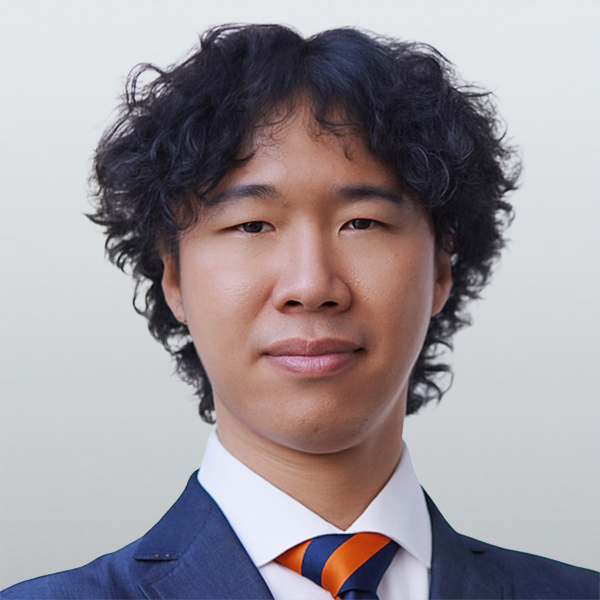
U.S.-based China current affairs commentator Li Linyi told The Epoch Times that the appointment highlights the expanding role of China’s security apparatus in monitoring foreign policy institutions.
“Within the CCP’s governance, disciplinary inspection teams function as the Party’s eyes and ears inside government agencies,” Li said. “The appointment of an official with a national security background suggests that political security concerns are becoming increasingly important within the diplomatic system.”
Li’s appointment is not an isolated case. In recent years, officials have moved between China’s foreign affairs and security institutions, reflecting the integration between diplomacy and national security under the CCP.
Personnel Exchanges Between Diplomacy and Intelligence Agencies
China’s foreign policy establishment has seen several high-level personnel exchanges with national security-related agencies.
Former Chinese Foreign Ministry Vice Minister Sun Weidong was removed from his position in April. After disappearing from public view for several months, he reappeared in late June at a political event identified as the executive deputy director of the Office of the Central National Security Commission.
Another example is Liu Haixing, who spent much of his career in the Chinese Foreign Ministry before moving into the national security system. Liu served as an assistant foreign minister before becoming deputy director and later executive deputy director of the Office of the Central National Security Commission. In 2025, he returned to the foreign affairs system and became head of the International Department of the CCP Central Committee, which manages the Party’s relations with foreign political organizations.
The personnel exchanges reflect the CCP’s broader approach of treating foreign affairs as closely connected with regime security, according to Li.
“The diplomatic system and national security system have always been closely connected within the CCP,” he said.
The overlap between diplomacy and security institutions dates back decades.
China’s foreign affairs system originally developed under Party-led structures rather than a traditional separation between diplomacy and intelligence agencies. In 1958, the CCP established a Central Foreign Affairs Group while the State Council created a foreign affairs office. During later political campaigns, these structures were repeatedly reorganized.
In 2000, Beijing established the Central National Security Leading Group, which initially operated alongside the Central Foreign Affairs Leading Group under a shared institutional arrangement. The National Security Commission was formally established in 2014, while the foreign affairs structure was elevated in 2018 into the Central Foreign Affairs Commission.
The changes reflected the CCP’s view that foreign policy, national security, and domestic political stability are closely connected.
Concerns Over Chinese Diplomatic Activities
The close relationship between China’s diplomacy and security has also fueled concerns in Western countries over the activities of some Chinese diplomats overseas.
In 2023, Canada expelled Chinese diplomat Zhao Wei after allegations that he was involved in efforts to intimidate a Canadian lawmaker and gather information about other political figures. Beijing denied wrongdoing.
Michel Juneau-Katsuya, a former head of the Asia-Pacific division at the Canadian Security Intelligence Service, told a Canadian House of Commons committee in 2023 that some Chinese diplomatic personnel may not be engaged solely in conventional diplomatic activities.
Similar concerns have been raised in other Western countries, where governments and human rights groups have accused Chinese embassies and consulates of monitoring overseas Chinese communities, pressuring dissidents, and supporting activities aimed at influencing politicians.
The Chinese regime has rejected accusations of conducting improper overseas operations, stating that Beijing’s diplomatic missions operate in accordance with international law.
John J. Tkacik Jr., a retired Department of State Foreign Service Officer who worked in U.S. diplomatic missions in China, wrote previously in Taiwanese media outlet The Liberty Times that some young Chinese diplomatic personnel he encountered appeared highly interested in collecting information about foreign governments and institutions.
Tkacik has argued that some individuals within China’s diplomatic service may have had intelligence-related backgrounds.
As Beijing places greater emphasis on political security and competition with Western countries, the traditional distinction between diplomacy and national security has become increasingly difficult to define within China’s party-state system.
Tang Bing contributed to this report.
 Friends Read Free
Copy
Facebook
Tweet
Friends Read Free
Copy
Facebook
Tweet