
News Analysis
The Chinese regime’s foreign minister, Wang Yi, has met with North Korean leader Kim Jong Un in Pyongyang on April 10 during a state visit, while the U.S.-Iran peace talks failed to solidify the conditional two-week ceasefire.
Analysts told The Epoch Times that the Chinese regime is trying to determine Kim’s view of the evolving geopolitical landscape after their “Axis of Evil” partner, the Iranian regime, was significantly weakened by the United States and Israel.
The Chinese foreign minister visited North Korea from April 9 to April 10—more than six and a half years since his previous visit in September 2019.
During the meeting, Wang told Kim that the Chinese regime and North Korea should further strengthen communication and coordination on major international and regional affairs.
Kim conveyed to Wang that continuously deepening and developing bilateral relations serves their shared interests, and expressed his willingness to engage in close strategic communication with China and firmly support one another.
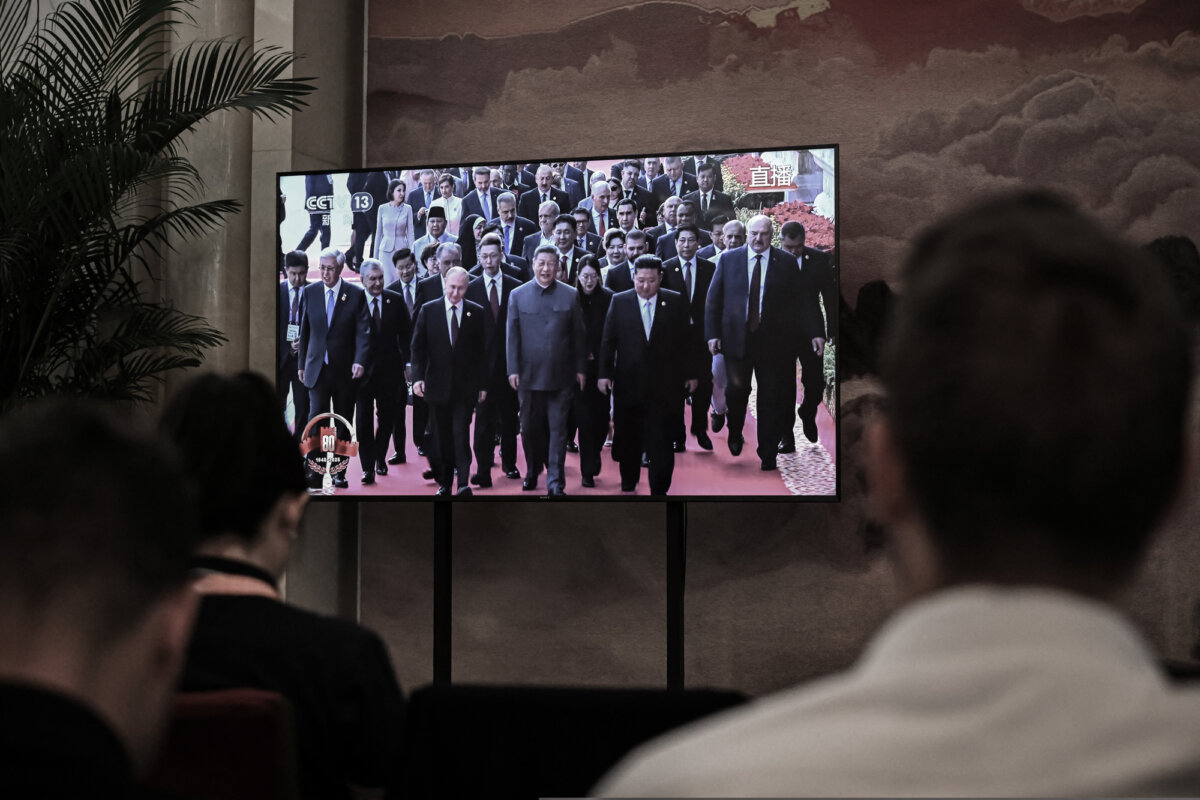
In September 2025, Kim met with the Chinese regime leader Xi Jinping in Beijing, alongside Russian President Vladimir Putin, who was also visiting China at the time.
Direct train and flight services between Beijing and Pyongyang resumed last month after a six-year halt.
Although North Korea condemned the U.S. attack on Iran at the beginning of the war, Kim has taken no further action to aid the Iranian regime.
Shen Ming-shih, research fellow at Taiwan’s Institute for National Defense and Security Research, told The Epoch Times that he believes Wang’s meeting with the North Korean leader this time was prompted by the removal of Venezuelan leader Nicolás Maduro and the attacks launched against Iran by the United States and Israel.
China is currently seeking ways to further engage the two remaining nations of the “Axis of Evil”—Russia and North Korea—as U.S. and Israeli forces dismantle the Iranian regime, he said. “China, Russia, and North Korea all have nuclear weapons. If these three nations were to unite, they would assume that the United States would not dare to employ military force against them.”
Strengthening the alliance between China, North Korea, and Russia would solidify the bloc that opposes the United States with the goal of countering the Trump administration, Shen said.
“They are thinking of joining forces to secure political advantages in East Asia if the United States is bogged down in a quagmire of the Iran war,” he said.
This is because China knows that once the United States resolves the situation in Iran, the Chinese regime will be the next priority, Shen said.
“Consequently, China must now begin to court allies to bolster its own strategic position and interests within the Indo-Pacific region—including on the Korean Peninsula and even across the Taiwan Strait.”
Testing Where North Korea Stands
Wang’s visit is merely a preliminary contact—likely an attempt to find out the personal views of Kim Jong Un on issues such as the Russo-Ukrainian war, the Iran war, and relations with the United States, Shen said.
North Korea faces its own set of challenges, he said, “most notably, Kim Jong Un’s health issues, which have prompted him to seek ways to transfer power to his daughter.”
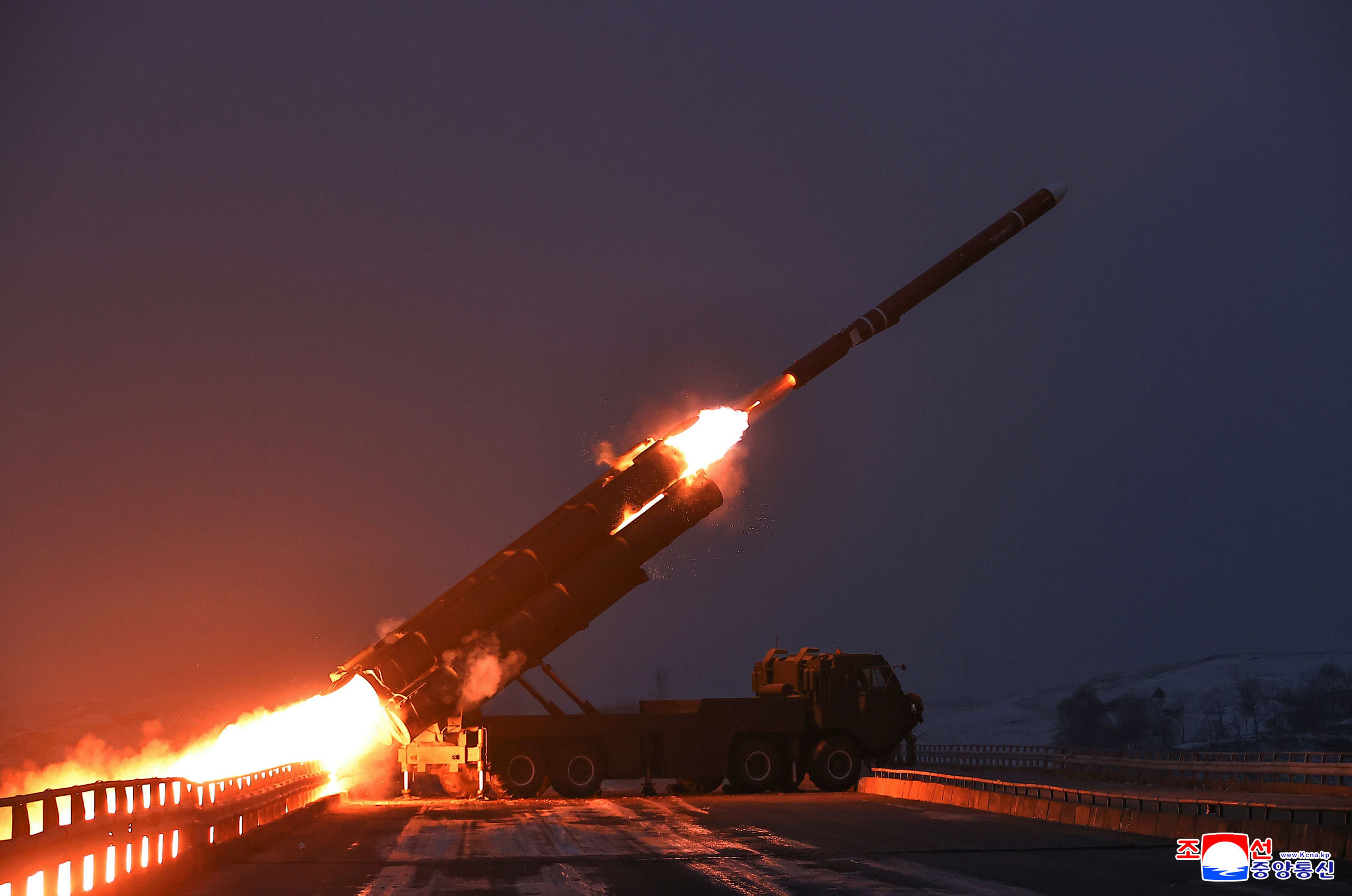
“Furthermore, through his cooperation with Russia—from which he has acquired significant military capabilities and technology—he is currently aggressively developing long-range intercontinental ballistic missiles, large-scale submarines, and similar assets. What, then, is his ultimate objective? Is it directed at South Korea, or is it aimed at the United States?” Shen asked.
The current situation is highly complex and therefore requires China’s top diplomat to travel to North Korea to ascertain Kim’s stance, which is of critical importance to China, Shen said.
Lin Chih-Hao, assistant research fellow at the Institute for National Defense and Security Research in Taiwan, who specializes in Korean Peninsula security, also believes that Wang’s visit was for the ruling Chinese Communist Party (CCP) to ascertain North Korea’s geopolitical stance.
Following the United States’ handling of Venezuela and Iran, “both North Korea and China—facing the potential threat of U.S. military force—share common security concerns,” Lin said.
China also has another agenda, Lin said. “It hopes to seize this moment to solicit North Korea’s support for the ‘One China’ principle regarding Taiwan.
“The CCP is currently adopting varying degrees of conciliatory and friendly diplomatic approaches toward both South Korea and North Korea,” he said. “However, the common thread is the CCP’s desire for both Koreas to adopt a similar stance or attitude regarding the Taiwan issue.”
For President Donald Trump, the North Korean issue is not a top priority; in fact, the Taiwan Strait issue likely ranks even higher on his agenda than the North Korean nuclear issue, according to Lin. Tensions over the Taiwan Strait have been increasing, while Taiwan’s semiconductor industry is essential to the United States and the world’s economy. Meanwhile, North Korea has been keeping a relatively low profile recently.
As long as North Korea maintains its current standing—preserving a certain balance between the United States and China, or even establishing a stable channel for dialogue with the United States—“it will help bolster American influence over the situation on the Korean Peninsula,” Lin said.
“However, this scenario is highly disadvantageous to the CCP, which will undoubtedly go to great lengths to prevent U.S.–North Korean relations from moving toward normalization.”
Geopolitics of Northeast Asia
Trump is expected to visit China next month. He has previously shown interest in resuming talks with North Korea.
The analysts said they believe that Trump and Xi may discuss issues concerning the Korean Peninsula during their potential meeting in May, and China may use the U.S.-China summit to help facilitate a meeting between the leaders of the United States and North Korea, thus it can continue to exert influence on the peninsula and prevent direct communication channels between the United States and the Kim regime, which would bypass the CCP.
When operating from a position of disadvantage, China may project an attitude of moderation or concession, Shen said of the CCP’s possible willingness to be the broker.
From China’s perspective, a North Korea that is “pro-Russia, pro-China, and friendly toward the United States” would actually be more beneficial in maintaining the status quo on the Korean Peninsula, where the Chinese regime can continue to exert influence, Lin said. North Korea and the Chinese regime have been allies, but relations have cooled in recent years since the COVID-19 outbreak, while Kim’s support for Russia’s war against Ukraine has brought those two countries closer. Meanwhile, tensions with the United States haven’t escalated.
Given China’s current capabilities, it is impossible for it to defeat the United States in a direct confrontation, Shen said.
“The objective becomes finding ways with other countries to jointly counterbalance the United States—to constrain it through diplomatic and political means.
“Yet, its ultimate goal remains—in the long run—to surpass the United States or to undermine its power,” Shen said.
The geopolitical landscape in Northeast Asia is poised to become increasingly complex and volatile, Lin said.
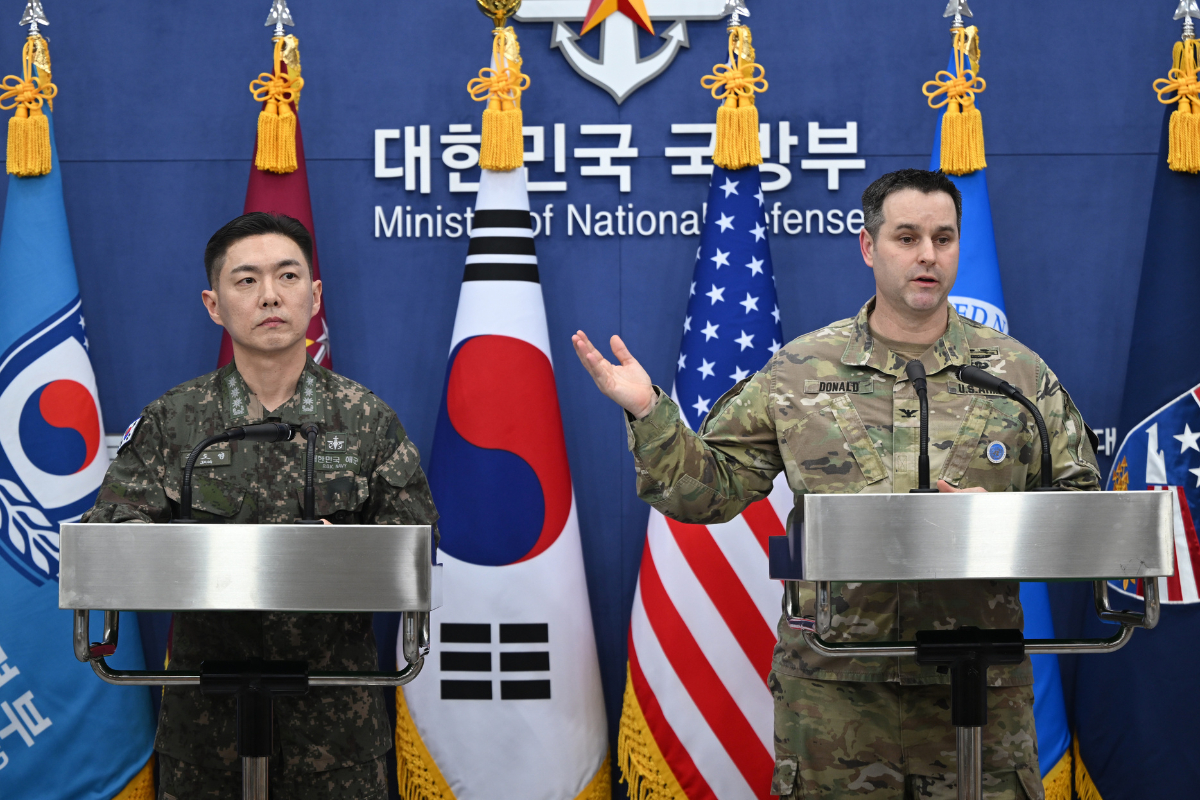
“North Korea has already leveraged the Russia-Ukraine war to bolster both its conventional weaponry and its nuclear capabilities,” he noted, while Japan and South Korea are expanding their military budgets and strengthening their military capabilities.
Russia has recently begun to re-insert itself into the dynamics of the Korean Peninsula, working to strengthen its ties with North Korea, he said.
Under these circumstances, the tension between the “South Korea-U.S.-Japan” bloc and the “North Korea-China-Russia” bloc is likely to become even more pronounced in the future, Lin said.
“Northeast Asia may well emerge as the primary frontline for the strategic competition among the United States, China, and Russia,” he said.
Luo Ya and Reuters contributed to this report.
 Friends Read Free
Copy
Facebook
Tweet
Friends Read Free
Copy
Facebook
Tweet