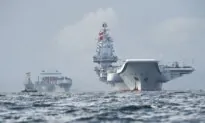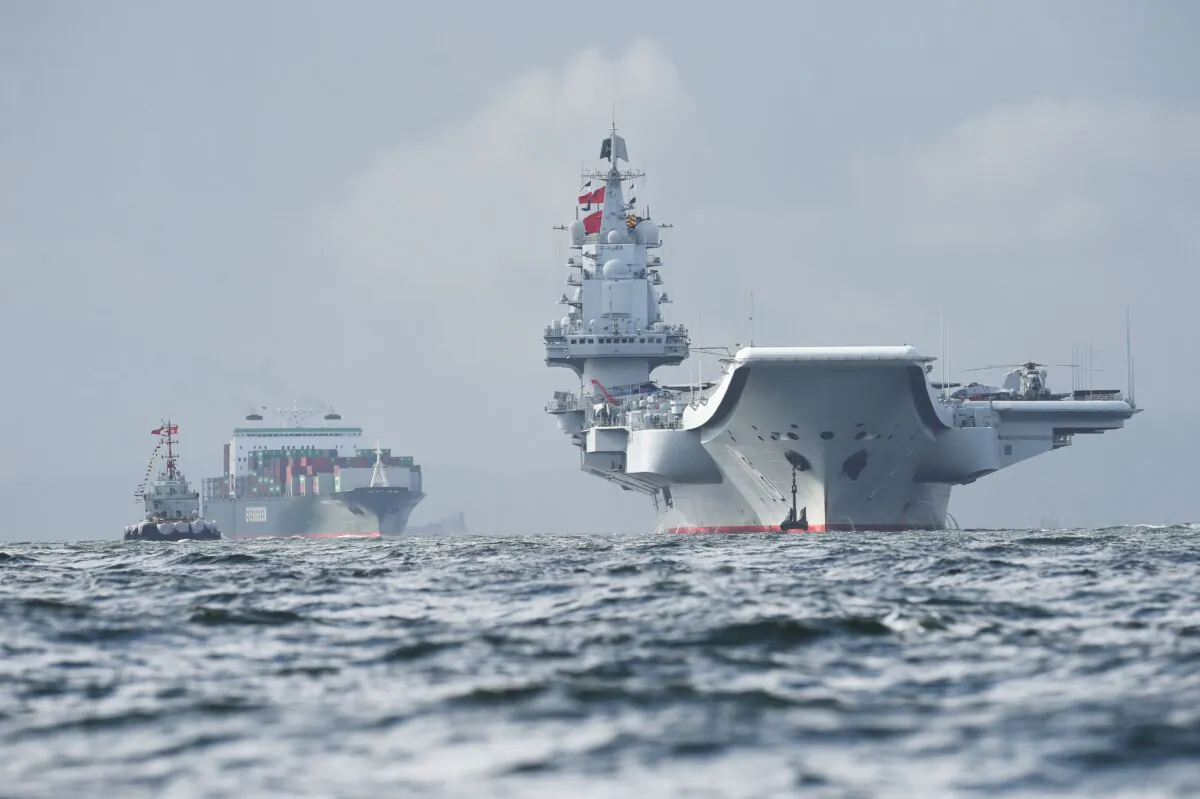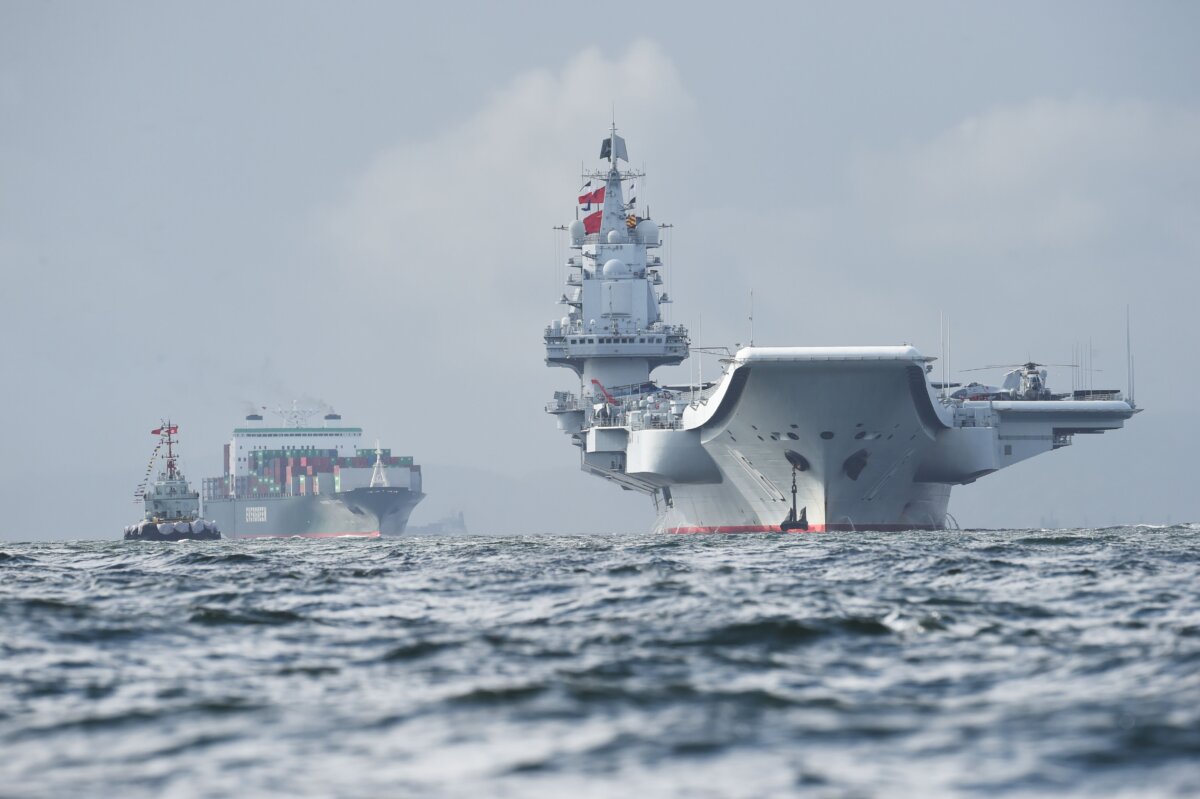

Chinese regime aircraft carrier Liaoning transited the Taiwan Strait on April 20 as the annual U.S.–Philippine joint military exercise began simulating “real-world” combat on an island near Taiwan.
Analysts told The Epoch Times that the island overlooks the crucial channel where the United States and its allies could block the Chinese Communist Party’s attempt to breach the first island chain, and that a confrontation could escalate into a multinational war.
The Liaoning’s passage through the strait, the Taiwanese defense ministry said, was its first this year. Fighter jets and helicopters were clearly visible on the flight deck, and the hull number 16 was also clearly discernible, as shown in surveillance photographs released by the ministry.
The Chinese navy’s move followed Japanese destroyer Ikazuchi’s transit of the strait on April 17 on its way to the Philippines to join the U.S.–Philippine Balikatan 2026 exercises.
The Chinese regime’s foreign ministry condemned the Japanese destroyer’s trek through what it sees as its territorial waters. Beijing also considers Taiwan its territory and has not ruled out the use of force to annex it.
Although the United States remains occupied with the Iran war, the Balikatan drills kicked off as scheduled on April 20 and will run until May 8. Balikatan is a Tagalog term meaning “shoulder-to-shoulder.”
This year’s drills are expanded in scope, the Philippine military announced, including Australia again and Canada, France, and New Zealand for the first time.
The drills also mark the first time Japanese forces have participated on a large scale.
The Philippines and the United States will, for the first time, hold maritime strike drills on the island of Itbayat, the northernmost point of the Philippines, about 96 miles from Taiwan. The Philippine military said it would test its readiness under “real‑world conditions.”
Itbayat, part of the Batanes island group, is a crucial outpost in the Bashi Channel, which connects the South China Sea and the Pacific Ocean.
The channel serves as a critical choke point in the first island chain—a strategic line in the Asia-Pacific including Japan, Taiwan, and the Philippines, designed by the U.S. military to contain the Chinese regime’s maritime expansion.
The Bashi Channel is a key corridor for People’s Liberation Army vessels to move from the coast of China into the deep waters of the Pacific.
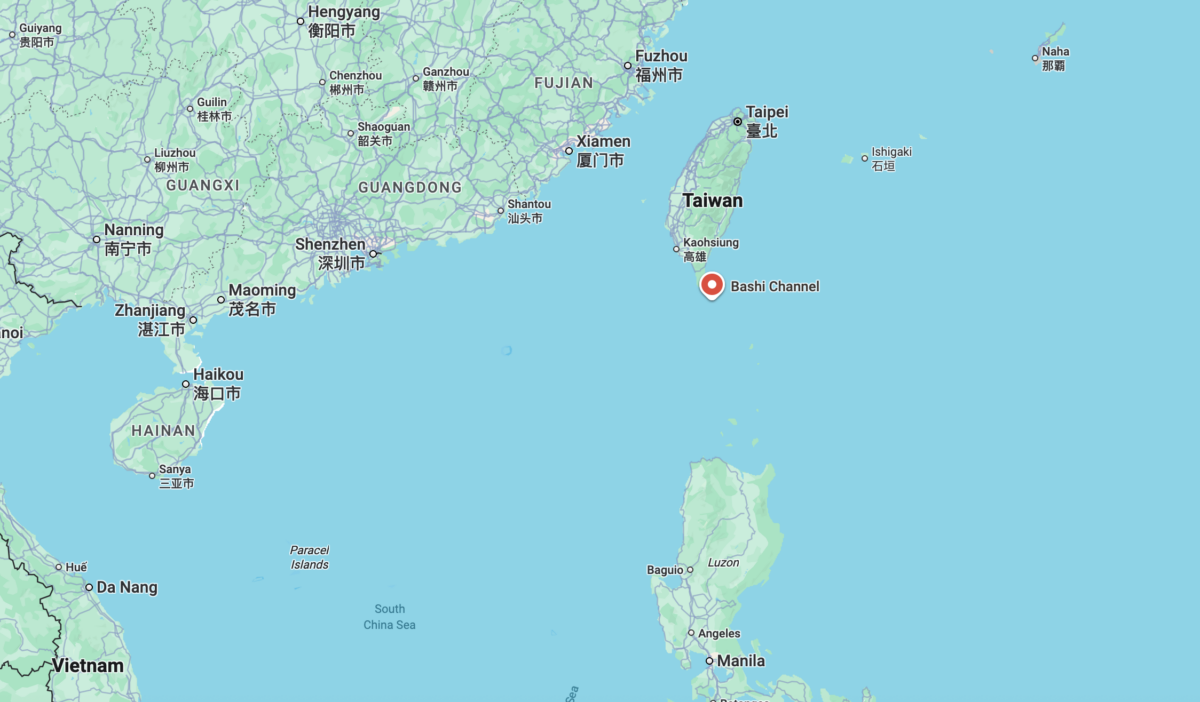
The U.S.–Philippine military deployments and exercises in this area have one objective, which is to blockade the Bashi Channel if the Chinese regime attempts to launch a military invasion of Taiwan, retired Taiwanese Maj. Gen. Yu Tsung-chi, an adviser to the Formosa Republican Association, told The Epoch Times.
Japan has recently been deploying anti-ship missiles on the island of Yonaguni, south of the key Miyako Strait, Yu noted.
“This demonstrates the resolve of both Japan and the United States to blockade the Miyako Strait should China ever attempt to take Taiwan by force,” he said.
Yonaguni is the westernmost island of Japan, lying between the East China Sea and the Philippine Sea, 67 miles east of Taiwan. It’s south of the Miyako Strait, a key choke point between Taiwan and the Japanese archipelago.
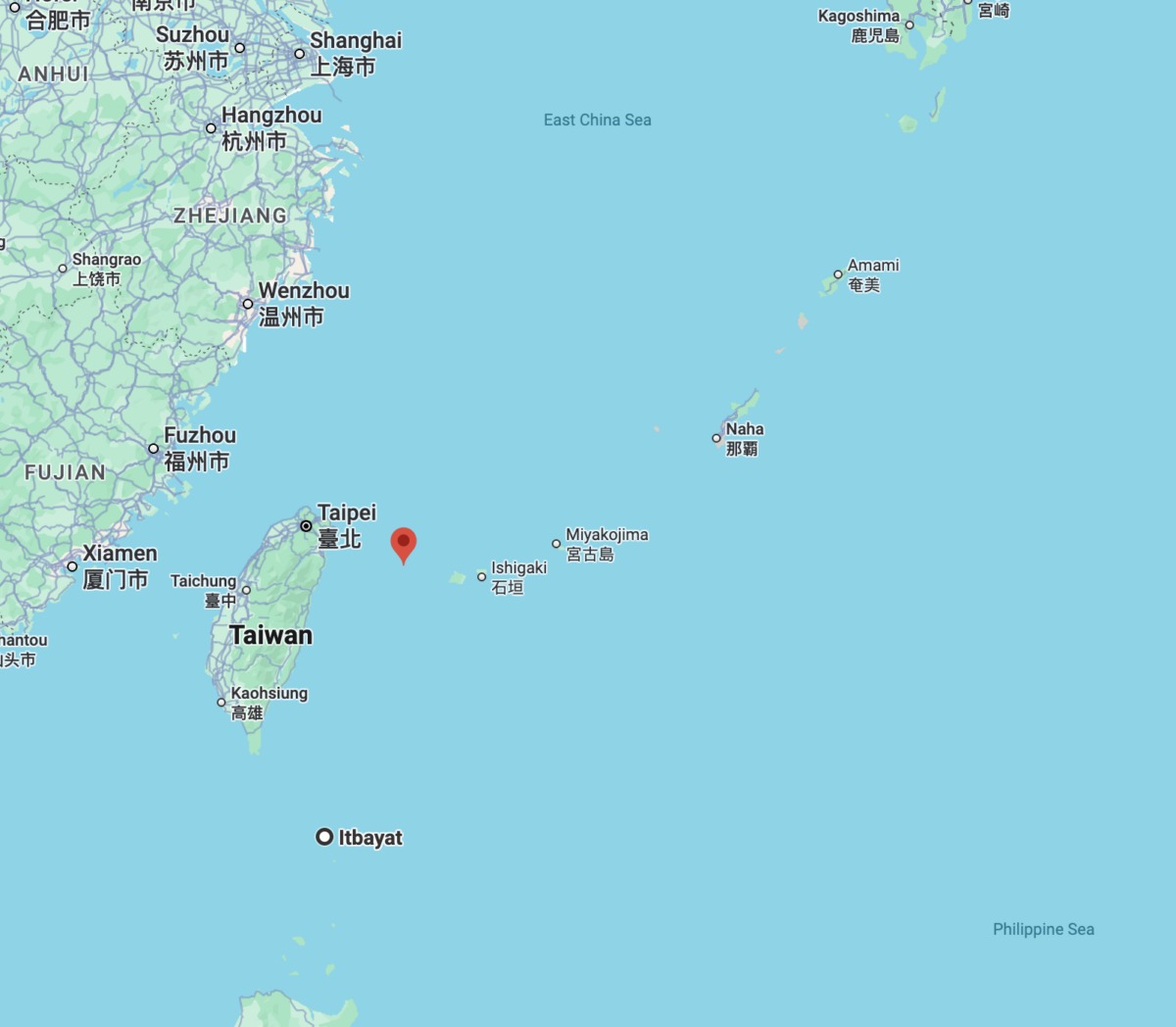
Japan announced plans to deploy surface-to-air and anti-ship missiles by 2031 to counter Chinese expansion.
The Bashi Channel and the Miyako Strait are two exceptionally critical international waterways situated along the first island chain in the Western Pacific; both are necessary routes for the Chinese navy and air force to sortie into the Western Pacific for “long-range, open-sea” training and to break through the first island chain blockade.
Attempt to Break Through First Island Chain
The Chinese regime’s dispatch of the Liaoning—its aircraft carrier—southward into the South China Sea this time “demonstrates its objective to expand its maritime power and break through the First Island Chain,” Su Tzu-yun, researcher and director of the Division of Defense Strategy and Resources at Taiwan’s Institute for National Defense and Security Research, told The Epoch Times.
“Consequently, the democratic nations of the maritime sphere—specifically Japan, Taiwan, and the Philippines, along with other existing and potential allies—are collaborating to construct a deterrence zone, to contain it, as shown in their joint drills,” Su said.
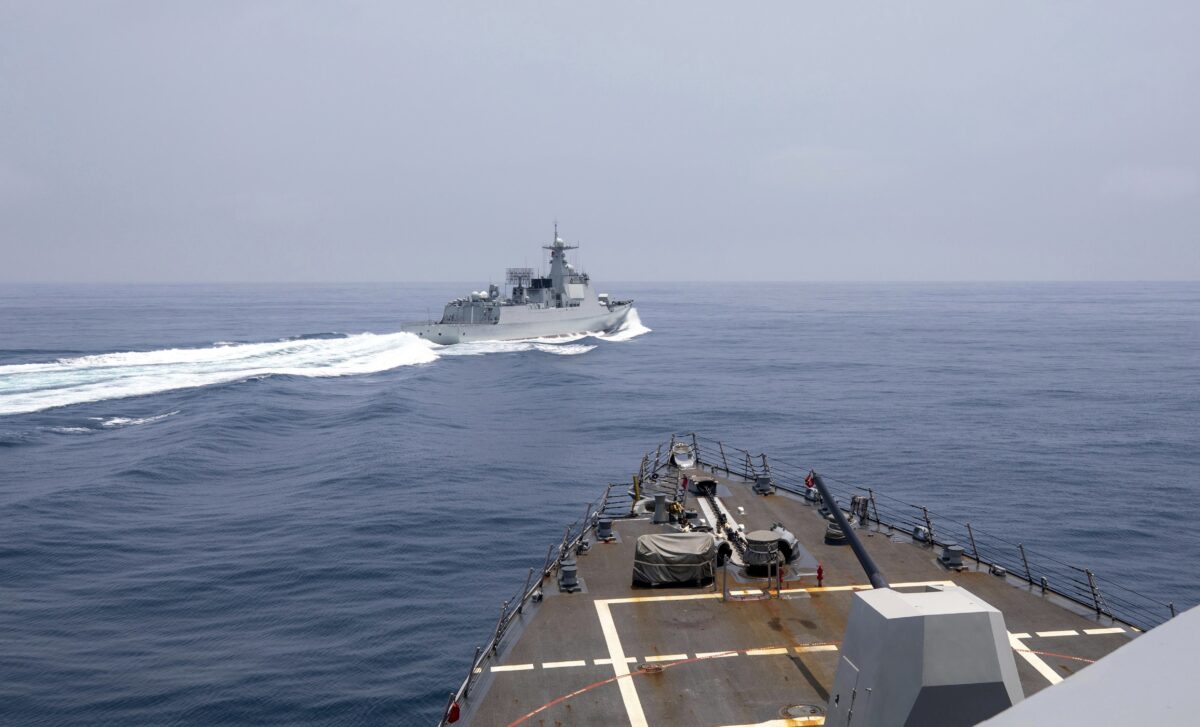
China frequently dispatches its naval fleets to the waters east of Taiwan to conduct military exercises, and its primary objective is to demonstrate its ability to break through the first island chain containment, Yu said.
“However, the United States, Japan, and the Philippines share a tacit understanding: Should a conflict erupt in the Taiwan Strait, they will undoubtedly blockade this maritime zone, thereby confining China’s military projection capabilities to the waters west of Taiwan and preventing them from penetrating into the eastern waters,” he said.
The primary focus of the joint military drills by the United States and other countries is to render China’s expansion attempt ineffective, Yu said.
“It would make the ruling Chinese Communist Party feel that it’s under encirclement by this U.S.-led coalition,” he said. “It’s also a warning to China not to contemplate using military force against neighboring nations—whether in the South China Sea, the Taiwan Strait, or even the East China Sea.”
The drills also demonstrate the U.S. policy of “peace through strength,” Yu said.
Multination Conflict
However, the Chinese Communist Party (CCP) has attempted countermeasures, Yu said, such as the “unprecedented” long-term airspace restriction without officially announcing military exercises.
China has reserved five offshore airspace zones in the Yellow and East China seas—covering a corridor where the People’s Liberation Army often conducts military drills—for 40 days, from March 27 to May 6, which signals intense military activities, as perceived by the outside world.
A flotilla of Chinese warships has conducted naval drills in the Western Pacific near Japan this week.
“China has transited through the Miyako Strait into the Western Pacific to conduct military exercises, which is a direct response to the realization that Japan, along with the United States and the Philippines, is effectively establishing a blockade along the first island chain,” Yu said.
Meanwhile, three Russian warships visited China last week. The Russian and Chinese navies have conducted annual joint drills in the Pacific.
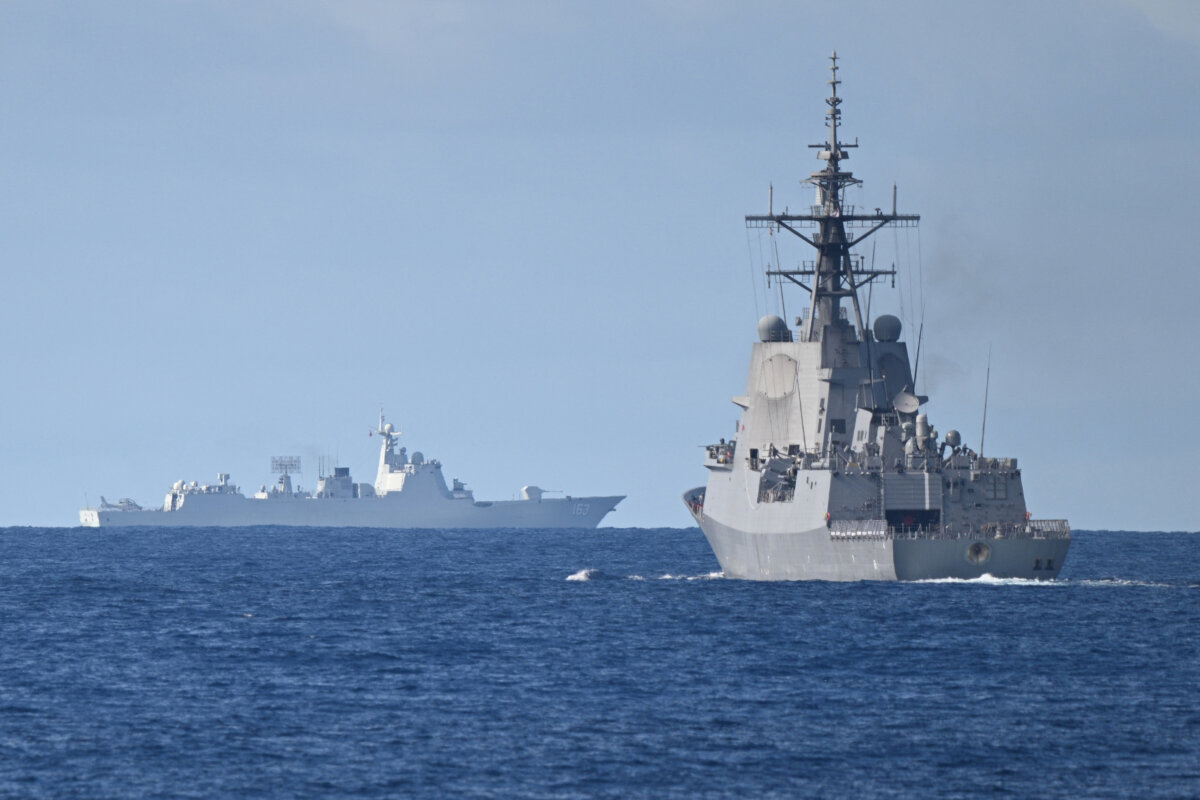
“China is compelled to enlist the support of North Korea and Russia in countering U.S.-led alliances,” Yu said.
He also said that North Korean leader Kim Jong Un “has recently carried out a series of missile tests, as the CCP doesn’t leave North Korea idle.”
“What remains to be seen is whether China will pull Russia in again to carry out joint military activities in the Western Pacific, even surrounding Japanese islands,” Yu said.
Should the unfortunate event of an armed conflict occur, Su said, “it would inevitably evolve into a multinational engagement.”
Given that the United States has mutual defense treaties with both Japan and the Philippines, a war breaking out in this region would create a scenario in which the U.S.-led multiple nation alliance would fight against the CCP and possibly its allies, Su said.
Luo Ya and Reuters contributed to this report.
 Friends Read Free
Copy
Facebook
Tweet
Friends Read Free
Copy
Facebook
Tweet