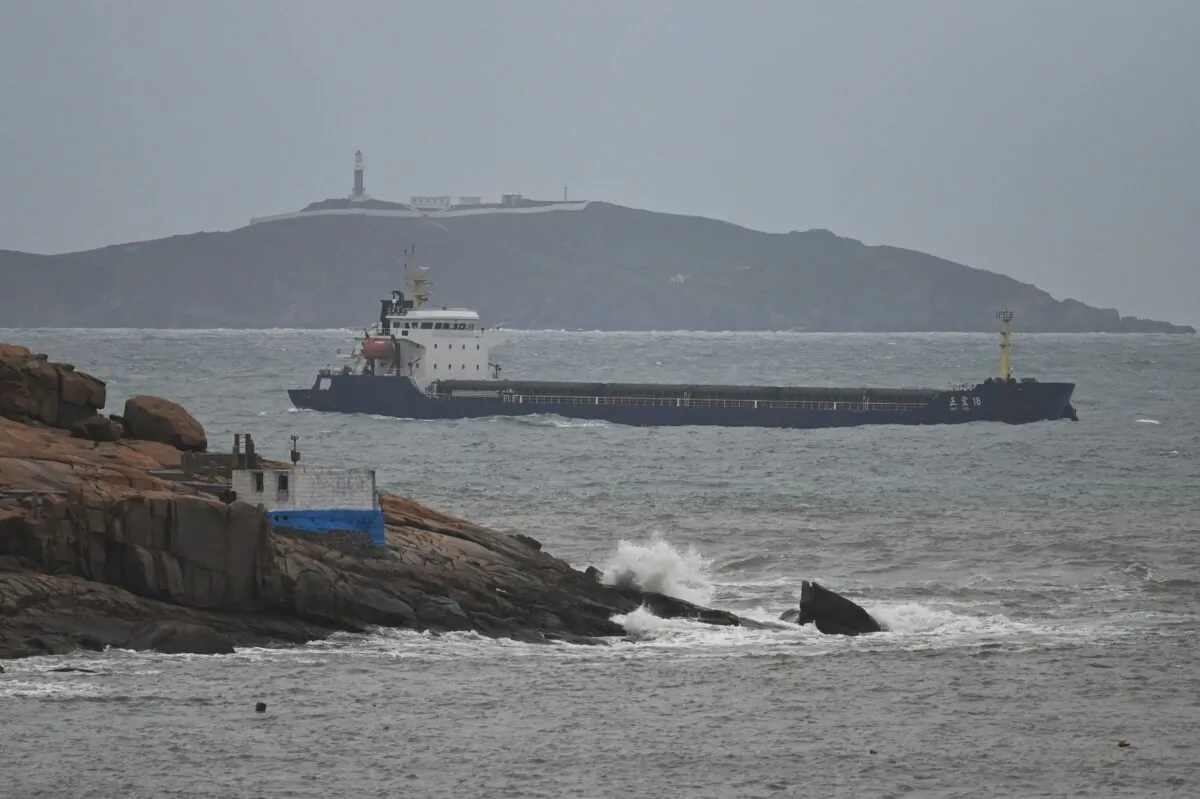

A Japanese warship’s transit of the Taiwan Strait has highlighted the limited impact of the Chinese regime’s intimidation campaign, with an expert saying the move will likely push Washington, Tokyo, and Taipei to deepen defense ties.
Japan’s JS Ikazuchi destroyer passed through the strait on April 17, according to Kyodo News.
The passage was part of Tokyo’s deployment for Balikatan 2026, the annual multilateral joint exercise hosted by the United States and the Philippines, running from April 20 to May 8.
The Taiwanese Ministry of National Defense declined to comment on the destroyer’s passage but said it is monitoring the surrounding maritime and air environment through joint surveillance and reconnaissance systems.
The Chinese Communist Party (CCP) claimed the operation was a “deliberate provocation” and lodged a strong protest with Japan.
This is the first crossing by a Japan Maritime Self-Defense Force vessel through the Taiwan Strait since Japanese Prime Minister Sanae Takaichi took office in October.
It also marks the fourth voyage through the sensitive waterway by the force, following previous sailings in September 2024, February 2025, and June 2025.
Analysts view the 10-month gap since the previous mission as reflecting an effort by Japan to avoid provoking the Chinese regime.
Relations between Beijing and Tokyo have soured sharply since Takaichi said in November 2025 that Japan would be justified in deploying its military if Taiwan came under attack—remarks that met with a wave of economic and military pressure from the Chinese regime.
Taiwan is a self-governed democracy that the CCP has never ruled but has vowed to annex by force if necessary.
Freedom of Navigation
Li Shih-hui, a professor at the College of International Affairs of National Chengchi University in Taiwan, said Tokyo’s move signals its foreign and security policies have established schedules and will not bend to Chinese coercion.
“Japan will play a more important role against specific countries unilaterally attempting to change the status quo by force in the East China Sea, the Taiwan Strait, and the South China Sea,” Li told The Epoch Times.
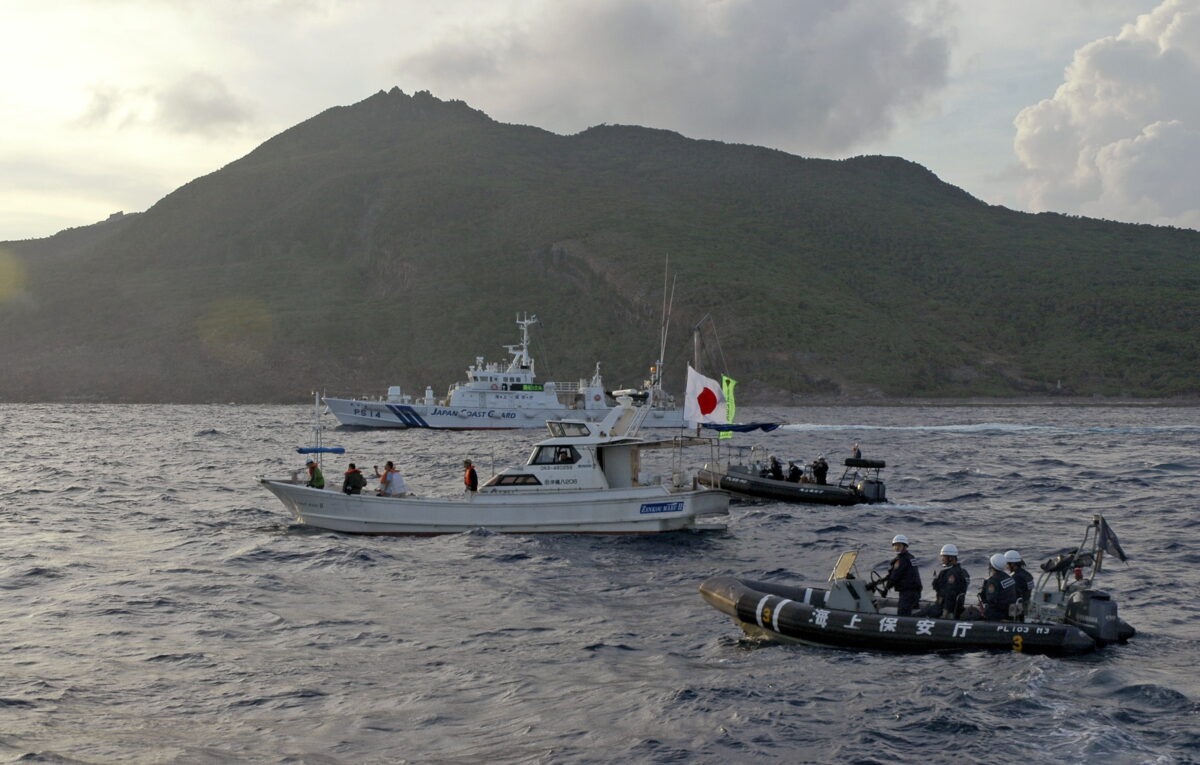
Richard Yu-ping Chou, a member of the Evaluation Center Committee of the National Defense Industrial Development Foundation in Taiwan, said the action sends a clear message to Beijing that the Takaichi administration is committed to holding the line on regional security issues.
“While conducting joint military drills with the United States and the Philippines, Japan also hopes to fully embed itself in the broader Indo-Pacific defense framework and assert its role,” Chou told The Epoch Times.
Chou said the transit more importantly serves as proof that the Taiwan Strait is international waters, not the internal waters Beijing claims it to be.
“Japan is using this to emphasize that the Taiwan Strait enjoys freedom of navigation, a status shared by other global shipping lanes,” Chou said.
“It also underscores Takaichi’s position on Taiwan’s security.”
Deterring Beijing
Chou said the repeated passages through the Taiwan Strait by Japan since 2024 suggest Tokyo may seek to normalize such naval deployments to deter the Chinese regime from conducting gray-zone tactics—coercive actions designed to intimidate an opponent while remaining below the threshold of warfare.
“Such a regular presence carries a clear deterrent effect in military strategy,” Chou said.
“An increased Japanese military footprint in the waterway means the CCP must factor in the possibility of intervention from Japan when planning any future military operations against Taiwan.”
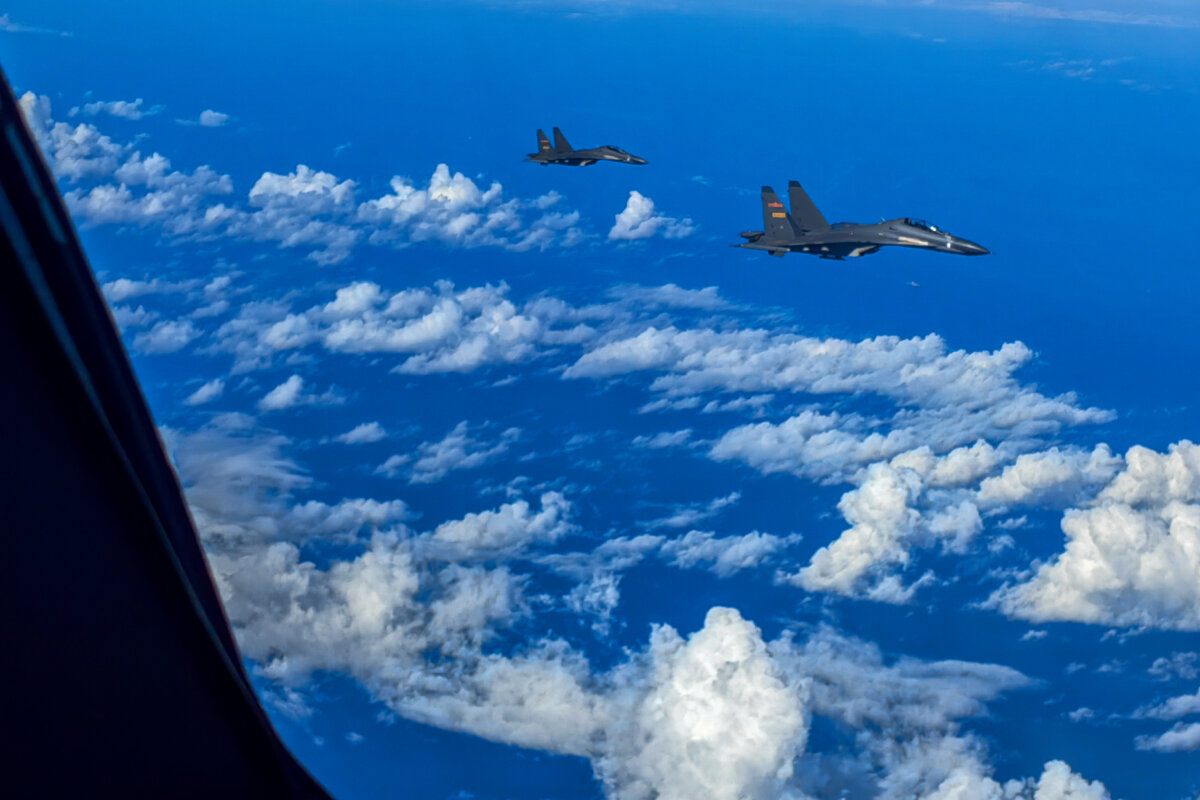
The U.S. Intelligence Community released its 2026 Annual Threat Assessment in March, indicating Beijing’s primary goal for Taiwan is to “achieve unification without the use of force,” but the People’s Liberation Army (PLA) continues building the plans and capabilities to launch an armed invasion of the island if ordered to do so.
Chou said this evolving security dynamic points to deeper defense cooperation between Washington and Tokyo in the Indo-Pacific.
“Once transits by Japanese warships become a routine norm, Tokyo will have the absolute right to provide assistance—from coordinating with U.S. forces in the area to taking further steps to help defend Taiwan,” Chou said.
Li said the deployment also demonstrates that the strait has become an international security issue, forcing the CCP to realize it cannot treat Taiwan as a domestic matter.
“The growing global stake in regional peace and stability means various countries view the Taiwan Strait as a vital strategic interest, which ultimately bolsters the defense of Taiwan,” Li said.
Ineffective Pressure
The PLA Eastern Theater Command conducted joint readiness patrols in the East China Sea on April 18, claiming the drills were “a routine arrangement organized in accordance with the annual plan,” a move that appeared to be a direct response to Tokyo’s action.
The command said on April 19 that it dispatched a naval fleet to sail through the Yokoate Waterway—a narrow passage located in Japan’s Ryukyu Islands—to test its “far-sea combat capabilities.”
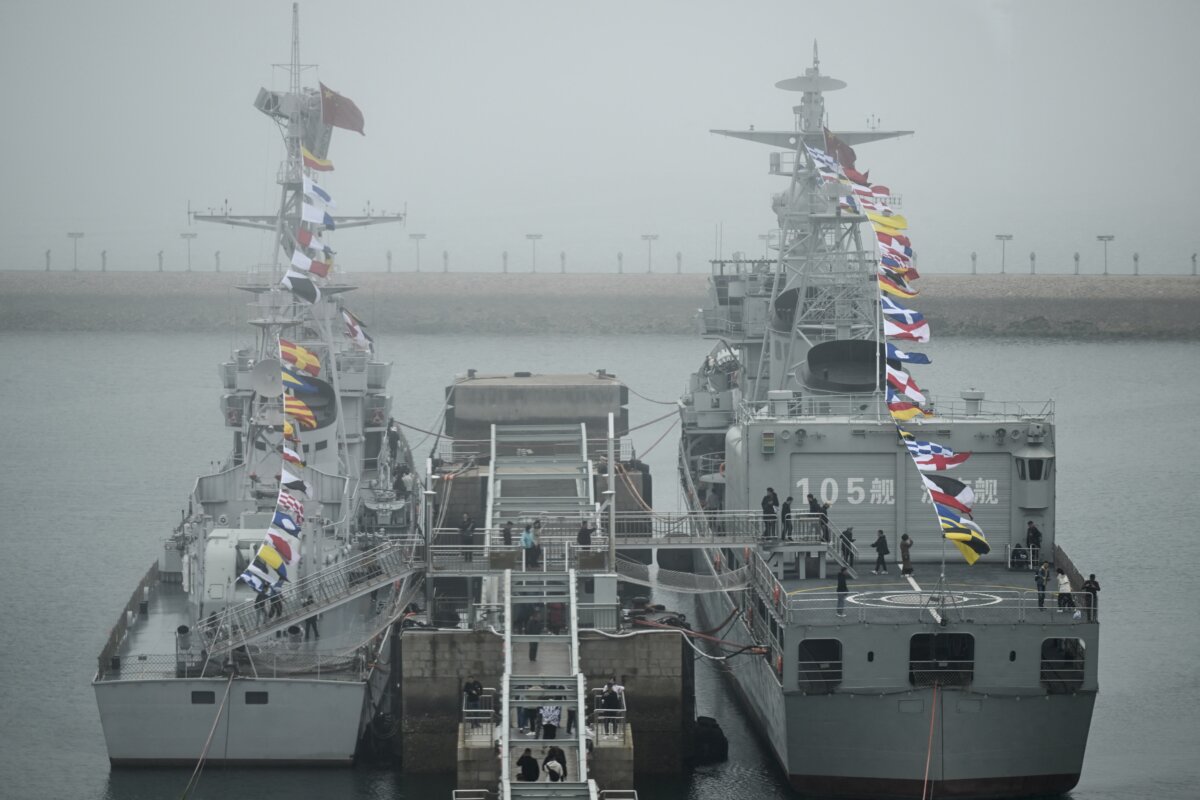
The Taiwanese Ministry of National Defense (MND) said the Chinese aircraft carrier Liaoning sailed through the Taiwan Strait the following day.
There were also five Chinese aircraft and 12 vessels operating around Taiwan from 6 a.m. on April 19 to 6 a.m. April 20, according to MND.
Li said while these Chinese military activities are squarely aimed at Taiwan and Japan, the maneuvers alone will not alter Tokyo’s course.
But he warned the real threat lies in potential military alignment.
“Japan will face tremendous security pressure if China, Russia, and North Korea take joint operations in the future,” Li said.
Li said Japan will not stand by if such a situation arises but will instead deepen ties with its Indo-Pacific allies.
“Japan is also actively strengthening trilateral security cooperation with the United States and South Korea,” Li said.
“If the tense standoff between Beijing and Tokyo continues to escalate, it could potentially trigger a multinational confrontation in East Asia.”
Chou said the Chinese regime’s ongoing pressure campaign against Japan has yielded limited results, making its latest military posturing unlikely to force Takaichi to withdraw her pro-Taiwan remarks.
“Japan has not scaled back its military readiness due to Chinese intimidation, so current and future provocations from the PLA may instead push Tokyo to more actively bolster its defense budget,” Chou said.
Chou said the escalating coercive tactics by the Chinese military will fail to compel Taiwan’s capitulation and will instead solidify strategic coordination among Washington, Tokyo, and Taipei.
“The U.S. and Japan will also use such harassment to remind Taiwan that it must be prepared when facing such a menacing adversary [like China], urging the island to bolster its defenses alongside its partners,” Chou said.
 Friends Read Free
Copy
Facebook
Tweet
Friends Read Free
Copy
Facebook
Tweet