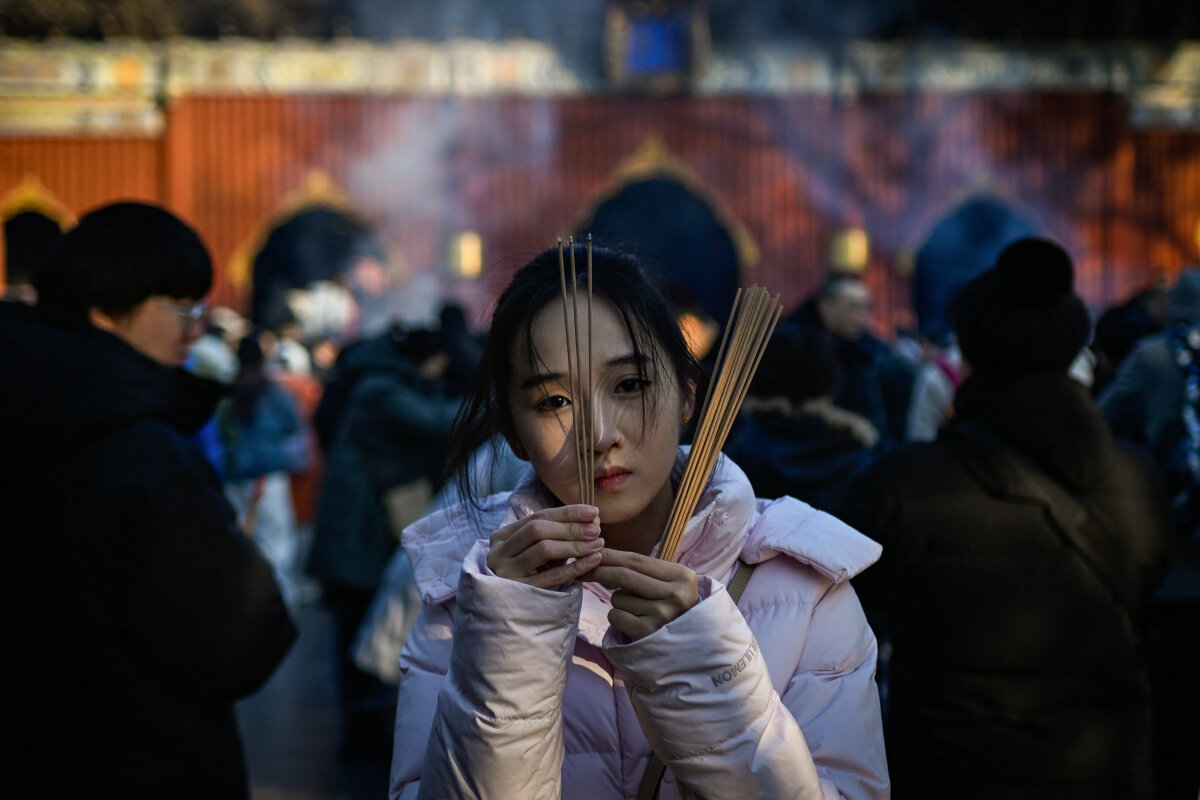

The tax agency of the Chinese communist regime has issued internal directives for sweeping audits of temples in an effort to collect back taxes, as government debt continues to grow, according to insiders who spoke with The Epoch Times.
Yan Qin, an insider within the Zhejiang provincial tax service of the State Taxation Administration, who used a pseudonym out of fear of reprisal by the regime, told The Epoch Times that “currently, government finances—from the central level down to the local level—are under severe strain.”
“To sustain the operations of the regime’s massive bureaucratic apparatus, tax bureaus across the country have received directives to bring all previously overlooked entities—specifically temples and business enterprises—fully within the scope of tax audits,” she said.
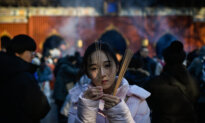
“Temples have long been in a ‘gray area,’” Yan said. “Revenue sources such as offerings, donations, and proceeds from Dharma assemblies have never been fully integrated into the official tax declaration system.
“Now, the mandate is to dig up all these records and subject them to a thorough investigation.”
Some temples in Zhejiang have already been ordered to turn over their financial ledgers, shut down the shops that sell religious artifacts, and provide detailed accounts of the fees charged for every religious ceremony, in addition to their total revenue, according to Yan.
A Shaolin Temple scandal last year brought public attention to corruption and the huge revenues of famous temples controlled by the Chinese Communist Party (CCP).
A former abbot of the renowned Buddhist monastery on Mount Song in Henan Province, was arrested in November 2025 on charges of embezzlement, misappropriation of funds, and accepting bribes.
According to reports by Chinese media Sohu on China’s most profitable temples in 2025, Shaolin Temple, which is famous for kung fu, makes approximately 320 million yuan (about $46.9 million) per year solely from admission fees.
The Lingshan Shengjing temple, famous for its Grand Buddha statue, in Wuxi, Jiangsu Province, ranked at the top with annual revenue of 762 million yuan (about $111.7 million). It was followed by Lingyin Temple in Zhejiang Province with 700 million yuan (about $102.6 million), and Nanshan Temple in Hainan, an island province in the nation’s southernmost point, ranked third with 610 million yuan (about $89.4 million).
There are numerous temples in China that have annual revenue exceeding 100 million yuan (about $14.7 million), generated from admission tickets, large temple fairs, sales of talismans and incantations, and various services, according to the reports.
The actual revenue of temples is far higher than publicly reported figures, Yan said, according to the tax authorities’ internal assessments.
“The information we have indicates that the actual income of certain temples exceeds their book figures by 20 [percent] to 30 percent,” she said.
“The tax authorities are currently conducting a comprehensive audit. Whenever we uncover instances of concealed or underreported income, we immediately pursue back taxes and impose penalties.
“To put it bluntly, the public coffers are running dry, so the authorities have no choice but to collect from these sources.”
According to public data, in 2025, China’s government debt reached $18.7 trillion, surpassing the European Union’s $17.6 trillion total for the first time.
Industry forecasts project that China’s government debt is set to grow by $1 trillion in 2026.
Meanwhile, amid the lingering sluggish economy, the Chinese regime had to cut its official economic growth target for 2026, setting gross domestic product growth at 4.5 percent to 5 percent—the lowest since 1991.
A Lucrative Target
Lin, an insider with close ties to temple management in Fujian Province in southeastern China, spoke to The Epoch Times but gave only his last name out of fear of reprisal. He told The Epoch Times that tax authorities have begun to implement stricter financial controls, targeting high-revenue temples—measures that include the introduction of third-party auditing.
“Internally, the tax authorities have designated temples with an annual income of approximately 5 million yuan (about $733,000) as ‘high-revenue temples,’ marking them as key targets for close scrutiny,” Lin said.
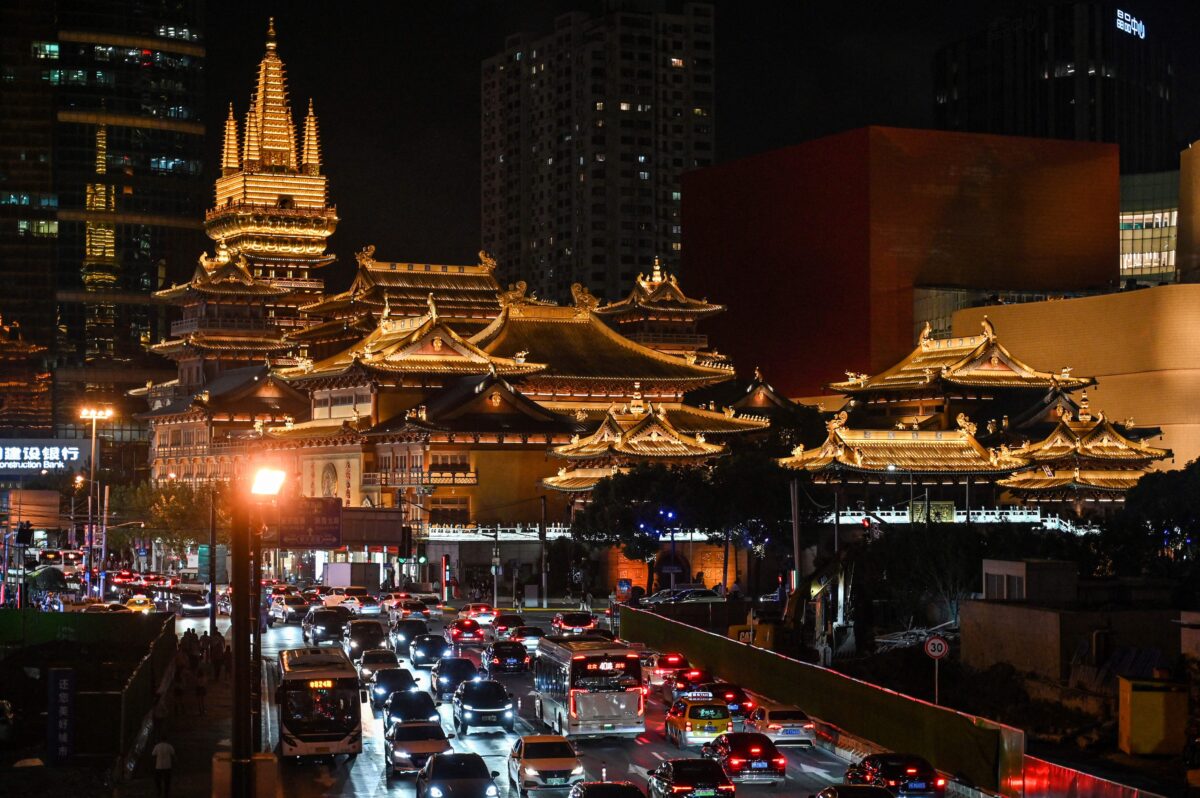
Major temples in Fujian Province such as Yongquan Temple and Wanfo Temple in Fuzhou, Nanputuo Temple in Xiamen, and Kaiyuan Temple in Quanzhou have all received notices regarding tax audits, according to Lin.
The core objective of this latest campaign is a comprehensive takeover of the financial systems of the temples, instead of a simple rectification, Lin said.
“This time, the focus is on auditing the books. In the past, the revenue structure of temples was complex—comprising public donations, ad-hoc contributions, and long-term offerings—and a significant portion of these funds was never recorded in a centralized accounting system,” he said.
“Now, everything must be fully accounted for; even past financial records require a clear explanation of their sources. This has placed many temples under sudden, immense pressure.”
Lin added that regulatory oversight is rapidly intensifying.
“I have learned that some local governments have already mandated that high-revenue temples undergo management procedures akin to corporate audits,” he said. “Although the specific criteria have not been made public, it is internally understood that the focus is squarely on those temples characterized by ‘substantial revenue and significant cash holdings.’”
Zhou Zhou, a media professional based in Zhejiang Province who used a pseudonym out of fear of reprisal, told The Epoch Times that this move directly exposes a deep-seated crisis within the CCP’s fiscal system.
“With domestic demand currently sluggish and infrastructure projects at a standstill, the government is forced to rely solely on exports and tax hikes to keep itself running,” he said. “The funds held by temples—an area that has long remained largely outside the formal tax system—appear to be a lucrative target. However, when weighed against the massive debt left in the wake of the real estate market collapse, this meager sum is nowhere near enough to plug the fiscal gap.
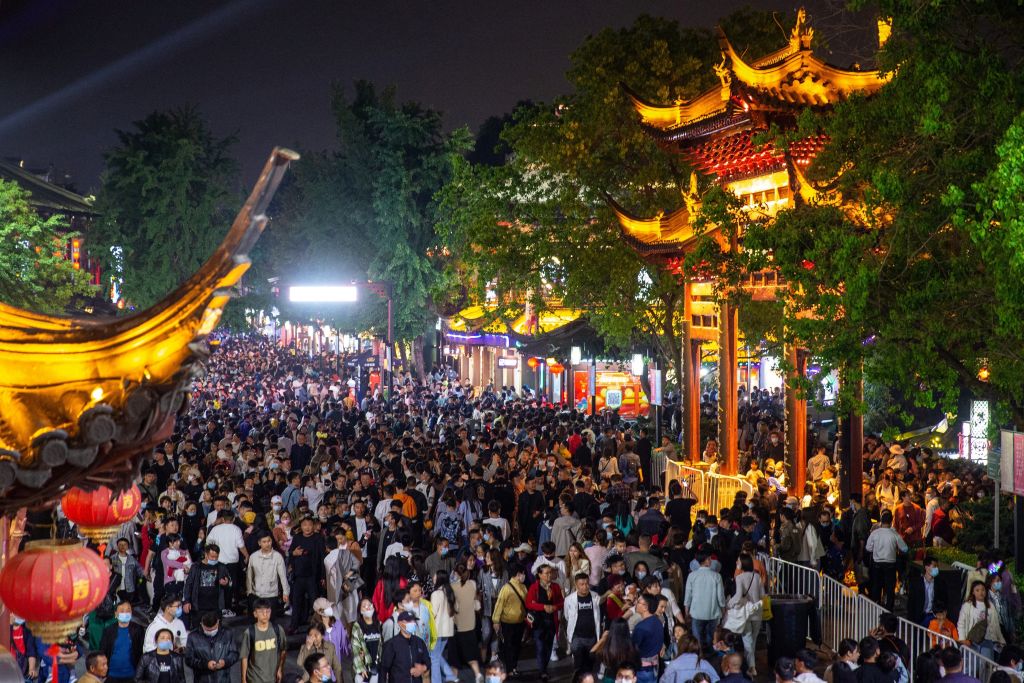
“Temples have effectively been turned into cash machines for the CCP; this signifies that these assets have, in reality, already been fully subsumed into the Party’s apparatus of control.”
Wang Xin contributed to this report.
 Friends Read Free
Copy
Facebook
Tweet
Friends Read Free
Copy
Facebook
Tweet