
Beijing’s conviction of top military generals for corruption has exposed fractures within its political and military leadership, making any near-term military action against Taiwan increasingly unlikely, according to analysts who recently spoke to The Epoch Times.
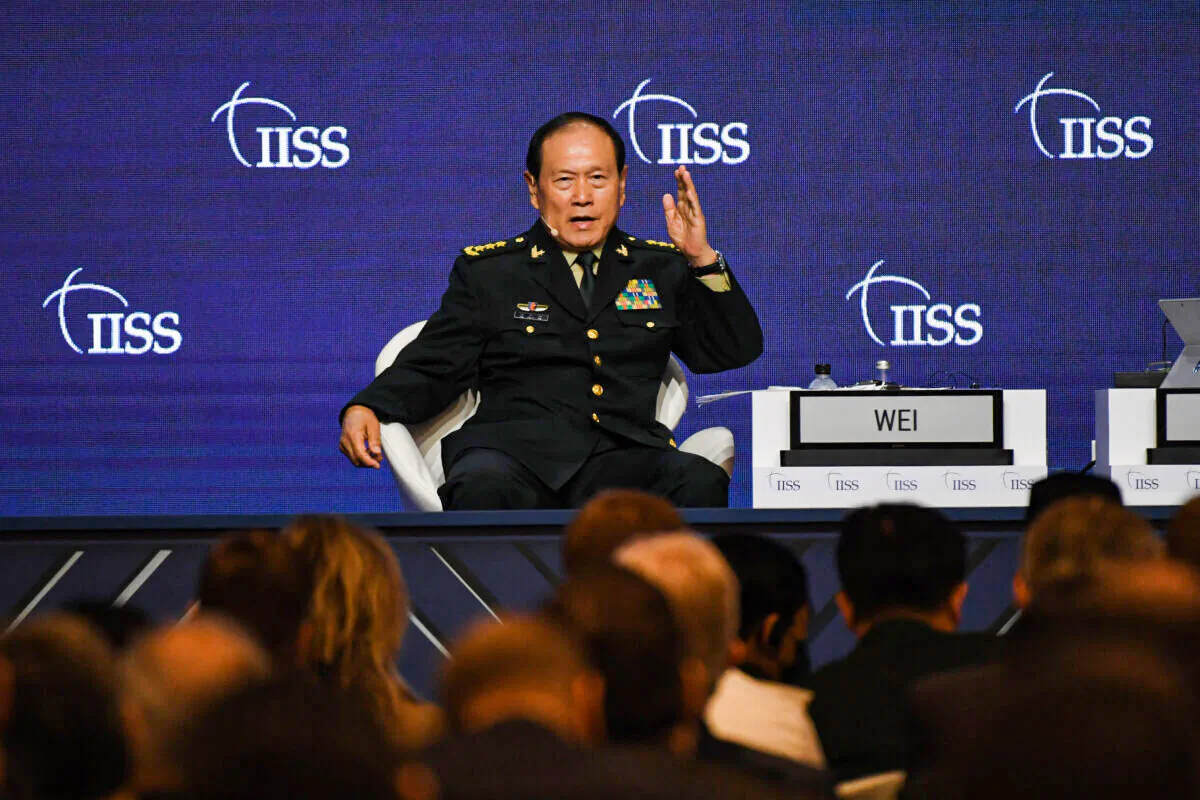
Wei Fenghe and Li Shangfu—both former Chinese defense ministers—were sentenced to death with a two-year reprieve over graft charges on May 7, according to Chinese state-run media Xinhua.
The news agency cited the court ruling that Wei was convicted of accepting bribes and that Li was convicted of both accepting and offering bribes.
The two men were also stripped of their political rights for life, it said.
“No further commutation or parole will be allowed after their penalties are commuted to life imprisonment … upon the expiration of the two-year reprieve period,” the report said.
The sentences were the harshest ever handed to senior People’s Liberation Army (PLA) generals under the military’s anti-corruption campaign, Hong Kong newspaper Ming Pao reported on May 11.
The PLA Daily—the Chinese military’s official newspaper—published a commentary on May 8 stating that the disgraced officials faced legal consequences “entirely of their own making.”
The verdict fully reflects “the unwavering resolve” of the top military command of the Chinese Communist Party (CCP) to punish corruption, it said.
Wei led the Chinese defense ministry from 2018 until March 2023, when he was succeeded by Li.
However, Li’s tenure lasted only seven months before his removal in October 2023.
Chinese leader Xi Jinping has continued to expand purges of senior officials under his anti-corruption campaign since taking power in 2012, with recent cases suggesting the crackdown has reached the Party’s top echelons.
In January, veteran PLA commanders Zhang Youxia and Liu Zhenli were placed under investigation for alleged grave breaches of discipline and law.
Zhang holds the rank of vice chairman of the Central Military Commission (CMC) and sits on the Political Bureau, or Politburo, of the CCP’s Central Committee, while Liu is a member of the CMC and heads the CMC Joint Staff Department.
In April, Ma Xingrui—another Politburo member and former Xinjiang Party secretary—was targeted on similar allegations.
‘Absolute Obedience’
Su Tzu-yun, a senior analyst at Taiwan’s Institute for National Defense and Security Research in Taipei, said the verdicts reveal serious problems between the CCP’s political and military leadership.
“Wei and Li were both promoted by Xi, yet the PLA Daily used exceptionally harsh language to denounce them,” Su told The Epoch Times.
“This suggests that Xi is either projecting an image of ‘iron discipline’ by punishing his own proteges, or the military’s corruption has simply grown too deep to hide.”
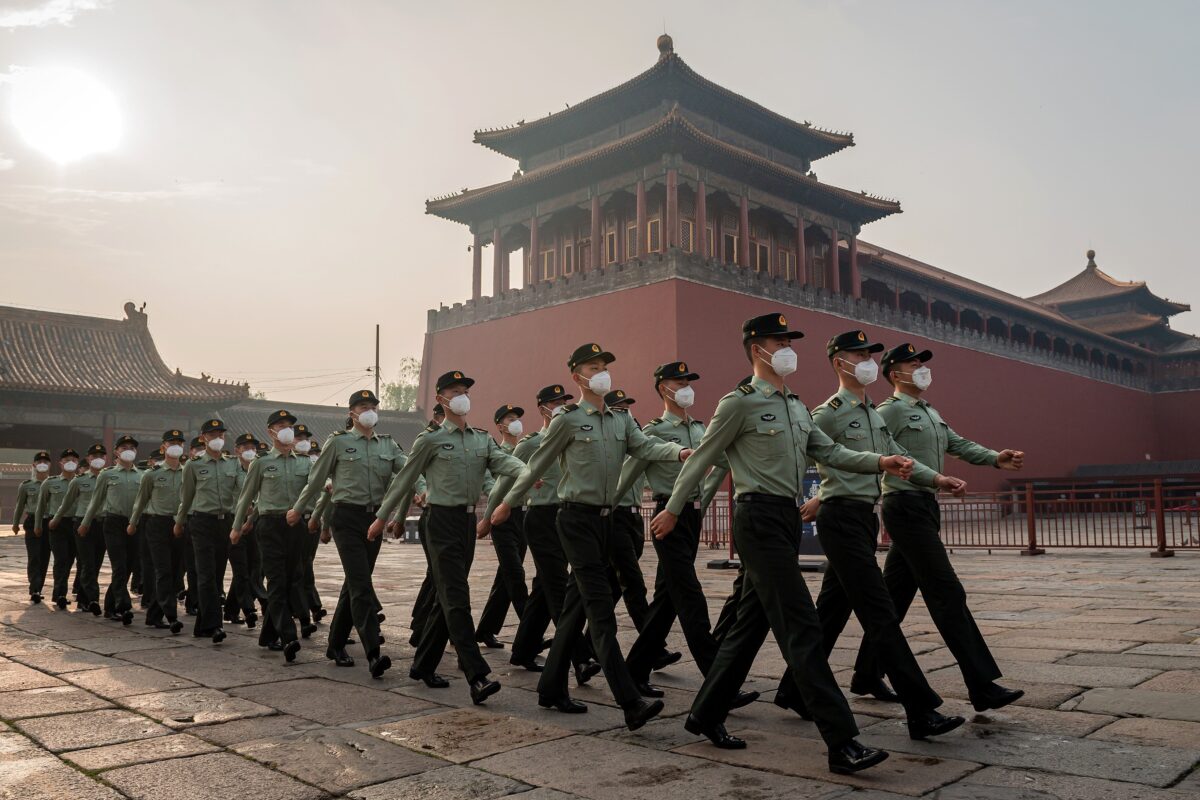
More than 100 senior PLA officers have been purged or gone missing from 2022 through Feb. 20, 2026, according to the China Power Project at the Center for Strategic and International Studies, a U.S.-based think tank.
Su said the sweeping campaign is “unprecedented,” and as those targeted implicate their former associates, the crackdown will likely continue for “at least two more years.”
Arthur Ding, professor emeritus at National Chengchi University in Taiwan, said that bureaucratic graft in China has reached extreme levels over the past 40 years of reform and opening up, and Xi may be leveraging these cases to cement “absolute obedience” to the CCP.
“Xi could certainly be using the anti-corruption drive as a tool for political purges,” Ding told The Epoch Times.
“But because the Chinese system lacks any external oversight, Xi is likely making a severe example of them to deter others and enforce strict political compliance across the bureaucracy.”
Command Chaos
Su said the sentencing of the top generals also highlights Xi’s expanding authoritarian rule, which stifles military progress and degrades the PLA’s combat capabilities.
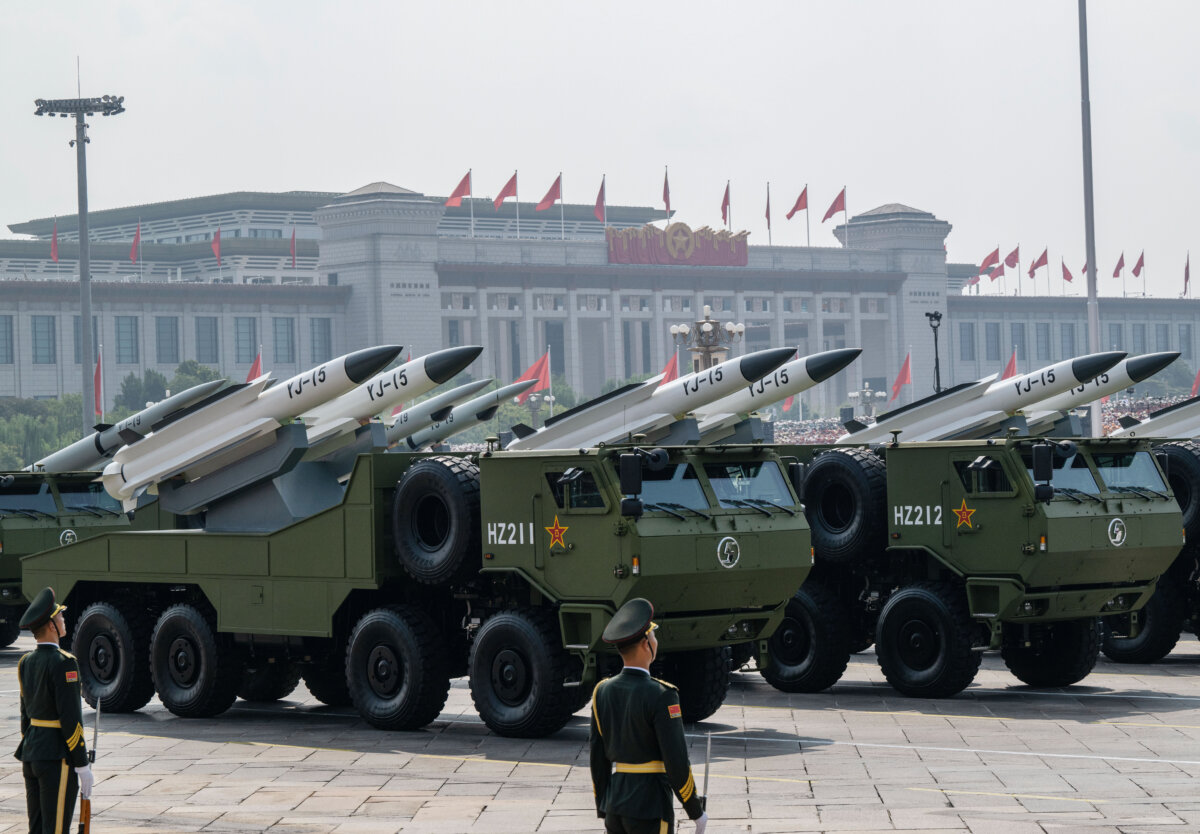
“Although the PLA has improved its military equipment, the current strategic and organizational culture will constrain those hardware upgrades,” Su said.
“The purges also show that a severe gap has emerged within the Chinese military’s entire command structure.”
Ding said the situation reveals Xi’s distrust of the military’s established hierarchy, which will undermine military readiness and delay weapons production.
“After these officials are removed, the military disciplinary commission must assign replacements to master these technical weapon systems, but arms manufacturing is highly complex,” Ding said.
“It will take significant time for their successors to gain the necessary expertise, inevitably stalling procurement and delaying equipment deliveries.”
Hindering Taiwan Invasion
The ongoing purges suggest the PLA is unlikely to offer candid military advice to Beijing, directly impacting its potential invasion of Taiwan, according to Su.
Taiwan is a self-governed democracy that the CCP has never controlled but has vowed to annex by force.
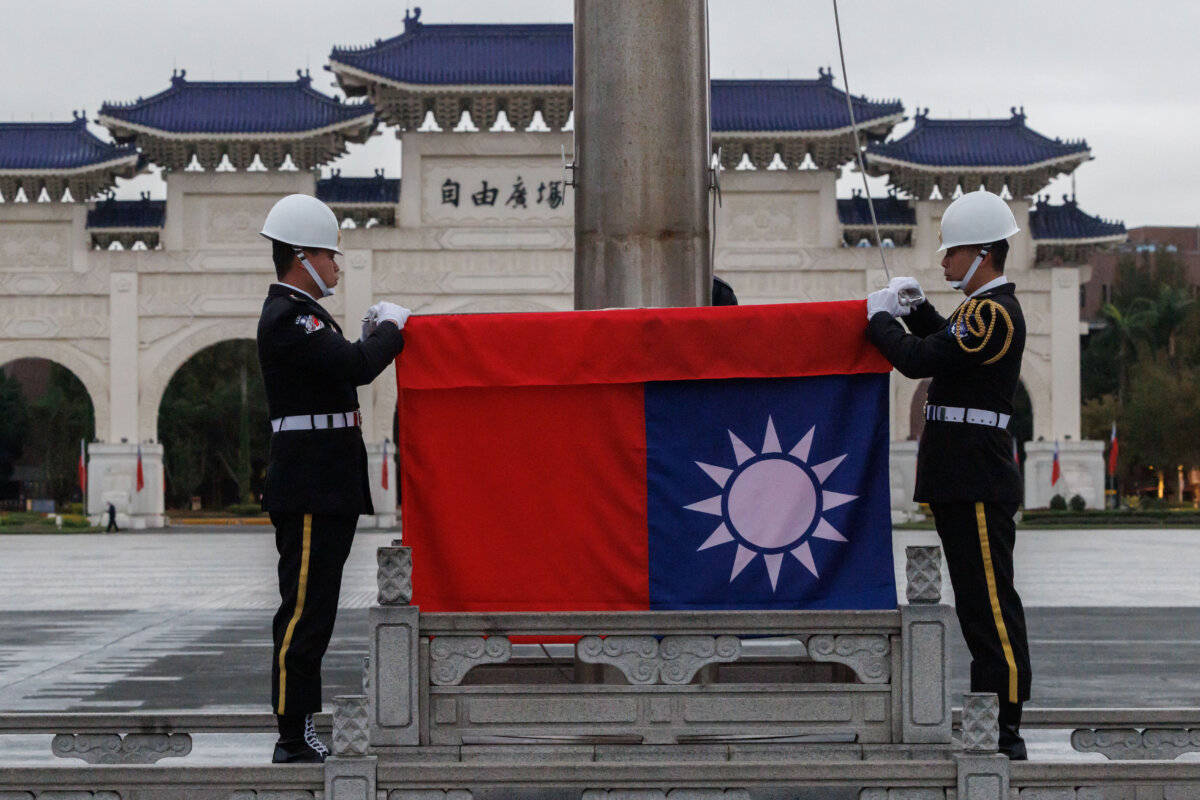
“Whether in the Taiwan Strait, the South China Sea, or the East China Sea, the PLA’s priority has shifted toward self-preservation—choosing inaction to avoid the risk of making a mistake,” Su said.
Su also said that the Chinese military remains hesitant due to the strengthening of defense ties between Washington and Taipei, and to Tokyo’s commitment to securing the first island chain.
The first island chain—which includes Taiwan, mainland Japan, and the Philippines—is widely seen by analysts as a strategic buffer limiting China’s ability to project military power into the Pacific.
“While some predict a military offensive against Taiwan by 2027, the likelihood remains very low, as launching such an attack would only accelerate the collapse of the CCP,” Su said.
“Xi is unlikely to act impulsively because his primary focus is securing another term, and he can still meet his political objectives without attacking the island.”
Xi secured an unprecedented third term as the CCP’s top leader in 2023, which runs through 2028, and some analysts believe he is positioning himself for a fourth term.
In a similar vein, Ding said that the current leadership shake-up creates significant obstacles for large-scale PLA operations.
“Positions in the top military command in China must typically be filled by the most senior and experienced generals, but the crackdown has left a shortage of qualified talent,” Ding said.
“Vacancies in these critical roles will hinder the execution of tactical missions, and the command structure is unlikely to be rebuilt before the 21st CCP National Congress.”
The 21st CCP National Congress—scheduled for late 2027 in Beijing—is the Chinese regime’s key forum for high-level leadership transitions.
Ding said the command vacuum means that any planned military action against Taiwan would face significant delays.
“Without direct intervention by Xi to fast-track appointments, rebuilding its senior ranks could take three to five years,” Ding said.
“Consequently, if Beijing insists on attacking Taiwan, any such operation would likely be delayed by three to five years beyond the original timeline.”
 Friends Read Free
Copy
Facebook
Tweet
Friends Read Free
Copy
Facebook
Tweet