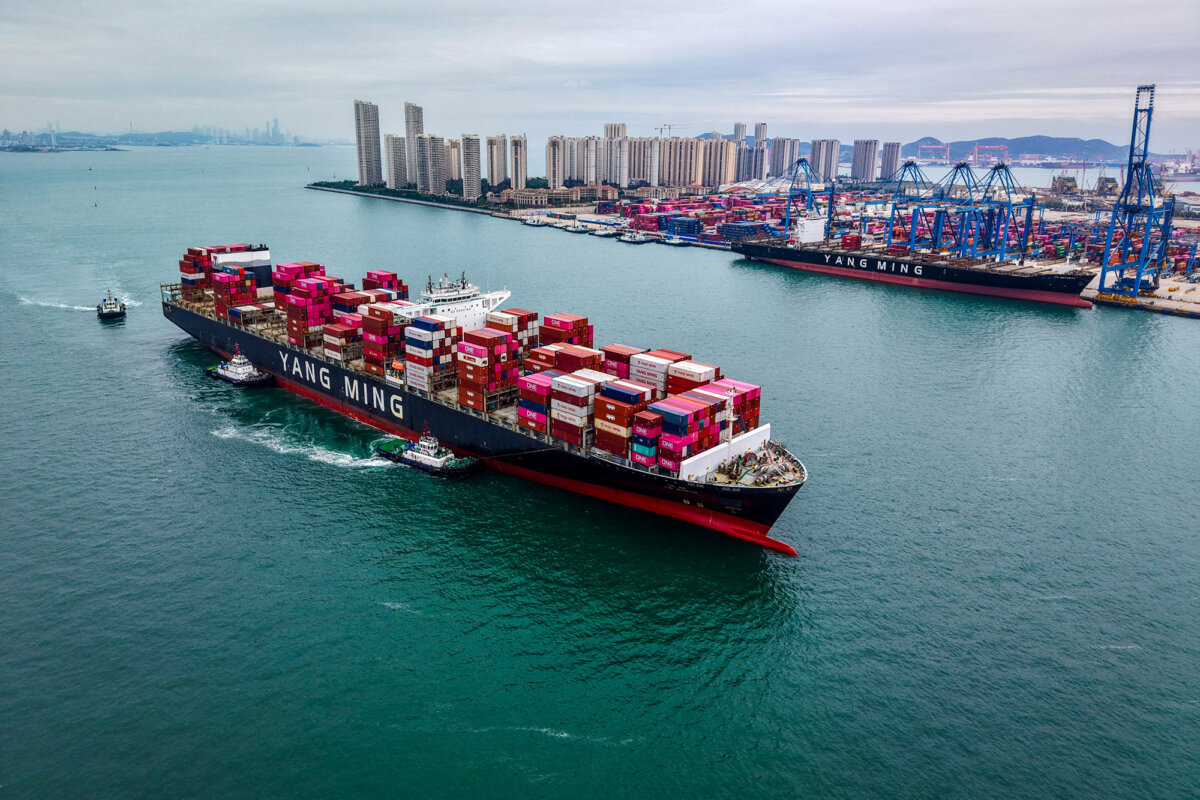

Rising tensions in the Middle East are disrupting cargo routes, forcing Chinese exporters to absorb the costs. Some traders say their goods were unloaded and rerouted without warning, causing them to pay thousands of dollars more to get shipments to their final destination.
Chinese industry insiders recently told The Epoch Times that the disruption is increasing pressure on China’s small and midsize exporters, many of which are already struggling in a weak domestic economy. They said that despite the Chinese Communist Party’s (CCP’s) close ties with Iran and its claims of influence in the region, those political relationships have provided little real protection for ordinary Chinese businesses when trade routes break down.
The individuals interviewed requested anonymity or only provided their surnames out of fear of reprisal.
According to a source in Beijing’s foreign trade circle, Chinese Foreign Minister Wang Yi and senior economic officials have recently been in frequent contact with Iran in an effort to deal with problems involving stranded Chinese cargo ships. But those talks have produced no clear progress.
“Iran isn’t giving them any face,” the source told The Epoch Times. “Their attitude has been very cold. They just tell the Chinese side to wait patiently. Weeks have passed, the route is still blocked, and nothing has moved forward.
“The CCP acts boldly internationally, but when it matters, it can’t even protect the lifeline of its own merchants. It’s all empty talk.”
Cargo Rerouted, Small Exporters Left With Hefty Bill
One recent case drew attention online.
On March 21, a woman who runs a foreign trade business in Shenzhen posted a plea for help on social media. She said two containers she had shipped from Shenzhen Port to Kuwait in early March were removed from the vessel by the carrier without her approval and left at a port in India.
In the video, she said the company gave no warning.
“The shipping company didn’t notify us at all,” she stated. “By the time we checked the tracking data, the goods were already in India.
“Now they say that if we want the cargo sent to the final destination, we have to pay another $4,500 per container.”
Fighting back tears, she said her company couldn’t handle the sudden expense.
“We’re just a small company trying to make a living,” she said. “We simply can’t bear this kind of unexpected risk.
“Now all the war risk and shipping costs are being pushed onto people like us in foreign trade.”
A Beijing-based scholar surnamed Zhou, who monitors developments involving the CCP and Iran, said the Shenzhen case may appear to be a normal business dispute on the surface, but it points to a much larger issue.
“The CCP has long pushed what it calls a ‘strategic partnership’ policy in the Middle East,” Zhou told The Epoch Times. “In reality, it has quietly supported forces such as Iran and used that as leverage in its broader competition with the West.
“But the consequences of that high-level political opportunism are usually borne by grassroots foreign trade merchants.”
Because of Beijing’s murky relationship with what he called “axis of evil” states, Zhou said ships carrying Chinese cargo could face greater security risks and higher insurance costs in sensitive waters.
He said that large international shipping companies often prioritize their own protection first, even if it means smaller Chinese exporters suffer the consequences.
“To avoid sanctions risk or very high insurance premiums, some major global carriers will sacrifice Chinese small businesses with weak bargaining power first,” Zhou said. “For them, dropping Chinese cargo headed to sensitive destinations costs much less than having an entire vessel detained or attacked.”
He pointed out that Beijing has helped inflame tensions abroad but has not provided real diplomatic protection for private trade.
“In this kind of turmoil, Chinese exporters’ containers become political castoffs that nobody wants to claim,” he said.
Liu, a Zhejiang-based commentator on the foreign trade industry, told The Epoch Times that Chinese exporters now face pressure from both abroad and at home.
“Doing foreign trade now means protecting against both external and internal problems,” he said. “The domestic economy is worsening, and overseas routes are also being blocked now.
“State media talks every day about ‘great power diplomacy,’ but in reality, it’s ordinary people like us who are bearing the cost of [Beijing’s] big narratives.”
A mainland Chinese internet user wrote: “All the risks end up at the tail end of the chain. The current policy direction does not care about people’s livelihoods at all. Foreign trade is starting to feel like Russian roulette.”
Wang Xin contributed to this report.
 Friends Read Free
Copy
Facebook
Tweet
Friends Read Free
Copy
Facebook
Tweet