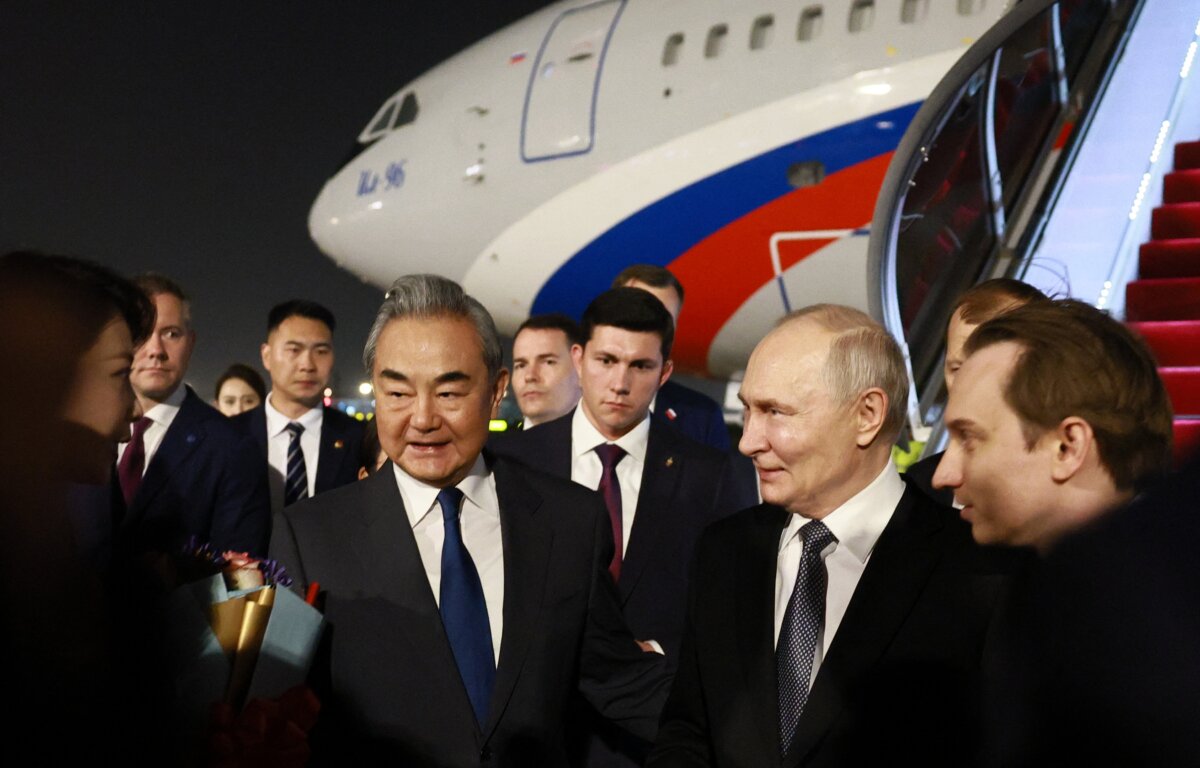

Chinese leader Xi Jinping and Russian President Vladimir Putin praised the strength of China–Russia ties on May 20 during talks in Beijing, presenting their partnership as a stabilizing force in a turbulent world even as key economic issues, including a long-delayed gas pipeline deal, remained unresolved.
Putin’s visit came only days after U.S. President Donald Trump concluded a closely watched summit with Xi in the Chinese capital, adding geopolitical significance to the Kremlin leader’s trip.
Xi welcomed Putin at the Great Hall of the People with an honor guard, military band, and 21-gun salute, according to a statement from China’s Ministry of Commerce. The two leaders later held both small-group and expanded meetings and were expected to continue discussions over tea in a more informal setting.
At the opening of talks, Xi described Putin as an “old friend” and said China and Russia had built relations based on “mutual respect, justice, and mutually beneficial cooperation,” according to a transcript of his remarks published by Putin’s office.
“China–Russia relations have reached this level because we have been able to deepen political mutual trust and strategic cooperation,” Xi said.
Putin called Xi a “dear friend” and said bilateral ties had reached an “unprecedentedly high level.”
“In the current tense situation on the international stage, our close cooperation is especially needed,” Putin said.
The two leaders agreed to extend a China–Russia friendship treaty, first signed in 2001. They also signed a joint statement on strengthening comprehensive strategic coordination and witnessed the signing of about 20 cooperation agreements covering areas including trade, education, and technology.
Both leaders also voiced support for what they described as a more multipolar world order, while criticizing unilateralism and hegemonic behavior in the context of what they described as a “chaotic international situation,” per the Kremlin readout.
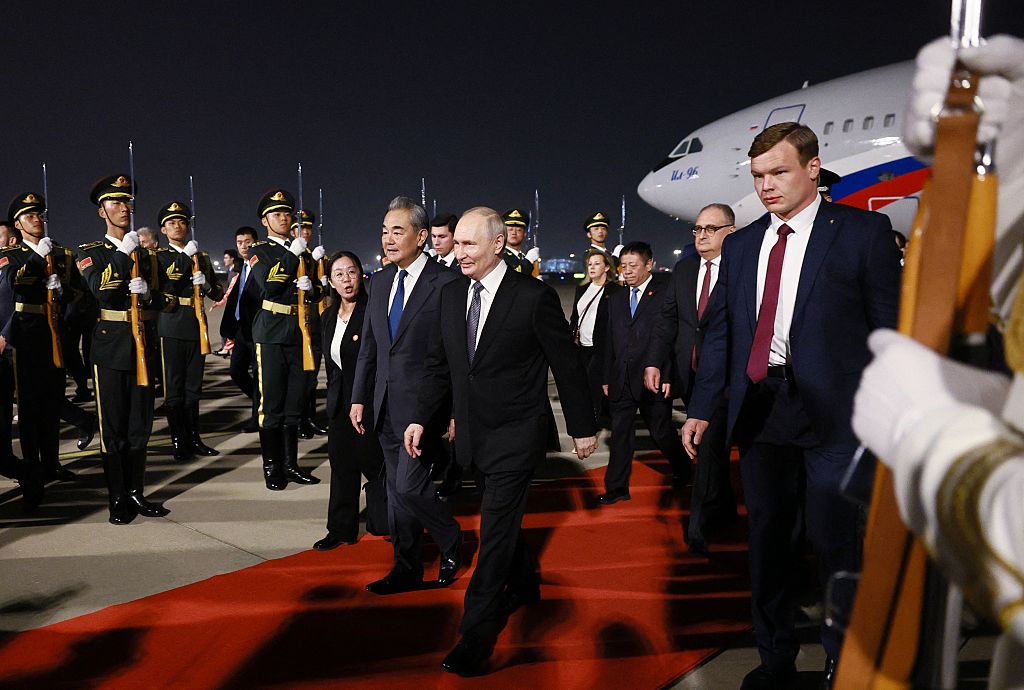
Putin invited Xi to visit Russia next year, as the two traded praise and referenced their close ties.
Energy Cooperation at Forefront
Energy cooperation was high on the agenda; Moscow signaled ahead of Putin’s visit that it was seeking further energy agreements with China, the largest buyer of Russian oil.
Putin said energy remained the “driving force” behind bilateral economic cooperation and described Russia as a reliable supplier amid Middle East disruption.
“Amid the crisis in the Middle East, Russia continues to maintain its role as a reliable supplier of resources, while China remains a responsible consumer of these resources,” Putin said.
Russian gas giant Gazprom said after Putin’s previous visit to Beijing in September 2025 that the two nations had agreed to move forward with a second pipeline, the Power of Siberia 2 gas pipeline.
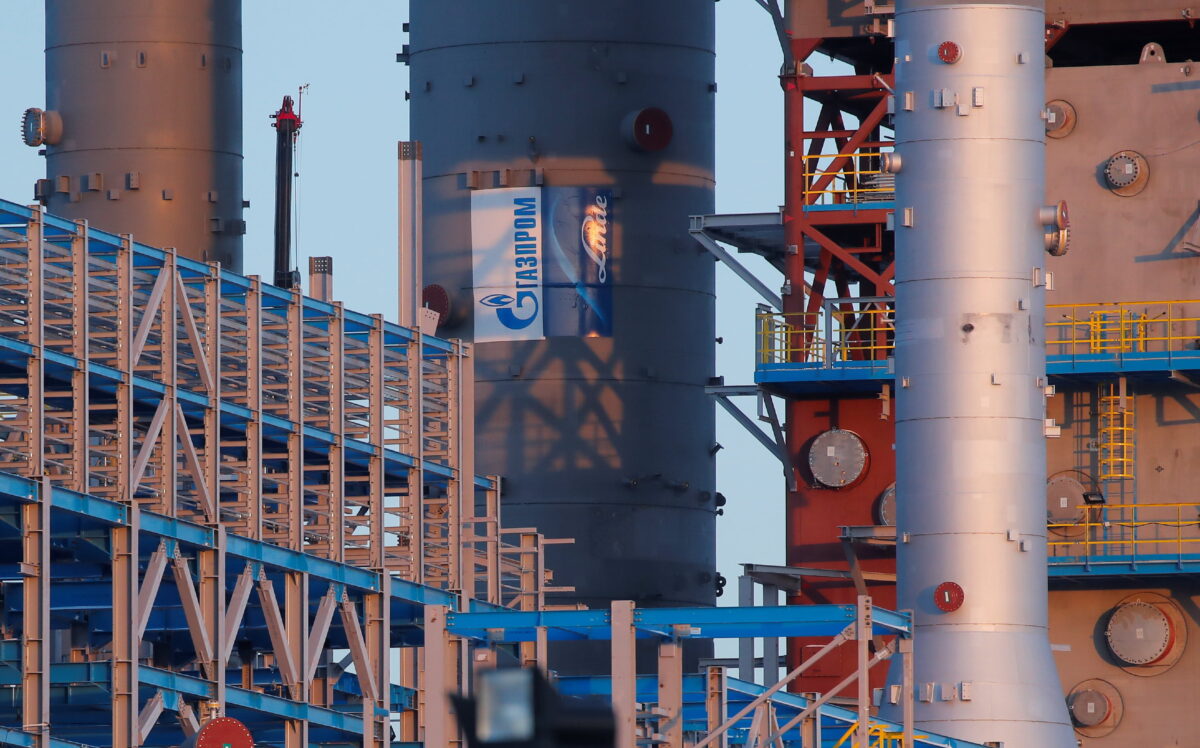
The planned 1,616-mile pipeline would transport 50 billion cubic meters of gas annually from Russia’s Yamal region to China through Mongolia, complementing the existing Power of Siberia pipeline.
Despite positive rhetoric from both sides, there was no indication of a final breakthrough on the project.
Xi said cooperation in energy and resource connectivity should serve as a “ballast stone” in bilateral ties, but he did not specifically mention the Power of Siberia 2 pipeline.
The Kremlin later said the two sides had reached a “general understanding on the parameters” of the project, although no details or timeline were announced.
Insight Into Trump–Xi Talks
Putin’s visit was also closely watched for signs of how Moscow views improving engagement between Beijing and Washington following Trump’s trip to China.
Kremlin spokesman Dmitry Peskov said before the visit that Putin and Xi would exchange views about Trump’s meeting with the Chinese leader and that Moscow hoped to receive information “firsthand.”
An insider with close ties to China’s diplomatic establishment told The Epoch Times that one of the central goals of Putin’s visit was to assess whether the Trump–Xi summit produced any shifts in China’s position on the war in Ukraine or the conflict involving Iran.
Trump said after meeting Xi that the two leaders discussed Ukraine and shared a desire to see the conflict settled. He also said Xi pledged not to provide military equipment to Iran following joint U.S.–Israeli strikes earlier this year.
Russia has relied increasingly on China for trade, technology, industrial goods, and diplomatic support since Western sanctions intensified following the invasion of Ukraine.
NATO Secretary-General Mark Rutte was asked during a May 20 press briefing whether China was training Russian soldiers in drone warfare and whether some of those trained soldiers were now in Ukraine fighting.
Although Rutte did not address the specific question, he responded by saying that China has been active in helping Russia evade sanctions and in delivering dual-use goods to support Moscow’s war effort.
“We knew already that was taking place, so I’ve never been naive about China’s role when it comes to Russia’s war against Ukraine,” he said.
Alex Wu contributed to this report.
 Friends Read Free
Copy
Facebook
Tweet
Friends Read Free
Copy
Facebook
Tweet