
President Donald Trump is set to challenge Chinese leader Xi Jinping over Beijing’s record-breaking purchases of Iranian oil during a high-stakes summit on May 14–15, as Washington warns that Chinese capital is sustaining Tehran’s military capabilities.
U.S. Trade Representative Jamieson Greer, speaking on Bloomberg Television on May 6, confirmed that China’s refusal to comply with U.S. sanctions “has to be a discussion item” when the leaders meet in Beijing. Greer characterized Iran as the world’s leading state sponsor of terrorism, asserting that any entity purchasing its crude is complicit in that activity.
The upcoming summit will occur against a backdrop of a revenue paradox that has allowed the Iranian regime to continue to profit despite intensified military pressure. Since the start of Operation Epic Fury in late February and the subsequent U.S. naval blockade, global energy prices have surged, and in the interim, it has cushioned the blow to Tehran’s treasury.
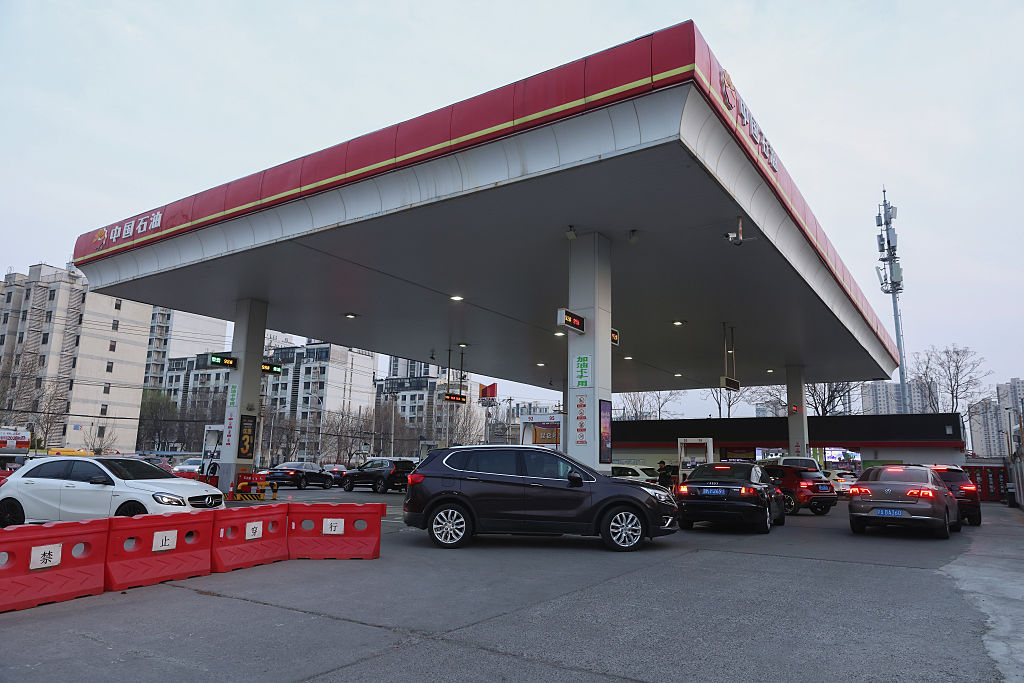
According to Vortexa Analytics, China utilized a “dark fleet” to import a record 1.8 million barrels per day (bpd) in March 2026, as buyers aggressively stocked up ahead of the conflict. While the physical volume of exports dropped in April due to the U.S. blockade, the financial impact has been mitigated by a spike in global oil prices.
With Brent crude trading at a four-year high of $120 to $126 per barrel, Tehran is generating an estimated $139 million to $170 million in daily revenue. Kpler data further suggests that while the U.S. blockade has slowed new loadings at Kharg Island, Beijing is drawing from a massive reserve of approximately 155 million barrels of Iranian crude currently held in floating storage to keep its domestic refineries running.
Greer signaled that the United States is prepared to prioritize U.S. economic sovereignty over traditional diplomatic sensibilities. He compared Beijing’s defiance to the European Union’s longstanding “blocking statute” regarding sanctions on Cuba, emphasizing that Washington will have “hard conversations” with any partner that undercuts American interests.
He emphasized that the Trump administration’s primary goals remain the re-industrialization of the American economy, reducing trade deficits, and raising real manufacturing wages. Greer warned that Washington would “fix the terms of trade with trading partners, friend or foe.”
The Beijing summit next week is expected to be a comprehensive negotiation covering tariffs, technology controls, market access, and regional security. However, while the Iranian oil trade remains a primary point of leverage, Greer said that the United States is “looking for stability with China.”
 Friends Read Free
Copy
Facebook
Tweet
Friends Read Free
Copy
Facebook
Tweet