
News Analysis
The 2026 BRICS summit in India ended with a carefully balanced declaration—and a familiar message from Chinese leader Xi Jinping. Speaking twice at the gathering, Xi made his usual case against unilateralism, power politics, and protectionism, while calling for a stronger role for developing countries in global affairs.
Analysts who spoke to The Epoch Times say there was little new substance in Xi’s remarks and that the summit exposed the limits of Beijing’s ability to turn the expanded BRICS grouping into a political force against the United States and the West.
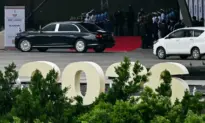
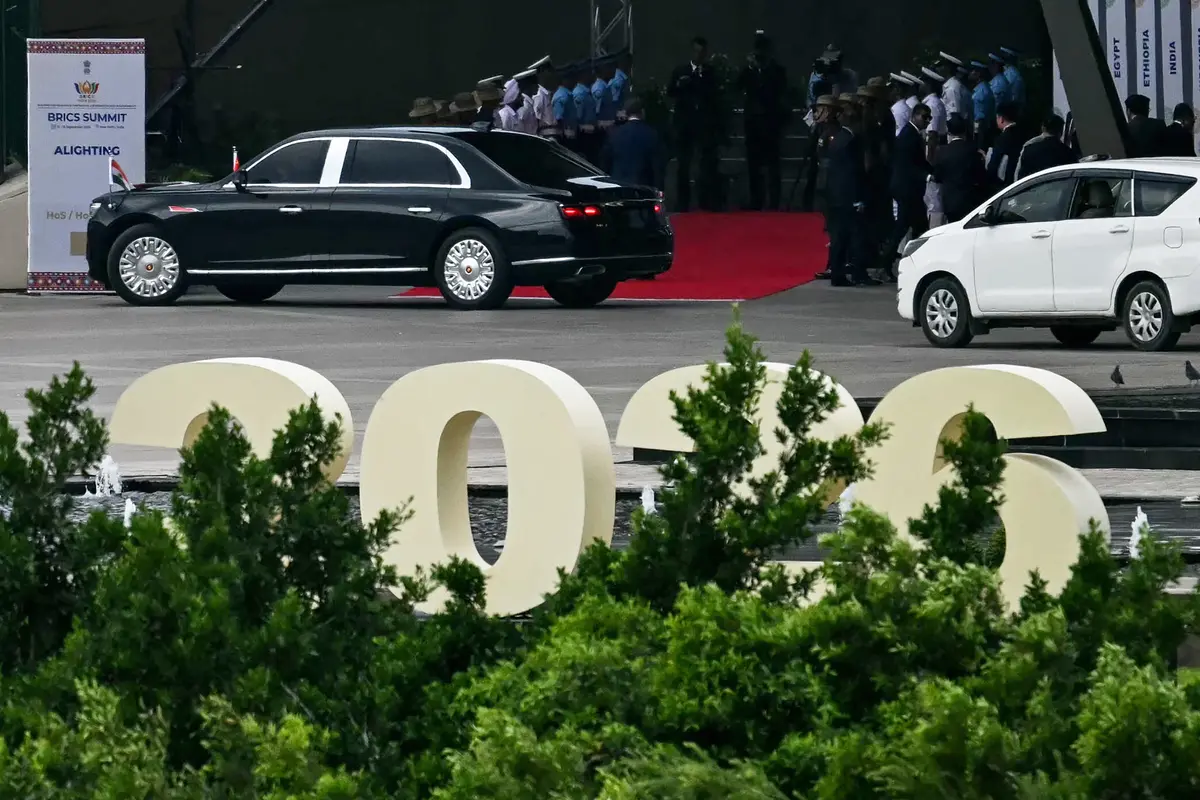
The 18th BRICS Summit was held in New Delhi on Sept. 12–13 under the theme “Building for Resilience, Innovation, Cooperation, and Sustainability.” The leaders adopted by consensus the New Delhi Declaration, which reaffirmed shared BRICS positions in favor of multilateralism and a WTO-centered trading system. It expressed concern over unilateral tariffs, protectionism, and other non-tariff measures deemed inconsistent with WTO rules, and condemned unilateral coercive measures—including certain economic and secondary sanctions—that it said were contrary to international law and the UN Charter.
At the same time, the declaration did not turn these criticisms into a direct political confrontation with Washington. In an opinion column in The Indian Express, C. Raja Mohan of the Council for Strategic and Defense Research argued that the text did not make BRICS a collective political front against the United States or the West; it also noted that the declaration did not name U.S. President Donald Trump and employed calibrated language on divisive geopolitical questions.
As BRICS chair, India also emphasized practical cooperation in areas including trade, supply chains, health, food security, climate adaptation, digital systems, small businesses, and development finance.
The group has now expanded to 11 full members: Brazil, Russia, India, China, South Africa, Egypt, Ethiopia, Indonesia, Iran, Saudi Arabia, and the United Arab Emirates. According to the Indian government, the members together account for approximately 49.5 percent of the world’s population, 40 percent of the global GDP, and 26 percent of global trade.
However, analysts say this economic weight does not necessarily translate into political unity. With the ongoing U.S.–China competition and unresolved tensions between China and India, Beijing faces significant obstacles in using BRICS as an anti-U.S. coalition.
Xi’s Speech: Familiar Themes
In the first session of the BRICS leaders’ meeting, Xi called for opposition to unilateralism and power politics. He urged members to resist protectionism, reject Cold War thinking, and oppose bloc confrontation, while calling on BRICS countries to take greater responsibility and “be pioneers” in addressing global challenges.
Chen Pokong, a U.S.-based writer and political commentator, told The Epoch Times that Xi’s speech contained “nothing new.”
Chen said Xi’s remarks were broadly similar to statements he has made on other occasions. In his view, Xi was essentially using BRICS as a platform to challenge the United States ahead of his expected visit to Washington and to demonstrate that China had international partners.
But Chen argued that countries such as Brazil and India would not risk seriously damaging their relations with the United States by openly siding with Beijing.
“As a result, much of what Xi says is simply talking to himself,” Chen said.
In his second speech, Xi included five proposals for cooperation, the first of which was open-source artificial intelligence.
Chen noted that Xi emphasized AI cooperation at a time when U.S. media outlets reported allegations that Chinese AI companies had used large-scale distillation techniques to extract or replicate capabilities from U.S. AI models, including Anthropic’s Claude. Separately, Anthropic reported that China-linked actors used Claude accounts to support surveillance of political, religious, and diaspora targets, including monitoring connected to overseas communities and protests.
Against that backdrop, Chen said that Xi’s decision to prioritize AI in his BRICS proposals in this way may not have been the wisest choice.
Chen also criticized Xi’s comments on artificial intelligence, world peace, and opposition to trade protectionism and the authority of the United Nations, describing them as “contrary to common sense.”
“To understand Xi, read his words in reverse,” Chen said. “When you realize the opposite conforms to common sense, you will understand what kind of person Xi is.”
Beijing Not Ready for Direct Confrontation
Xi’s remarks attracted particular attention because they were made amid ongoing tensions between China and the United States, as well as ahead of a planned meeting between the two countries’ leaders.
In his speech, Xi stated that efforts to “decouple and sever supply chains” could not stop China’s development and that “small yards with high fences” would only constrain those who built them and divide the world. He also called for opposition to the excessive use of tariffs and all forms of protectionism.
Xi did not directly name the United States, though his remarks were widely understood as criticism of U.S. policies. His second speech was even less confrontational.
According to China affairs expert Wang He, Xi’s remarks were not particularly aggressive toward Washington. Instead, Xi spoke in broad terms about maintaining peace and stability.
“He is mainly raising a flag and putting forward slogans,” Wang told The Epoch Times. “It is essentially a statement of position without much substantive content.”
Wang added that the timing was important. With the Trump–Xi summit approaching, Xi would not want to take actions or make statements that could unnecessarily provoke Washington.
China’s national strength is also limited compared to the United States’, Wang said. Beijing wants to use BRICS cooperation to draw other countries closer, but it still lacks the ability to confront Washington directly.
“Politically, it cannot compete with the United States,” Wang said. “If it were to engage in a substantive confrontation with the United States, the Chinese Communist Party would not dare do so at this point.”
Criticizing the West, but Not an Anti-Western Bloc
Chinese state media have portrayed Xi’s initiatives as providing direction for the future of expanded BRICS cooperation. Chinese state-run news outlet Xinhua News Agency has described China as an active participant, a strong driver, and an important contributor to BRICS cooperation, crediting Beijing with promoting global governance and strengthening the voice of developing countries.
Wang disputes that portrayal.
He argued that the expanded BRICS grouping remains limited by major differences among its members.
The New Delhi Declaration itself illustrates that problem. While members agreed to criticize unilateral tariffs, non-tariff barriers, protectionism, and unilateral sanctions, the document relied on carefully balanced language on issues where their interests diverge. Mohan in the Indian Express noted that the declaration avoided naming countries in connection with some of the most divisive disputes, while devoting substantial space to trade, health, artificial intelligence, and other areas of cooperation.
India, for example, has emphasized that it can cooperate with China without allowing key industries to become overly dependent on Chinese suppliers. China’s manufacturing expansion and large trade surplus also give India and other countries reasons to diversify their supply chains.
“Russia and China would like to see BRICS develop into a force capable of balancing or confronting the West,” Wang said. “India and Brazil, by contrast, place greater emphasis on economic cooperation and reform of global governance.”
He noted these differences make it difficult for the group to establish a unified position on major international issues. Instead, members often rely on broad language that allows countries with conflicting interests to remain within the same framework.
“If BRICS moves toward becoming anti-American, it will inevitably face pressure from the United States and eventually fracture,” Wang said. “Therefore, it cannot completely oppose the United States and the West. At most, it can seek limited reforms to the international order.”
Cooperation Without Trust
Xi’s attendance in New Delhi was also significant because it marked his first trip to India in seven years. He traveled to India for the BRICS summit, rather than for a separate state visit.
Chen noted that the ruling Chinese Communist Party has never regarded India as a true friend, partly due to the long-standing China–India border dispute.
Beijing has also opposed India’s bid for a permanent seat on a reformed U.N. Security Council. India and Japan have long been among the countries discussed as candidates for permanent membership in an expanded council, but China has resisted granting the two countries permanent seats.
“The essence of China–India relations is that they are friendly on the surface but hostile at heart, with both sides using each other,” Chen said.
He further stated that the member states of BRICS and the Shanghai Cooperation Organization each pursue their own calculated interests and lack mutual trust.
“These groupings primarily serve as vehicles for mutual exploitation and as bargaining chips in challenging the West. They lack any substantive capacity for political coordination,” he said.
Jon Sun and Luo Ya contributed to this report.
 Friends Read Free
Copy
Facebook
Tweet
Friends Read Free
Copy
Facebook
Tweet