

According to a new poll released on Monday, an overwhelming majority of Americans would like to see Disney produce more family-friendly entertainment.
The national survey, conducted by nonpartisan polling company Rasmussen Reports, polled 1,255 adults from April 21-23, finding 71 percent of respondents believe Disney should “return to wholesome programming and allow parents to decide when their children are taught about sexuality.”
The poll also addressed comments made by Disney exec Karey Burke during a 2022 company-wide call in which she said: “We have many, many, many LGBTQIA characters in our stories.” Ms. Burke, who served as the media giant’s president of general entertainment content, expressed her desire to see more LGBT leads, noting that she was the mother of “two queer children”—one who identified as transgender and one who identified as pansexual.
Fifty-four percent of those surveyed in the poll said programming featuring these types of characters was not appropriate for children under the age of 12. Only 33 percent of those polled believed such content was appropriate, while 13 percent indicated that they were not sure.
The polling company performed a similar study in 2022, which featured a sample size of 1,000 adults, discovering that 45 percent of adults believe the push for inclusion and diversity by media companies, such as Disney, is making children’s entertainment worse. Twenty-eight percent of respondents indicated this type of content made kids’ entertainment better, while 10 percent said they were not sure.
The Epoch Times reached out to Disney for comment, but a response was not received by press time.
Disney’s Push for Inclusion
In an apparent bid for inclusion, Disney has included LGBT characters in several of its recent films. The animated movie “Elemental,” released last year, featured a non-binary character, while the 2022 animated comedy/adventure “Strange World” introduced an openly gay character. Both films flopped at the box office. The former grossed about $30 million on its opening weekend; the latter made a little over $12 million, according to Box Office Mojo.
In line with its “commitment to inclusive storytelling,” the Walt Disney Company states on its website that it is “continuing to develop representation guidelines” across its general entertainment content and studio live-action productions.
On the company’s “Content Representation Dashboard,” Disney provides a breakdown of the percentage of men, women, people of color, and Caucasians who are employed in various scripted, film, news, and sports roles. People of color account for 40 percent of its directors, 49 percent of its series regulars and leads, 26 percent of its producers, and 34 percent of its writers in scripted content and film. On-air representation includes 41 percent of people of color, while 31 percent work behind the camera.
Walt Disney Stock Plummets
On Tuesday, the Walt Disney Company’s stock plummeted, falling 10 percent to $104.23 from $116.40 in afternoon trading, per Dow Jones Market Data. The entertainment giant’s shares took a tumble after Disney reported earnings for its second quarter, which ended on March 30.
According to the earnings report, released the same day, revenues increased by 1 percent to $22.1 billion, up from $21.8 billion compared to the same period last year.
In a statement, Bob Iger, Disney’s chief executive officer, said that the company’s results were largely driven by its experiences segment, including its theme parks and its streaming business. “Importantly, entertainment streaming was profitable for the quarter, and we remain on track to achieve profitability in our combined streaming businesses in Q4,” he explained.
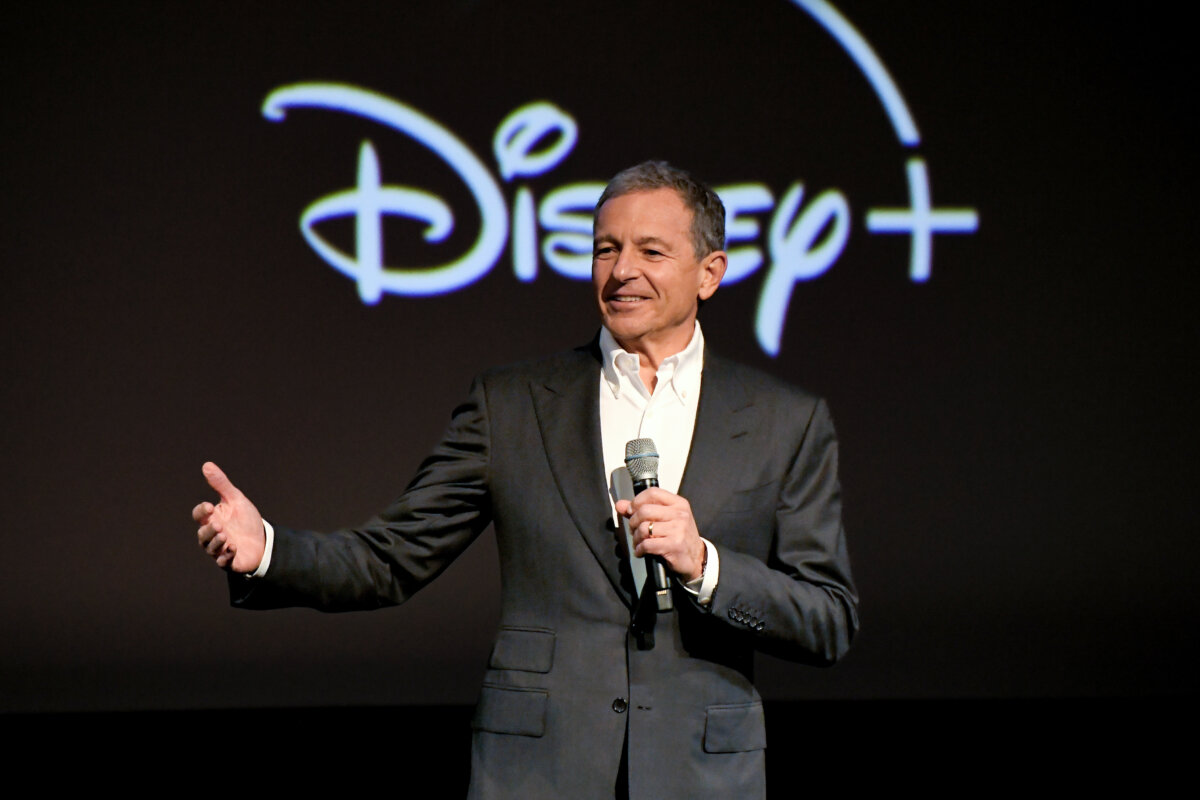
Disney’s direct-to-consumer entertainment streaming segment was up 13 percent to $5.6 billion, with Disney+ Core subscribers increasing by more than 6 million users. However, revenues for its linear networks dropped 8 percent to around $2.77 billion, down from $3 billion the previous year. Operating income for the linear segment saw a decrease of 22 percent.
Mr. Iger, who is expected to step down in 2026, said the streaming segment’s turnaround was “particularly noteworthy” considering the company reported peak losses a year and a half ago. “While we are anticipating a softer third quarter, due in large part to the seasonality of our India sports offerings, we fully expect streaming to be a growth driver for the company in the future and we have prioritized the steps necessary to achieve this,” he added.
“Looking at our company as a whole, it’s clear that the turnaround and growth initiatives we set in motion last year have continued to yield positive results, and we are executing against our ambitious strategic priorities with both speed and determination,” Mr. Iger continued.
In addition to “turbocharging growth” in the experiences category via short- and long-term strategic investments, Mr. Iger said Disney had a slew of highly anticipated theatrical releases in the pipeline, which are expected to hit theaters in the coming months.
“Our television shows are resonating with audiences and critics alike,” he added, noting that ESPN “continues to break ratings records” as Disney works to evolve the network “into the preeminent digital sports platform.”
 Friends Read Free
Copy
Facebook
Tweet
Friends Read Free
Copy
Facebook
Tweet