
Commentary
Containing China in the context of military conflicts in Russia, Iran, and Venezuela is no simple task. In the short term, Beijing is being appeased to stop these conflicts from escalating into a war with China.
U.S. tariffs, tech restrictions, and export controls are not as tough as they could be. Some have been slipping in the run-up to a U.S.–China summit planned for May. This is, in part, because Washington wants Beijing’s support in nudging Tehran and Moscow to the peace table, Beijing continues to use the threat of rare-earth element restrictions against the United States, and because Washington is arguably prioritizing U.S. exports to China. Wall Street still wants business with China, and still has plenty of influence in Washington.
If Washington rejects Chinese investment, China can go to Europe, increasing its political influence there. Brussels thus threatens to undercut U.S. attempts to contain and preferably roll back China’s international economic power. China’s ally Iran is demanding “tolls” in the Strait of Hormuz against U.S.-allied Arab energy exporters. The tolls are demanded not only in cryptocurrency but also in what one Iranian embassy touted as the “petroyuan.”
If Tehran succeeds in this extortion against freedom of the seas, Beijing could copy the tactic by blockading Taiwan’s ability to export the world’s most advanced semiconductors. The United States is walking a global tightrope while fighting a multi-front war.
The Chinese Communist Party (CCP) remains the world’s most dangerous threat. It is arguably waiting out the Iran and Russian wars to weaken the United States through a depletion of our munitions. This is what it did to the Chinese nationalists during World War II. After they bore the brunt of the fighting against the Japanese, the CCP pushed them out of mainland China, and they fled to Taiwan.
However, U.S. munitions are now meeting their marks against China’s closest partners. Iran’s navy, air force, air defenses, and most of its ballistic missiles have been destroyed. The United States has arguably reduced a state-level threat in Iran down to a terrorist threat. Venezuela has been turned from a thorn in the U.S. side into a puppet of the United States. Its energy exports now flow in the direction of Washington. Russia is in a stalemate with Ukraine after severely depleting its economy and military forces.
While the United States is admittedly walking quietly and carrying a big stick when it comes to its direct relations with China, the stick is getting used on Beijing’s close partners and energy suppliers. Energy prices in China are increasing, making it more difficult for the CCP to achieve its GDP growth goals. This could eventually encourage domestic opposition to the CCP and China’s democratization. While unlikely in the short term, any crack in Beijing’s authoritarian dam is welcome.
The CCP’s credibility is getting hurt by successful U.S. military operations against its partners, without much response from Beijing. Beyond Venezuela and Iran, Cuba could be next. This could be why Washington is trying so hard to negotiate peace with Tehran. It would free the Pentagon’s attention to free islands closer to home.
Beijing wants no peace that would be good for the United States, and is reportedly sending dual-use military technology to Iran, along with missile components and shoulder-fired anti-air MANPAD missiles. Beijing is likely hiding these sales through transshipment via third countries. In exchange, Iran is shipping oil to China, which the U.S. Navy is unfortunately allowing through. The MANPADs could be used in terrorist operations against civilian airliners, putting Beijing in serious jeopardy of further aiding international terrorism.
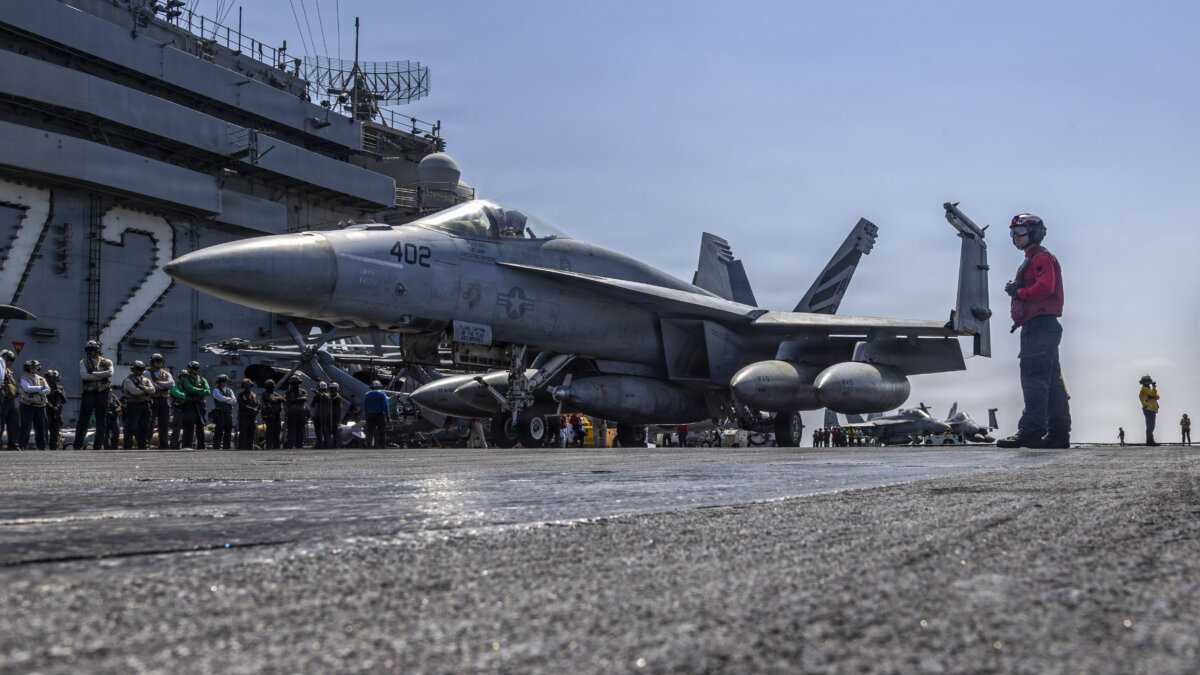
The lack of more conventional military support for Iran by China reveals the CCP as the inconstant ally that it is. And there is more that the United States could do to stop China’s support for Iran, including interdicting Iranian oil shipments at sea. Few good reasons exist for the United States to allow China and Iran to strengthen each other through trade when both countries are U.S. adversaries and the U.S. Navy is still the most powerful navy on the planet.
U.S. strategy on China appears to be sound: the degradation of the strength of Beijing’s allies, starting with the weakest and most energy-rich. Once Venezuela, Iran, and Cuba are dealt with, addressing the rest of the rogue states, including the CCP at their head, will be easier. The strategy works as long as the CCP and its partners continue to be contained and rolled back.
Views expressed in this article are the opinions of the author and do not necessarily reflect the views of The Epoch Times.
 Friends Read Free
Copy
Facebook
Tweet
Friends Read Free
Copy
Facebook
Tweet