Commentary
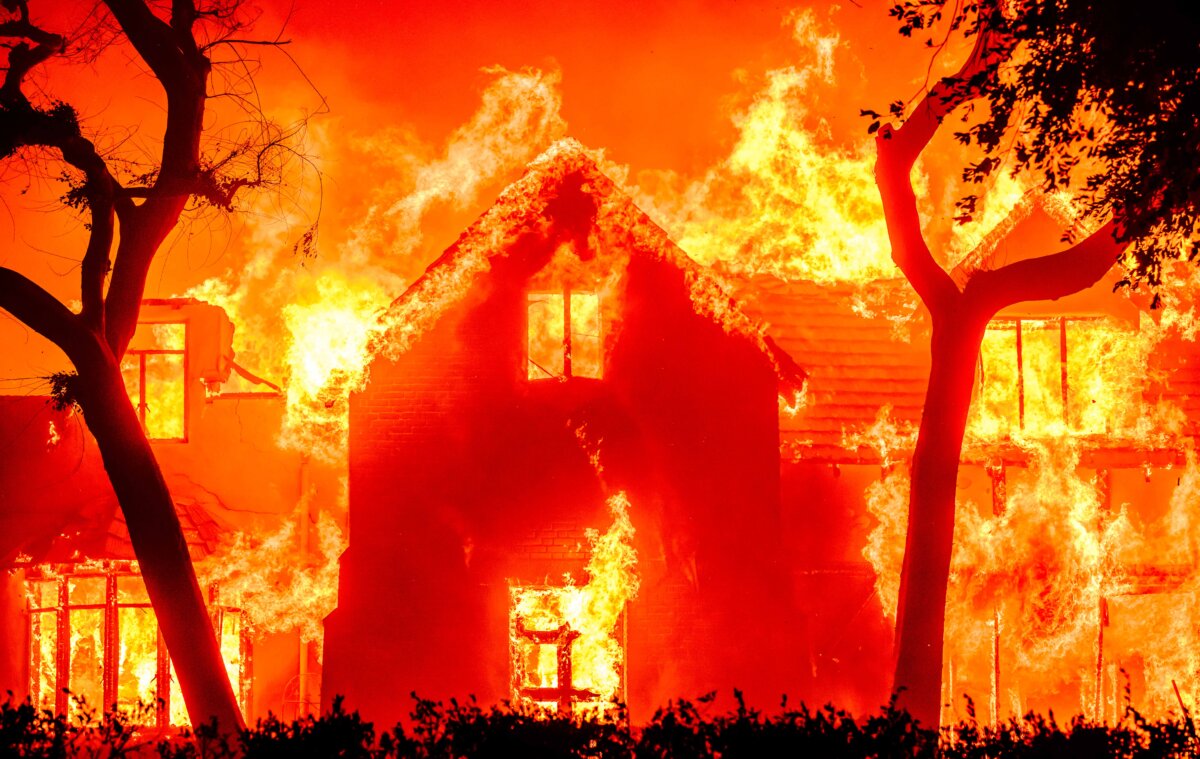
In 2025, California wildfires destroyed 13,000 homes.
Los Angeles Mayor Karen Bass announced, “We are 100 percent committed to getting this neighborhood rebuilt again!”
California Gov. Gavin Newsom echoed that, saying that his officials were “responding to it at scale, with efficiency … addressing building codes, permitting issues, and moving forward to rebuilding.”
Great! It sounded like bureaucrats would get out of the way and let fire victims rebuild quickly.
But no. Not when government bureaucrats are in control.
More than a year later, fewer than 30 of the 13,000 destroyed homes have been rebuilt.
Jim Cragg, who saved his house by putting sprinklers on his roof, blames California’s red tape.
Now he runs a volunteer group helping people navigate life after the fire. He’s frustrated that it still takes months just to get permission to rebuild.
Also, those who do get permits and start rebuilding sometimes get stopped.
“You start building on that house and, oops, there’s a permit issue,” Cragg said. “Do you shut down for five days? All those trucks are waiting, all that lumber is waiting. There’s 6,000 houses waiting behind you.”
Bass claimed that her office simplified things for homeowners.
“We have waived, put aside, suspended, so we can get through the permitting process in record speed!” she said.
“Record speed” must not mean much to politicians.
Fire victims must complete a mountain of paperwork before they can get permission to rebuild.
The green building code alone has countless rules. The flush volume of water closets must not exceed 1.28 gallons, builders must submit a construction waste management plan, garages must be wired for electric cars, and finished buildings must include educational material on positive impacts of humidity and information about California solar energy programs.
It’s a good thing there’s a digital version of these requirements. Printing it would probably violate California’s environmental rules.
“Thousands of people are traumatized, and they’re being handed [those forms] and told, ‘Learn this, figure it out, master this,'” Cragg said. “‘By the way, if you mess up on this, you may end up losing … $100,000.’ It’s scary.”
The paperwork is so overwhelming that most homeowners haven’t even applied for permits.
“Financially, it doesn’t make sense to try,” Cragg said. “This is something that could ruin your family even worse than what just happened in the fire.”
Yet his mayor still insists, “This is actually pretty quick.”
Cragg said, “It doesn’t feel pretty quick for that family that’s living in a hotel.”
As usual, government causes more problems than it solves.
The fire itself was probably exacerbated by California’s strict environmental rules.
Residents say Los Angeles County wouldn’t let firefighters use heavy machinery in areas with “protected plants.”
Also, before the fire, officials drained a reservoir of 117 million gallons to repair its cover.
As a result, Cragg said: “Fire hydrants … some worked, most didn’t. … The reservoir was empty.”
One reason it stayed empty was because California officials took months just to schedule its repair.
Everything government does costs more and takes longer.
If all the bureaucracy isn’t bad enough, the owners of empty lots are told that they still must pay property tax.
But the politicians say they’re giving them a break. You only need to pay taxes on the lot, which comes out to two-thirds of what they used to pay.
“It’s a slap in the face!” Cragg said.
Last year, Bass admitted: “There [are] dysfunctional levels of government everywhere. It isn’t anything particular to Los Angeles.”
She’s right about that.
But I think that Los Angeles is probably worse than most places.
“The Pacific Palisades is a war zone,” Cragg said. “We need a warfighter mentality there. We don’t need committees. We need a decision now. We need leadership and rebuilding now.”
In California? Don’t count on it.
Views expressed in this article are the opinions of the author and do not necessarily reflect the views of The Epoch Times.
 Friends Read Free
Copy
Facebook
Tweet
Friends Read Free
Copy
Facebook
Tweet