
Commentary
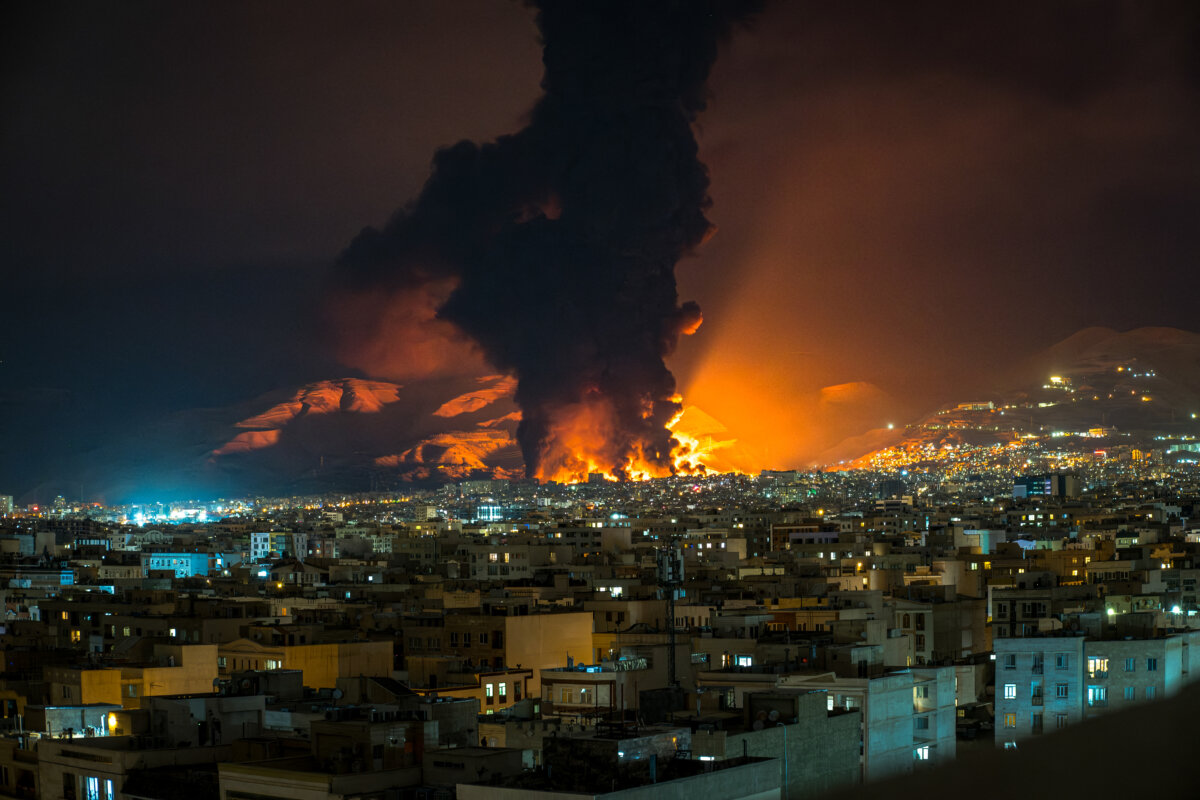
Since the beginning of the war with Iran’s terrorist regime, its missile attacks have decreased by about 90 percent and its drone strikes have decreased by 83 percent. This is likely because the United States successfully targeted Iran’s launchers and bombed the entrances to its vast underground missile storage areas. Iran’s air force and navy are no more. Many of the country’s top military and intelligence leadership are gone. Iran’s nuclear weapons development has been set back as much as a decade.
These are major successes on the heels of the capture of Venezuela’s dictator and the turn of that country towards compliance with U.S.-led international law. The global importance of these strategic shifts in two of the world’s top three countries by total oil reserves will have repercussions for their allies, including China, Russia, and North Korea.
However, victory in Iran is likely still distant. The lower-level structure of the Iranian military apparatus remains. It has instituted a decentralized command with orders to execute attacks on critical U.S. air defenses, bases, and soft civilian targets throughout the region, including oil infrastructure and transport. Iran’s leadership hopes that by increasing global oil costs, perhaps to as high as $150 a barrel, the United States will eventually stop, as in Iraq and Afghanistan. On March 9, the cost of a barrel breached $100 a barrel. The United States and allies are in discussions about releasing their strategic oil reserves.
The initial hope of an overthrow of the regime by the opposition, which emerged onto the streets in January, appears to have faded. So has the hope that the Iranian mullahs would appoint a moderate as a leader. They instead chose the son of the last hard line Supreme Leader. The regime reportedly killed as many as 36,000 Iranian protesters in January, and Iranians do not yet appear willing to risk their lives again to overturn the regime. Neither have there been many military defections or a coup against the mullahs. The Iranian military continues to target U.S. and Israeli military forces, reportedly with the help of Russian intelligence. On March 9, Iran shot a second missile against Turkey, a NATO member that could invoke the alliance’s Article 5. Both missiles were intercepted.
The cost of the first 100 hours of the war for the United States was as much as $3.7 billion. This is in part due to expensive missile interceptors and standoff munitions designed for higher-end threats like Chinese and Russian ballistic missiles. They get the job done, but for years, the Iran missile math was not good. After the Oct. 7, 2023 Hamas attack on Israel, followed by multiple Iranian attacks through 2024 totaling hundreds of missiles and drones each, the United States and Israel depleted a significant portion of their anti-missile defense (AMD) interceptor stock.
Iran launched drones that cost as little as $20,000 a piece, and ballistic missiles that cost $1 million. These often required U.S.-produced AMD interceptors. The THAAD variety, which targets missiles above the atmosphere, can cost up to $13 million each. Patriot interceptors are for closer threats but still cost up to $4 million each. To be 90 percent sure of downing a missile, one patriot could be used. To be 99 percent sure requires two.
All have been used by the United States against cheap Shahed drones. Iran has in the past produced as many as 6,000 monthly. Compare that to U.S. production of just about a thousand ABM interceptors per year. Iran may also be producing as many as hundreds of ballistic missiles a month at as little as $1 million each.
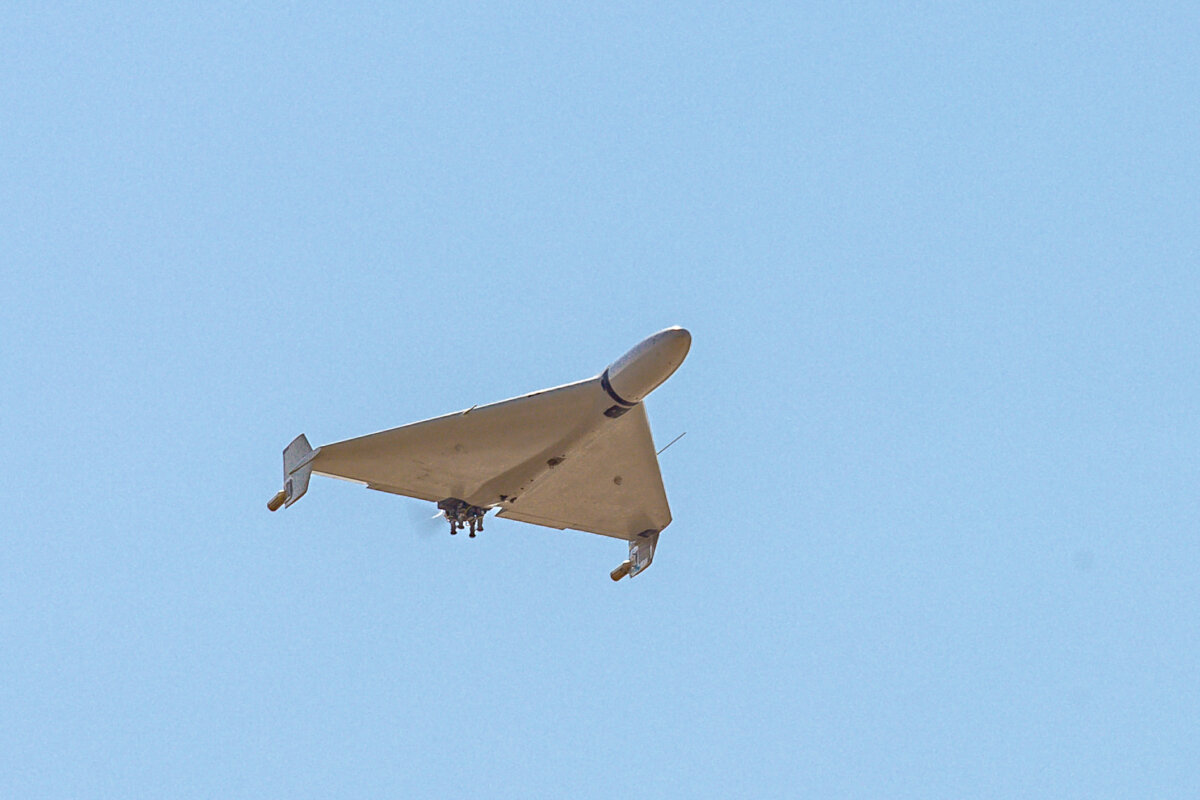
Iran’s mass production of drones gives it the opportunity for swarm tactics. On the first two days of the current war, the United Arab Emirates (UAE) was hit by 500 Iranian drones a day, with 100 a day targeting the country since then. Iran is also hitting U.S. radar installations, one of which cost $1 billion. If those are eventually taken out, the war will become much more difficult.
The cost and supply asymmetry can’t go on forever, or the United States and allies could lose through financial attrition. As Iran has proven its aggressive intent against civilians, and was allegedly close to having enough enriched uranium for as many as 19 nuclear weapons last summer, the United States and Israel evolved their strategies to prioritize the targeting of the country’s nuclear weapons development programs. This was largely achieved during the 12-day war in June.
But, that war depleted expensive reserves. About 100 of the THAAD interceptors were fired in defense. That’s about 20 percent of the stockpiles. And, Iran allegedly maintained its nuclear weapons intentions, missile development, and drone production afterwards. So, plans had to be made to strike its nuclear programs again, plus the country’s leadership and broader military targets so that this would not keep happening. U.S. and Israeli operations restarted on Feb. 28 and missile defense has again been eating into stocks of U.S. AMD interceptors and standoff munitions.
Dictators in China, Russia, and North Korea are likely watching the impressive U.S. victories in Iran, but also reading about the rapid depletion of U.S. weapons stocks. They may be thinking about this as an opportunity to launch new wars against the United States and our partners in Asia and Europe. So, the deterrent effect of the Iran war is double-edged.
To counter this problem, the United States is quadrupling production of some weapons, but it can take years between purchase and delivery of the most advanced missiles. Meanwhile, Xi Jinping has ordered China’s military to be capable of invading Taiwan by next year. Russia is already engaged in a war in Ukraine. To these ends, our adversaries have long built up their weapons supplies. China has the world’s largest industrial supply chains, and so is arguably the biggest threat from an inexpensive weapons quantity perspective.
The world is a dangerous place, and the United States is wisely picking off the easiest targets first. Part of the evolution of U.S. strategy against the regime in Iran is to target the country’s leadership, including the Supreme Leader, Ayatollah Ali Khamenei, along with Islamic Revolutionary Guard Corps (IRGC) leaders and remaining nuclear weapons, ballistic missile, and drone development and manufacturing sites. The IRGC is a U.S.-designated terrorist organization with a history of targeting U.S. troops, so it can’t be allowed to have nuclear weapons.
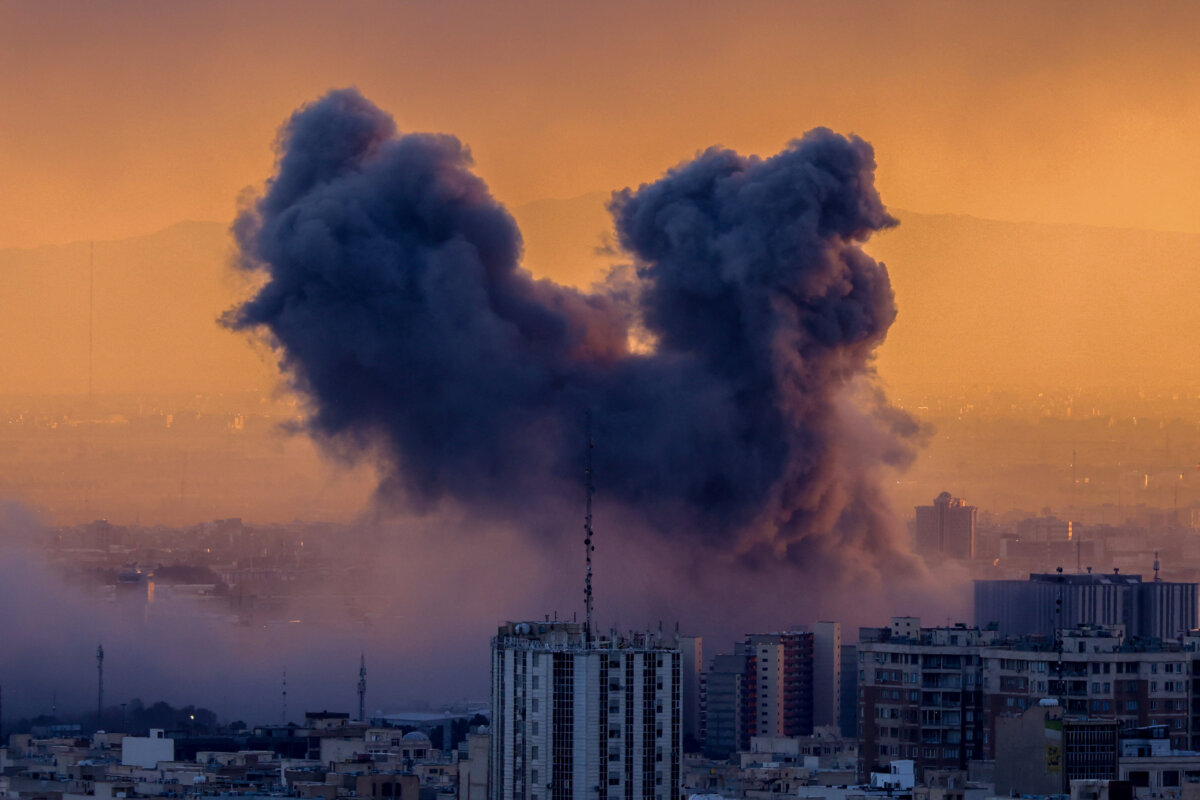
But, there are leaders in the wings waiting for their chance to take over the regime’s conventional military forces. In the first week of the conflict, the United States severely degraded Iran’s air defenses, command centers, missile launchers, air force, and navy, in approximately that order. Many of these targets were hit with standoff munitions like the Tomahawk and Army Tactical Missile System (ATACM) missiles, each of which cost over $1 million.
Now that air superiority has been achieved over Iran, the U.S. Air Force could deploy cheaper non-stealth A-10 Warthogs and F-15 fighter jets to hunt Shahed drones. The Warthogs could potentially hit them with its beer bottle-sized 30mm rounds, each of which costs about $136. But the F-15 fires the $1 million AMRAAM missile, which has likely been used in the current conflict against Shaheds. Raytheon’s Coyote drone that hunts other drones has interceptors that cost under $127,000 each. Still, Coyote interceptors are expensive relative to the Shahed.
There are options in addition to the A-10s that will be less of a strain on the U.S. taxpayer. The United States has developed laser weapons designed to defeat drones. Each shot is just a few dollars. Ukraine has used drone interceptors that cost as little as $1,000 each to knock out a Shahed. That puts the financial advantage solidly with the defender. Ukraine also uses jamming, helicopter cannons, heavy machine guns mounted on the back of pickup trucks, shotguns, and fishing nets to decent effect against Shaheds.
The United States needs to keep its powder dry and taxpayer bank accounts full to deter China and other dangerous adversaries. The good news is that the U.S. government of course knows this and is working overtime to deploy cheaper anti-drone solutions to the Middle East, including many of those mentioned above. That’s the right direction to go. The regime in Iran is severely weakened, and could be kept that way from the air if the United States and Israel retain a permanent air superiority over the country.
The United States could also start thinking about how to make Iran pay for containing Iran. For example, the United States could charge Iran tariffs on its exports—regardless of what country imports them. If Iran wants to export its oil to China, for example, it can be tariffed by the United States to pay for all of the damage Tehran has done in the region, and the cost of past and ongoing military operations to keep the regime contained. If a ship with an Iranian cargo does not pay the tariff, then the U.S. Navy could impound and sell the ship. This would help bring the region’s finances into order. For every $13 million THAAD interceptor the United States or an ally had to use to defeat an Iranian missile, the bill would be sent to Tehran. That would be only partial justice for the up to $1,720 bullet fees that the regime reportedly charges the families of protesters who were killed.
Another way to weaken the regime would be to break off the country’s Kurdish regions. The United States has long allied with Kurdish groups. Now, the Kurds in Iran and neighboring Syria appear to be considering ground operations in Iran. They could be supported by the U.S. Air Force to the point of controlling their historic territories.
The goal should be to keep the mullahs weak, decrease their territorial reach, continue to contain their military forces, and gradually support Iran’s democratic opposition so that as much of the country as possible will eventually be free. It’s a big ask, but all of this should be done at as little of a burden to the U.S. taxpayer as possible.
Views expressed in this article are the opinions of the author and do not necessarily reflect the views of The Epoch Times.
 Friends Read Free
Copy
Facebook
Tweet
Friends Read Free
Copy
Facebook
Tweet