
Commentary
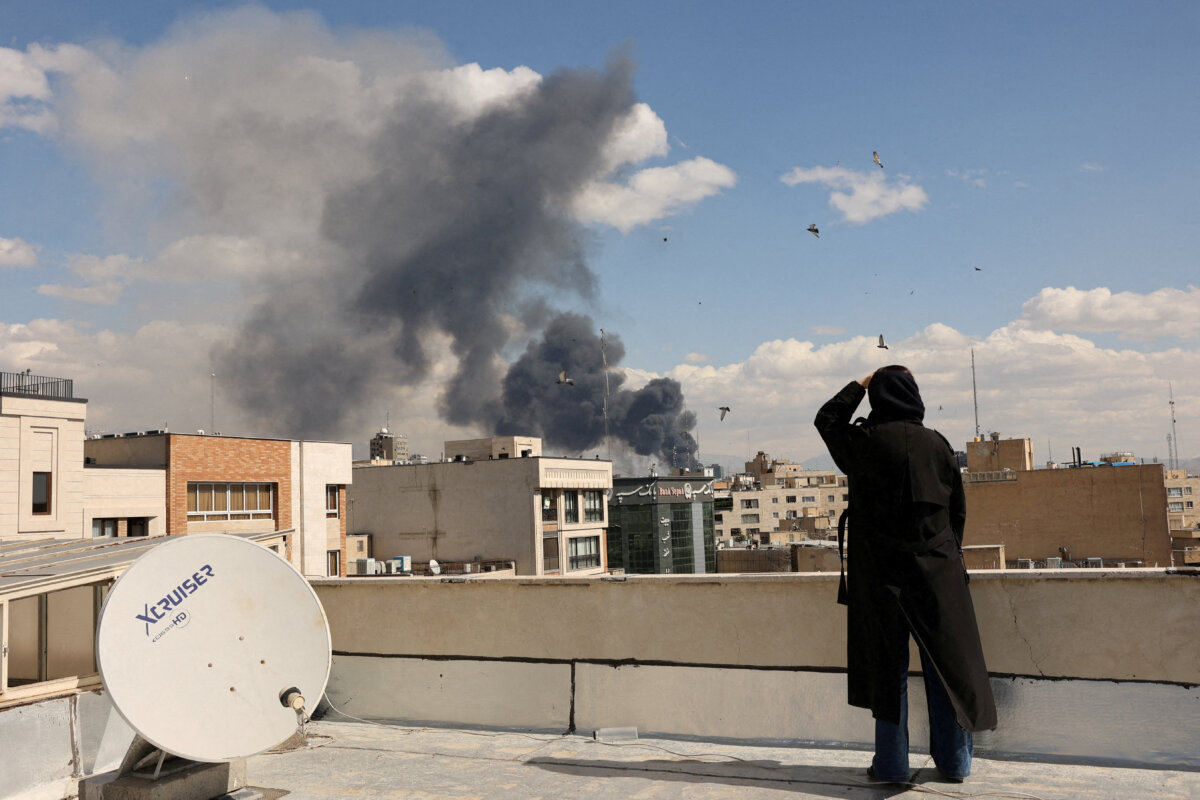
On the morning of Saturday, Feb. 28, we all awoke to an alarming development.
Addressing the world, the president of the United States revealed that joint military forces of the United States and Israel had begun a coordinated strike against the 47-year-old Islamic regime in Iran. In measured tones, President Trump explained that the operation had been launched in response to a clear and present danger posed by Iran’s continued nuclear ambitions and the regime’s longstanding support for terrorism against the West.
The president affirmed that the goal was to dismantle Iran’s capacity to wage asymmetrical warfare, to protect allied nations, and to restore a balance of power that would prevent further destabilization in the Middle East. He also encouraged the Iranian people to rise up and take back their freedom.
The scope of the operation came as a surprise to much of the world. Yet Trump framed the action not as a provocation, but as a reluctant necessity: a decision made only after exhausting diplomatic channels and repeated warnings that had gone unheeded. “We seek peace,” he declared, “but we will not stand idle while threats to innocent lives are sharpened under the shadows of aggression.”
Critics Were Swift and Loud
Almost immediately after the announcement, predictable critics of the USA condemned the military action. From European capitals, loud voices of dissent questioned the justification for the strike. U.N. Secretary-General António Guterres delivered an unequivocal critique. He stated that the U.S. and Israeli airstrikes violated international law, including the U.N. Charter.
Within the United States, opponents of President Trump raised even louder objections. Opposition leaders and progressive influencers lambasted the campaign as an unnecessary descent into violence, and urged Americans not to endorse what they characterized as unlawful aggression.
On legacy news channels and social media the predominant themes were fear, skepticism, and moral outrage. They warned of civilian casualties, of a widening insurgency, of deepening sectarian conflict, and a breakdown of the international consensus on collective security.
Canadian Reaction: Swift and Supportive
Against this backdrop of global division, Canadian Prime Minister Mark Carney offered a prompt and unequivocal endorsement of the U.S. and Israeli actions. Speaking from an official visit in Mumbai, India, Carney underscored Canada’s longstanding assessment that “the Islamic Republic of Iran is the principal source of instability and terror throughout the Middle East.”
In a statement shared jointly with Foreign Affairs Minister Anita Anand, Carney reinforced Ottawa’s support for the use of force in this case, saying: “Canada supports the United States acting to prevent Iran from obtaining a nuclear weapon and to prevent its regime from further threatening international peace and security.”
Carney also reaffirmed Israel’s right to defend itself, stating: “Canada stands with Iranian people in their long and courageous struggle against this oppressive regime and we reaffirm Israel’s right to defend itself.”
At the same time, he acknowledged the risks to noncombatants and emphasized the protection of civilians, urging all parties in the conflict to “protect civilian lives as best as possible.” Aware of the escalating tension across the region, Carney also issued practical advice to Canadians living abroad, urging them to “shelter in place” and follow local safety guidance amid rapidly deteriorating conditions.
Reflecting on Just War Theory
In the wake of these tumultuous developments, it is natural—perhaps essential—to return to the time-honoured principles of just war theory. These principles, rooted in philosophical, theological, and ethical traditions stretching back to Augustine and Aquinas, provide a framework for distinguishing legitimate defence from gratuitous violence. When we examine the motives and circumstances surrounding the U.S. and Israeli operation through this lens, we find that key criteria align with what many scholars and leaders consider a justifiable use of force.
Just Cause
First and foremost is the question of just cause. A war or military action may be considered just if it is waged to confront an imminent and grave threat—such as the use of weapons of mass destruction, genocide, or sustained acts of terror—rather than to acquire territory or settle old scores. In this scenario, the Iranian regime was widely believed to be close to achieving a deliverable nuclear capacity and had repeatedly sponsored external militant forces. By acting to prevent a catastrophic escalation of violence, the U.S. and Israel sought to protect millions of lives.
Right Intention
Closely related is right intention: the notion that the purpose of war must genuinely be to secure peace and justice, not to advance selfish or secondary agendas. The public statements from Washington and Jerusalem—the removal of threats, the protection of civilians, and the restoration of order—indicate that the central motive was not conquest or geopolitical dominance but defensive necessity. While political critics may dispute the sincerity of these motives, the alignment between declared objectives and internationally recognized security concerns asserts a legitimate intention.
Probability of Success
A just war must have a reasonable chance of achieving its aims. Wars fought in desperation with no prospect of success subject combatants and noncombatants alike to pointless suffering. The joint operation in question was not a spontaneous uprising but a carefully planned military campaign by two of the most capable armed forces in the world. Its strategic precision, robust intelligence backing, and clear tactical goals indicate a high probability of success—not in an abstract sense of total victory, but in eliminating the specific threat identified.
Last Resort
According to just war theory, force should be employed only when all peaceful alternatives have been exhausted. In this case, months—even years—of diplomatic warnings, sanctions, and international negotiation had preceded the strike. While critics will always assert that more could have been tried, there is a credible case that traditional diplomatic tools had reached their limits, and that continuing to postpone action risked emboldening actors determined to flout international norms.
Jus in Bello
Finally, the conduct of the war itself—jus in bello (Latin for “law in war”)—must remain proportionate and discriminate, seeking to minimize civilian harm and avoid means that are morally objectionable. Public statements emphasize that the joint forces employed precision technology and targeted the military infrastructure directly related to the threat, taking extraordinary care to mitigate collateral damage. This focus on proportionality and discrimination aligns with the ethical demands of just conduct in war.
Hope in a Fractured World
As the dust settles and the profound ramifications of the Feb. 28 announcement continue to unfold, it is easy to feel overwhelmed by uncertainty. But within this uncertainty lies a call to reflection, to reaffirmation of values, and to the enduring belief that humanity can navigate its gravest challenges without capitulating to fear or cynicism.
In the words of the philosopher and statesman George Santayana, “Peace is not the absence of war, but the presence of justice.” If this moment serves to remind the world that the pursuit of peace sometimes demands courage, and that moral clarity must accompany strategic resolve, then it may have imparted a lesson larger than itself.
Views expressed in this article are the opinions of the author and do not necessarily reflect the views of The Epoch Times.
 Friends Read Free
Copy
Facebook
Tweet
Friends Read Free
Copy
Facebook
Tweet