
Commentary
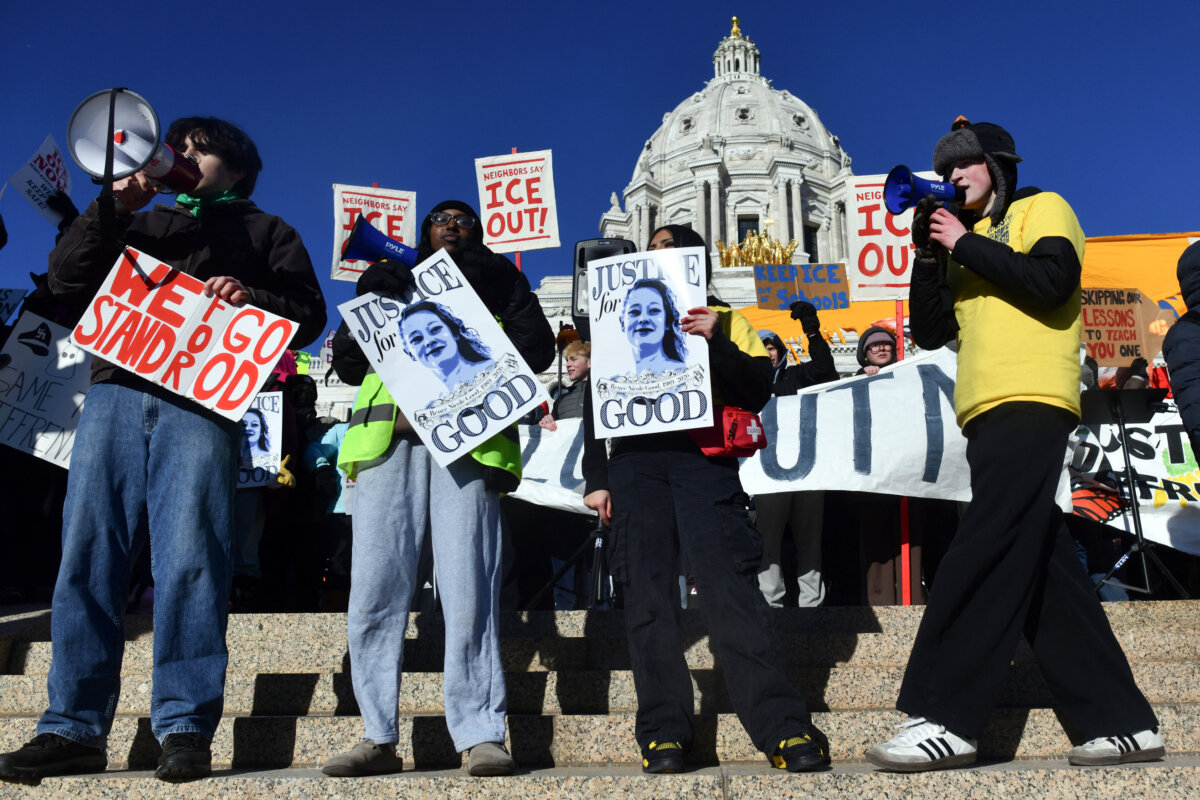
The shooting to death of Alex Pretti in Minnesota resulted in a surprising inversion of opinion. Those who would normally defend the right of people to go armed took the fact that Pretti was carrying a powerful weapon to a demonstration as evidence that he intended no good, while those who would normally favor gun control said that he was merely exercising his legal rights. After all, he had a gun license and was perfectly entitled to carry his gun.
This goes to show that, once we have an opinion on a subject, we are inclined to twist our thoughts to justify it. This is a perfectly normal part of human psychology. It is easier to give up smoking than to give up an opinion.
For myself, I would not carry a gun to a demonstration that had the potential to turn violent, but then I wouldn’t carry a gun anywhere, not knowing how to use one. I have traveled to many dangerous places but never felt that a gun would make me safer; on the contrary, the person I would most likely injure with a gun was always myself.
The furor over Pretti’s death rather overshadowed deeper questions about how to deal with illegal immigration and illegal immigrants already in the country. These questions are related but not quite the same.
Europe, as well as the United States, has a problem with illegal immigration. Much of the population is exasperated that the authorities have been unable, or unwilling, to stop it from happening, but a small, vocal, educated minority is in favor of it, claiming both that it is humane to allow or encourage it and good for the country as a whole.
As with so many questions, your response depends on which end of the telescope you look down. When I was still practicing as a doctor, I had quite a number of patients who were illegal immigrants. As a man, I sympathized with them as individuals, but as a citizen, I wished they had not come. Strictly speaking, they were not entitled to medical treatment, but it is not for doctors to enforce immigration rules; their duty to patients comes first.
The illegals had left bad conditions behind them; you do not risk illegal immigration for no reason. All had stories of suffering, most of them believable. Some had paid people smugglers quite large sums and had therefore not been the poorest of the poor. But it takes courage to enter or to stay in a country illegally.
The condition of being illegally in a country is not a happy one. You cannot entirely relax. Even if your chances of being caught are small, you do not have that feeling of security that citizens take for granted. You are easily exploitable because you have few legal protections.
The vulnerability of illegal immigrants to exploitation is one of the arguments the Spanish government has used to regularize the position of 500,000 illegal immigrants in the country. This is an argument with at least a superficial justification, for everyone is opposed to exploitation. But it is superficial.
The Spanish government knows that there is no real prospect of deporting more than a small proportion of so many people, given the length and complication of procedures to deport even one illegal immigrant. Therefore, deportation is no solution, except at the margins. Regularization seems the humane alternative.
But are the illegal immigrants exploited? If they are, they prefer to be exploited in this way than not to be exploited. That is to say, they would rather be exploited in Spain than remain unexploited at home. (Spain is perhaps fortunate, in that the majority of its illegal immigrants are Latin Americans, who speak the language and may be assumed to have some affinity for the receiving country’s culture.)
The illegal immigrants can find work precisely because their labor is cheap. Their wage rates are low, and in addition, there are no payroll taxes levied by the state. They have no legal protections and can be fired at will.
Once regularized, however, they will have to be paid the minimum wage, and their labor will be subject to payroll taxes. This labor will then cost more to an employer than the added value it produces. It is quite likely, therefore, that many of them will join the ranks of the Spanish unemployed, at a high cost to the Spanish state. This is not a problem in Spain alone: Not long ago in France, I met a Malian who, as an illegal immigrant, was employed for nine years continuously without a day’s unemployment; as soon as he was regularized, he became unemployed and has never worked since. But he could get by on the Social Security to which he was now entitled.
The illegal immigrants do jobs that the local people do not want to do and do not have to do because they can choose to be unemployed instead, at no great loss of standard of living. If the currently illegal immigrants are regularized, then a vacuum will be created into which a further wave of illegal immigrants will be sucked in, and the cycle will begin again.
Theoretically, or conceptually, the problem is easy to solve. The borders should be closed, or very much tightened, while wage rates for the unskilled work that the illegals do should be lowered, and unemployment benefits either abolished or so reduced that work even at low rates of pay becomes economically attractive to local people.
But if there is one thing that we have learned, it is that conceptually simple solutions to social problems are politically impossible. People are extremely reluctant to give up privileges and advantages that they enjoy, even if they harm them, or the country, in the long term. In democracies, it is impossible to bulldoze ahead without meeting strong opposition. The result is inertia.
On the one hand, the population is very dissatisfied with the situation as it is: It sees the squalor, crime, exploitation, deterioration in public services, and pressure on housing that illegal immigration brings. On the other hand, it is not prepared to accept the reforms—a freer market in labor—that would be necessary to halt such immigration. To have one’s cake and eat it, too, is a basic human desire.
Views expressed in this article are the opinions of the author and do not necessarily reflect the views of The Epoch Times.
 Friends Read Free
Copy
Facebook
Tweet
Friends Read Free
Copy
Facebook
Tweet