Commentary
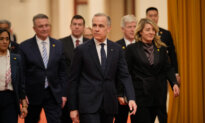
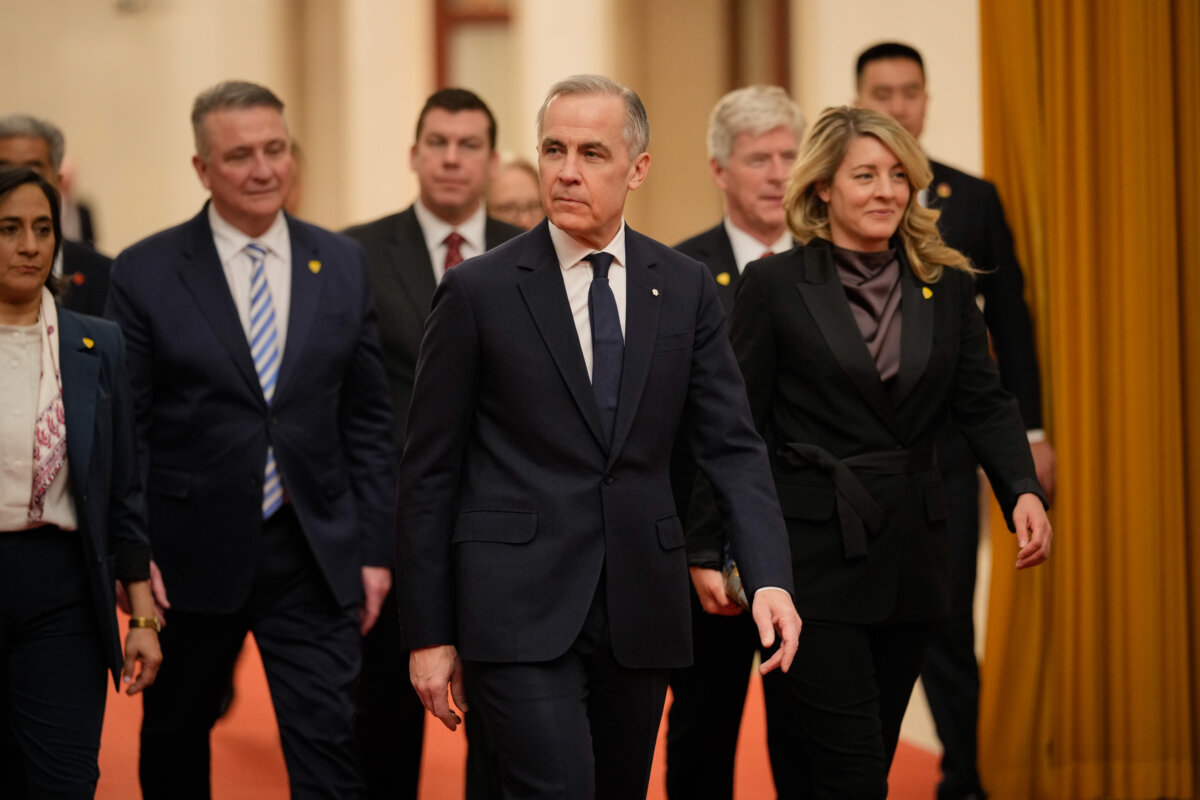
After eight months without any trade or tariff agreements, some people said that it was a relief to see that Prime Minister Carney had reached a partial free trade agreement with China. It appears to be substantially a liberalization of our sale of canola in exchange for their exportation to us of 49,000 electric vehicles.
To the extent that this begins a process of making Canada less dependent upon the United States economically, it is useful. And to the extent that it inaugurates a series of enterprising trade agreements with a wide variety of countries, it is the beginning of a welcome and long-overdue procession of events to end Canada’s status as a branch-plant country. This process began with the Canada -U.S. Free Trade Agreement of nearly 40 years ago, prior to which almost every company in Canada, except Canadian Pacific and the large banks, had the words “Canada Ltd.” after their names.
Though there was no sign of it in Mr. Carney’s official announcement, the general lack of appreciation in Canada for President Trump, which is not hard to understand, has led some people publicly to contemplate the thought of building up the Chinese relationship to a full-scale alternative to our relations with the United States. That is not going to happen.
There will never be remotely the cultural or obviously the geographic proximity that this country enjoys with the United States. Leaders come and go, and the regrettable nadir we recently reached in relations with the current American president is based on his understandable annoyance caused by the flippancy of former Prime Minister Justin Trudeau. Trudeau’s statement that Canada’s economy would “collapse” if Trump imposed upon it tariffs that for the most part have, in fact, been imposed without inducing any such collapse, along with Canada‘s anemic defence budget, caused Trump to wonder if maintaining Canada as an independent country was a worthwhile enterprise.
As a plainspoken man and a perceptive analyst of cold facts, as well as a vintage American who naturally thinks that everybody in the world would really rather be an American, this was not an unreasonable question.
I myself have had the occasion to tell President Trump that Canada is a very successful country, otherwise it would not have kept pace with the growth of the United States these 160 years (until the last decade), and that Canadians are attached to our relatively low crime rates and restrained access to firearms. Americans, and certainly their president, tend to be less conscious of these comparative shortcomings of American life than observant foreigners are.
So by all means, let us develop alternative markets to the United States, but we should have no illusions about the Chinese regime. Less than a year ago, Mr. Carney was rightly describing China as a totalitarian and potentially threatening country. It is all of that: the communist regime in Beijing is proud of its totalitarianism and of its ability to locate anyone in China in 10 minutes because of the unparalleled thoroughness of its photographic surveillance of the huge population.
They are generally unfair traders, who have taken advantage of the desire of the Western world to welcome them into the modern international community with a great many unfair practices, both in bi-national relations and as a participant in international organizations. A memorable example of this was Beijing’s misleading of the World Health Organization on everything to do with the COVID pandemic.
Canada in particular should not soon forget that the major Chinese telecommunications company, Huawei, was largely built on industrial espionage conducted against Northern Telecom, later known as Nortel, which was one of Canada‘s greatest companies and was driven into bankruptcy by Chinese chicanery. China has never been seriously called to account either for its devious behaviour over COVID or its outrageous corporate provocation against us over Nortel.
Trump appears to be convinced that the United States doesn’t need Canadian steel or any parts of Canadian automobiles. This may be true, but if we organize our affairs properly, we can maintain a domestic automobile business and a competitive steel industry, and we can be sure that not so much as a steel fence post or one American automobile is imported into this country.
The real key to our future is not just diversifying trade; it is recovering our competitiveness with the United States. For most of our statistically recorded history, the United States has had a per capita income approximately 10 to 20 percent higher than Canada’s. It is now 50 percent higher than Canada’s, and we have only ourselves to blame for that.
Mark Carney is an experienced international banker and financial negotiator and is completely familiar with these trends. Unfortunately, he is also a champion of a fuzzy and arbitrary theory of the evident requirement of any financial act to be socially conscientious and objectively useful in an egalitarian or at least societal way. This is a fine sentiment, but no economy with any such motivation is going to be competitive with that of the United States, much less with China.
There is mounting evidence that Mr. Carney is at least partially outgrowing his almost self-destructively rigid preoccupation with fossil fuel use. The evidence is inconclusive and leaves room for backsliding, but clear political realities, especially those of Alberta, are toiling to reinforce the grace of his conversion on that subject.
We have no evidence that there is any parallel reform of his thinking on the subject of economics, which is a neutral activity in moral terms but is the only possible basis for building the prosperity and strength of a country.
Capitalism is superior to all other economic systems because it is the only one that directly addresses the almost universal human desire for more. It cannot proceed entirely unregulated as it will lead to abusive monopolies and excesses, but nor can it satisfy any society if the government mangles the capitalist system into a tawdry seizure-by-taxation of money from those who have earned it for redistribution to those who have not (usually in informal exchange for their votes).
In the meantime, we do have to live with the United States, and it is a good sign and an achievement of the prime minister that President Trump commended him on his deal with China and invited him to play a role in his Gaza peace bureau. The latter may become a significant organization after Israel has completed the military destruction of the Hamas terrorist operation.
Views expressed in this article are the opinions of the author and do not necessarily reflect the views of The Epoch Times.
 Friends Read Free
Copy
Facebook
Tweet
Friends Read Free
Copy
Facebook
Tweet