Commentary
There is distinct room for relief and even satisfaction that the federal government is apparently prepared to encourage the expanded Trans Mountain pipeline. It is apparently also prepared to lift the tanker ban on the West Coast to facilitate Alberta oil and gas exports, even though it may need to rely on opposition MPs to do so.
The Sword of Damocles that has been hanging over the country, politically and economically, has been whether Prime Minister Mark Carney has sufficiently outgrown his previous strict adherence to climate change doomsday scenarios, to pursue economic growth in the petroleum industry and bank the mounting fires of Alberta separatism in doing so.
The position the government has taken in support of Alberta petroleum exports has significantly placated the Alberta government. As was also expected, the federal government is proceeding with its $16 billion boondoggle to capture carbon and pipeline it to an underground dump site near Cold Lake. This is an almost complete waste of money, but it is apparently judged to be the price the government must pay to its climate militants to keep them on board. Considering the national disaster we would already be totally immersed in if Carney had simply stonewalled Alberta, this must be considered progress.
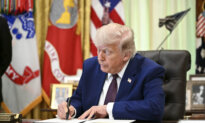
A great deal still depends on negotiations with the United States, and there is no doubt that the amusing but undiplomatic squall over Ontario Premier Doug Ford’s anti-tariff advertisement during television coverage of the World Series interrupted the discussions. There is reason for hope that both sides are now engaged in specialist discussions to address the Americans’ concern. This is timely, as the United States awaits the decision of the Supreme Court on the legality of President Trump‘s use of emergency powers to impose the tariffs that he has. If the high court determines that the president exceeded his authority, it will to some extent be a blessing in disguise for the administration. It could just keep the arrangements that have been negotiated to overcome the tariffs that will then have been judged to have been imposed unconstitutionally.
While the United States had legitimate grievances against the unfair trading practices of many countries, and the US$1.2 trillion trade deficit it was running was outrageous and unsustainable, Trump never had any legitimate complaint with Canada. He did us a favour by raising the absurdity of supply management, one of the many over-protected sacred cows of Quebec. It is justifiable to wish to strengthen farm incomes, but the way to do that is specific income supplements to the farmers and not the requirement that the entire country overpay for milk and eggs.
Beyond this, the United States only runs a trade deficit with Canada with respect to oil that it buys from us at a knockdown price and sells on to others at a profit that makes us look like chumps.
Our real problem is the U.S. president’s conviction that his country does not need any automobiles or any steel or forest products from Canada since it is capable of supplying all of those things itself. That may be true, though it does need other things from us, including electricity and ingredients for fertilizer. We can play to our strengths and Canadianize the automobile industry, barring any automobile imports from the United States, and serving our own market, preferably in collaboration with a successful foreign (non-American) automobile manufacturer.
In this context, it was pleasing to see the extensive discussions that opened up as the king of Sweden visited Canada with a large delegation recently and specifically explored the manufacture of the Saab fighter plane in Canada in preference to the far more expensive American F-35. The F-35 may be a marginally superior plane, but we are obviously going to have to impart to our American friends sometime soon the fact that this country is not a doormat and will not be treated like one.
We need to respond to the United States with as much resolution as necessary to make that point and put an end to Trump’s ill-considered jibes about a 51st state. I myself have had occasion to tell him that Canadians do not admire the high American violent crime rate, the profusion of firearms, and the fascistic justice system, with which the president himself is well-familiar. He took this on board, but as a very plain-spoken and direct man, he still wondered whether—since Justin Trudeau had told him that Canada would “collapse” under higher American tariffs, and since Canada has not paid for its own defence for the last 30 years—Canada was really serious about wishing to be an independent country.
Given the circumstances, it was not an unreasonable question. It is a relief that Mr. Carney is answering it with practical measures and not a continuation of his pyrotechnics about keeping his “elbows up” on “orange man.”
The idea of building our own warplanes, even if in collaboration with Sweden, is particularly appealing. The greatest of a number of disasters in the Diefenbaker government of 1957–1963 was his cancellation of the Avro Arrow. This effectively shut down almost our entire aviation and aerospace industry and potential. The Arrow could have been modified to be a completely competitive warplane, and we lost in one stroke over 1,000 highly specialized aviation-aerospace technicians and an incalculable amount of future income for the country. We became in this, as in so many other areas, a mere branch-plant of the United States.
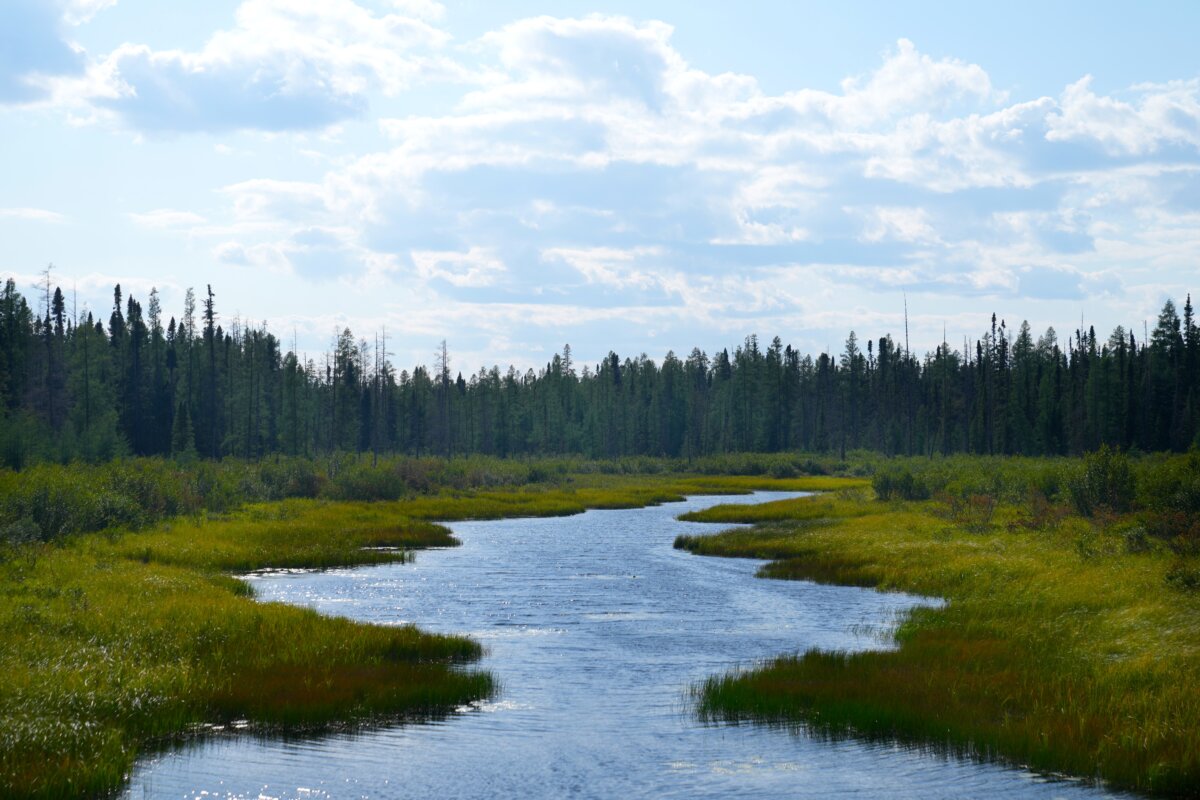
Another area that is getting a great deal of attention is the Ring of Fire range of minerals, including strategic minerals, in northern Ontario. Almost all base and strategic minerals and significant traces of precious metals are also in that immense storehouse of resources. There are already extensive discussions in progress with U.S. government officials about developing these resources, especially chromium, which is essential to stainless steel and utilized in practically everything that goes into the water, the air, or space.
With chromium as with a number of other resources, the United States has already defined its national interest as requiring a swift transfer of the source of production to Canada from distant and much less reliable countries. These discussions should be strenuously expedited for the sake of both countries, and serious discussions are underway in respect of the Canadian Chrome Company (disclosure: I am a modest option-holder), and the progress of the Northfield and Juno interests in the Ring of Fire are better known every week.
It is encouraging that neither country has given notice of cancellation of the existing U.S.-Canada trade arrangements, which govern almost three-quarters of the exchanges between the countries. The atmosphere appears to be settling down, and the Carney government’s highlighting of its intentions to promote the development and export of mineral resources is both encouraging and incites hope for better days in Canada–U.S. relations.
Although the Carney government has yet to negotiate a single new trade agreement with a major jurisdiction and all we’ve seen are positive asides and hints, the prime minister and his chief collaborators clearly recognize the necessity to exploit and promote our resources and claw our way back up among the world’s most prosperous countries, by taking advantage of our natural resources and not being ashamed of them.
I have not been this government’s most unstinting supporter, but I thank and salute it for outgrowing the churlish juvenilism of the preceding regime.
Views expressed in this article are the opinions of the author and do not necessarily reflect the views of The Epoch Times.
 Friends Read Free
Copy
Facebook
Tweet
Friends Read Free
Copy
Facebook
Tweet