Commentary
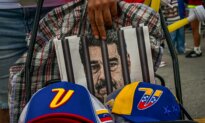
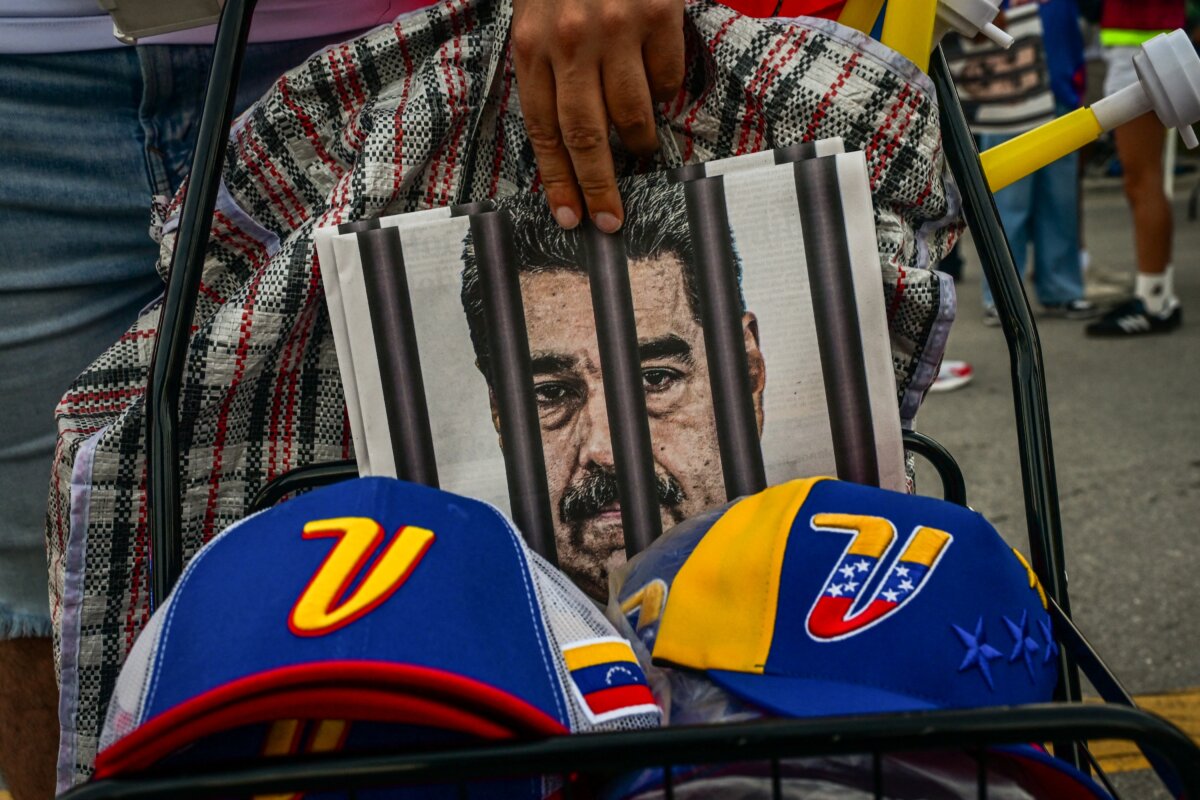
The seizure and removal of Venezuelan leader Nicolás Maduro and his wife from their official residence in Caracas, to the Metropolitan Detention Center in Brooklyn, New York, with no American casualties, has been an astonishing strategic and tactical success.
It eliminates one of the few anti-Western governments in the world, reinforces the general move to the democratic right in Latin America, and strikes a deadly blow against the narco-terrorists who have severely provoked the United States. It probably cuts the lifeline from Venezuela to the dismal Marxist regime in Nicaragua, and has already been cited as a warning to the erratic president of Colombia, Gustavo Petro, whom Trump has named as head of the vast Colombian illegal narcotics producing and exporting operation. Trump also revoked Petro’s visa to enter the United States after he gave a speech in New York, urging American armed servicemen to ignore orders to engage with Hamas and other terrorists.
The reckoning will be coming with Mexico, both for gangs that govern northern Mexico and that have now been excluded from entering the United States after Trump closed the border and began the deportation of dangerous, convicted criminals who had entered illegally, as well as for Mexico’s support of Cuba’s communist government.
More important than any pan-American consequence of the removal of Maduro is that Trump has already promised to send U.S. oil companies to Venezuela to triple oil production to where it was when the former Venezuelan government seized most of the oil business from the Americans about 25 years ago. This alone would add about $4,000 per capita to the Venezuelan people (not counting the 7.7 million people, 20 percent of the population, who have fled the country due to Maduro’s repression and incompetence).
This will free up 2 million barrels a day for sale to Western Europe, and deny Russia $3.7 billion that it is currently receiving from Western Europe to finance its war in Ukraine. Europe, under its present and recent leaders, has been beseeching the Americans to supply Ukraine with arms that will enable it to counter the Russian invasion that Europe has largely and inadvertently been financing. The emerging policy is that Trump has browbeaten Europe (and Canada) into raising defense spending, as the United States objects to carrying most of its allies on its back any longer. Europe will buy first-class weapons and munitions from America and pass them on in large quantities to Ukraine, while Russia will have to find another $4 billion to hold its tenuous position in Ukraine.
Trump can keep raising the stakes until the Kremlin has no choice except to be comparatively reasonable. The U.S. president now holds all the levers.
The myth that post-Soviet Russia can be swiftly rebuilt into a superpower has been exposed as a fraud. Russia more closely resembles, as John McCain said, “a gas station with nuclear weapons.” And it is making very slow progress economically. Its GDP is smaller than Canada’s and the population is shrinking. It can’t continue this war indefinitely: By next month, the war will have gone on as long as the Russo-German war of 1941–1945, in which the USSR, generously supplied by the West, defeated the mighty Nazi war machine, albeit at a cost of about 35 million lives.
Trump has given Russian President Putin endless opportunities to end the war on a basis that he can claim to his countrymen as a respectable result. The war is costing about 10,000 casualties a week between the two sides, for small territorial gains, and Russia has suffered heavy desertions and draft evasions. Historically, the Russian masses have been prepared to put up with almost anything, without recourse to a general uprising.
There is no sign of anything like that, but the reason Trump has gone to such lengths to give Putin a less embarrassing exit than he deserves is because he doesn’t want Russia so debilitated that it becomes a Chinese vassal state, making China the leading and pre-eminent power in Eurasia. If Putin doesn’t take Trump’s olive branch soon, he will be circling the drain.
There is a legal argument against Trump’s action in Venezuela, but he has the best side of it. Maduro stole the last two elections and is not seen as a legitimate president in most of Latin America. He has rigged elections, emasculated the legislature, packed the Supreme Court, and destroyed democracy and civil rights.
Maduro and his wife have been credibly indicted in the United States. Although almost everyone is convicted in the federal courts of that country—95 percent of them without a trial, so stacked is the deck for the prosecution because of the ability to extort or suborn evidence under the plea bargain system—there is not much doubt of the guilt of the defendants in this case.
Trump has made a believable case that narco-terrorism is an authentic threat to the safety and legitimate interests of the United States, and as commander-in-chief, he has the right and duty to defend the country.
The counter-argument is that under international law, no one has the right to kidnap the head of another country. Trump’s argument is clearly stronger; Maduro had promoted an outright state of war and has no legitimacy as president. Trump will be judged to have acted in conformity with his duty by American courts, and the USA has never accepted the jurisdiction of any foreign court to vary a Supreme Court decision in a U.S. constitutional matter.
Trump invoked the Monroe Doctrine of 1823, but without any refinement, this is a vulnerable argument. That doctrine followed or narrowly preceded the expulsion of Spain from the Americas (except for Cuba and Puerto Rico, which were seized by the United States in the Spanish–American War of 1898). The United States did not want a reassertion of colonial powers in their hemisphere. More importantly, neither did the British, although they had little interest in Latin America themselves. Essentially, the Royal Navy enforced the Monroe Doctrine until the U.S. Civil War, in the course of which the French emperor, Napoleon III, determined that it was a good time to set up a French-sponsored Habsburg Empire in Mexico. He ignored President Lincoln’s warnings that this would not stand, and the whole enterprise collapsed and the putative emperor was dispatched by a firing squad.
President Kennedy invoked the Monroe Doctrine in the Cuban Missile Crisis, but he effectively granted reciprocity in withdrawing U.S. missiles from Turkey and Italy, while the USSR withdrew missiles from Cuba, and the United States promised not to invade Cuba. The Monroe Doctrine was asserted, but something like it was implicitly agreed to for the USSR.
President Reagan cited the Monroe Doctrine in invading Grenada, but that was a case where a small Caribbean country had been effectively taken over by Cuba, the whole population was under house arrest, and neighboring countries requested the removal of the Cuban threat.
Trump has hinted at this but he should clarify that the Monroe Doctrine, as currently defined, permits the United States to counter any serious threat to it arising in the hemisphere, while in other ways respecting the right of nations to be as intimate as they wish with extra-hemispheric powers.
In 1939, President Roosevelt, who was popular in Latin America because of his “Good Neighbor” policy, and in Mexico because he had been fairly quiescent in the takeover of American oil interests there, told the Mexican government he could not tolerate an accumulation of land in Baja, California, by Japan, and this was stopped. Trump employed a similar argument with Panama about the Chinese ports adjacent to the canal.
Trump’s intervention in the Honduran election, and his raising of tariffs on Brazil, a country of 190 million people, over the alleged mistreatment of the former president, is more complicated. A country can raise tariffs as it wants, but Trump will have to be careful about body-slamming large countries like Brazil over their elections.
President Trump has played his cards with great skill so far. The Chinese challenge has been met, the Russians are being put in their post-superpower place, and Iran, Venezuela, and others are being muscled as required and justified.
Views expressed in this article are the opinions of the author and do not necessarily reflect the views of The Epoch Times.
 Friends Read Free
Copy
Facebook
Tweet
Friends Read Free
Copy
Facebook
Tweet