
Commentary
China and Iran have dangerously close links that threaten a buildup of U.S. military forces in the Middle East.
On Feb. 24, news broke that Beijing is close to a deal to export CM-302 cruise missiles to Iran. The supersonic missiles carry 500 pounds of explosives each and zigzag as they approach a target, putting at risk U.S. aircraft carriers and the thousands of personnel onboard.
If Iran were to use a Chinese missile to sink a U.S. carrier, the military response would not only be against Iran. It would be against China. The risk that Beijing takes by exporting such missiles to Iran is immense.
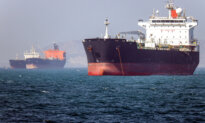
The CM-302 is one of many arguably criminal links that Beijing has to Tehran. China purchases more than 80 percent of Iran’s shipped oil, which constitutes 13.4 percent of its oil imports. It often ships using the illegal shadow fleet, including via transshipment to third countries. In exchange, China has allegedly exported to Iran radar capable of tracking U.S. stealth aircraft, along with other military-capable sensors and weapons components for drones and ballistic missiles.
Iran also seeks Chinese man-portable surface‑to‑air missile systems (MANPADS) that could be used against airliners by Tehran’s terrorist proxies (Hamas, Hezbollah, and the Houthis). Tehran and Beijing are discussing the export of anti‑ballistic weapons systems and anti-satellite weapons. Beijing provides satellite imagery that supports Iran in its ongoing propaganda war, along with diplomatic support at the United Nations. Chinese intelligence agents are allegedly stationed in Tehran to counter those of the United States and Israel.
Beijing and Tehran also cooperate, along with Russia and North Korea, on cyber operations in the defense sector. On Feb. 17, Iranian, Russian, and Chinese naval ships were supposed to conduct joint exercises in the Strait of Hormuz. A Russian helicopter carrier participated but left shortly after the exercise. Whether Chinese ships actually took part is unclear. But according to Iranian media, China plans to join a similar exercise in the near future. China can project its naval power globally only because its economy has grown so quickly over the past two decades.
One way to slow China’s economic growth is to reduce its access to oil, of which it imports more than 70 percent. And more than 90 percent of China’s oil imports come by sea. This is a major vulnerability, given that the U.S. Navy has much more control over global shipping routes than China’s navy.
The vulnerability is apparent when considering that the United States cut China off from its Venezuelan oil supply by capturing the country’s authoritarian president, seizing shadow fleet tankers, and pressuring the new Venezuelan president to sell oil to the United States instead.
The same could be done for the oil that Iran exports to China. The fewer sources of oil that China has, the more it will be forced to pay on global markets, and the harder it will be for the Chinese Communist Party (CCP) to achieve its economic goals. Lower economic growth decreases tax revenues available to the CCP for the country’s naval shipbuilding, nuclear modernization, and plans to invade Taiwan.
Low economic growth could also increase dissatisfaction with the regime among Chinese citizens, encouraging them to democratize the country. The U.S. message to China should be that if it continues to act as a U.S. adversary, then the United States will continue to seek to interdict its global oil supplies, including from Venezuela, Iran, and elsewhere.
Cutting the oil link between rogue regimes like China and Iran also increases the supply for other countries in the world that subscribe to the international rule of law, as promoted by the United States after World War II through the Pax Americana. This policy supports democracies and punishes their authoritarian adversaries.
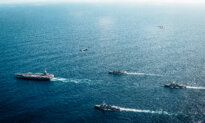
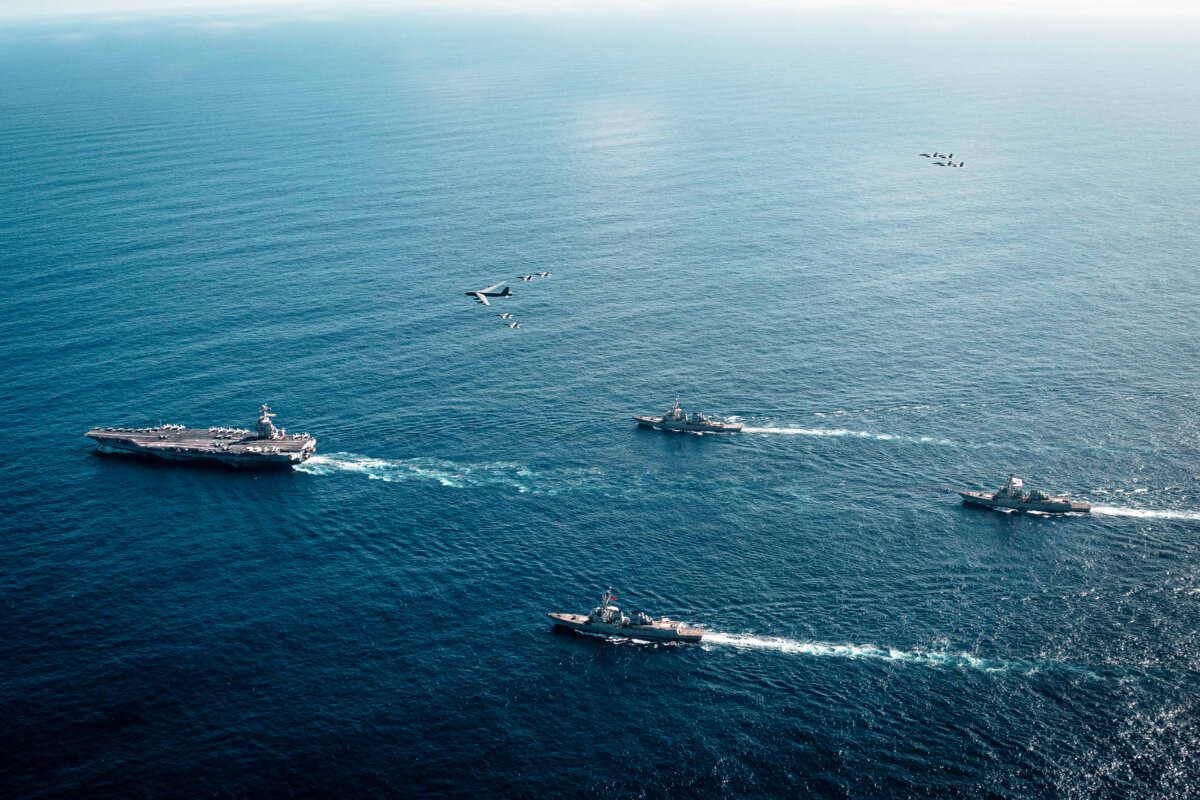
To this end, the U.S. armada now in the Mideast could usefully add to its list of goals a complete cessation or tariffing of Iranian oil exports to China, including on shadow- and non-shadow-fleet tankers. If Iran wants to sell its oil to China tariff-free, it ought to surrender its ambitions to pursue nuclear weapons and hypersonic missiles that threaten U.S. military forces in the region. Tehran should instead busy itself with democratization.
Note that in Venezuela, the United States did not get bogged down in another endless war. The United States captured the country’s authoritarian leader and diverted Venezuelan oil resources away from China and toward the support of democracy.
Surgical strikes against authoritarian leaders and seizures of assets that can be sold to pay for U.S. operations are far better than endless wars on the backs of taxpayers. The U.S. taxpayer should not have to bear the burden of deposing foreign dictators and providing global security.
Washington should consider telling Beijing in no uncertain terms that the United States will consider an Iranian strike on a U.S. aircraft carrier—if that strike is conducted with Chinese missiles—to be an act of war on the part of China. This would be a form of expanded deterrence, which is also useful at deterring the kind of nuclear terrorism that we risk by allowing Iran to go nuclear. And if the deal goes through, the CM-302 shipment from China ought to be interdicted en route or destroyed upon arrival. Iran cannot be allowed to control weapons that will defeat U.S. aircraft carriers.
Broad economic sanctions should also be imposed on China for enabling the regime in Tehran. Sanctioning particular Chinese companies or individuals—as the United States has done in the past—has apparently been ineffective. By containing China’s entire economy, it will serve as less of an economic outlet and technological reserve for rogue regimes like Iran, thereby weakening them relative to the United States. In the future, that will help deter them from their dangerous attacks on U.S. and allied forces.
Views expressed in this article are the opinions of the author and do not necessarily reflect the views of The Epoch Times.
 Friends Read Free
Copy
Facebook
Tweet
Friends Read Free
Copy
Facebook
Tweet