
The Strait of Hormuz may be open to unfettered commercial traffic, but it could take 90 days to convince ships and insurers that the transit is clear of menace, and up to nine months for Gulf State oil and petrochemical industries to restore production to February capacities, according to projections by market analysts, shipping operators, and supply chain experts.
The memorandum of understanding ending the United States’ and Israel’s four-month war against Iran, sealed on June 13 and electronically signed on June 18 in France, is not a binding treaty but an interim agreement that requires Iran to reopen the Strait of Hormuz without tolls and the U.S. Navy to lift its blockade of Iranian shipping.
Speaking at the annual G7 summit in France on June 17, before he signed the document the following day, U.S. President Donald Trump said Iran wants “to sign a deal,” noting that if Tehran does not comply, “We go back to bombing.”
Now formalized, the memorandum kicks off 60 days of talks aimed at ending Tehran’s nuclear weapons development program and its support for regional terrorist proxies in exchange for sanctions relief and access to billions of dollars in frozen funds.
Market analysts told The Epoch Times that American farmers will likely continue paying higher prices for fertilizer, and consumers higher prices for gasoline and food, through the first quarter of 2027.
Shipping industry trade groups and global trade analysts uniformly predicted that strait traffic could resume quickly with certainty of safe passage, but that it could take far longer for Saudi Arabia, Qatar, Kuwait, Bahrain, and the United Arab Emirates to restore an estimated 10,000 “shut in” oil wells to standard production, as well as repair liquefied natural gas production trains, refineries, and ports damaged by Iranian drone and missile attacks.
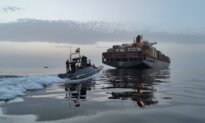
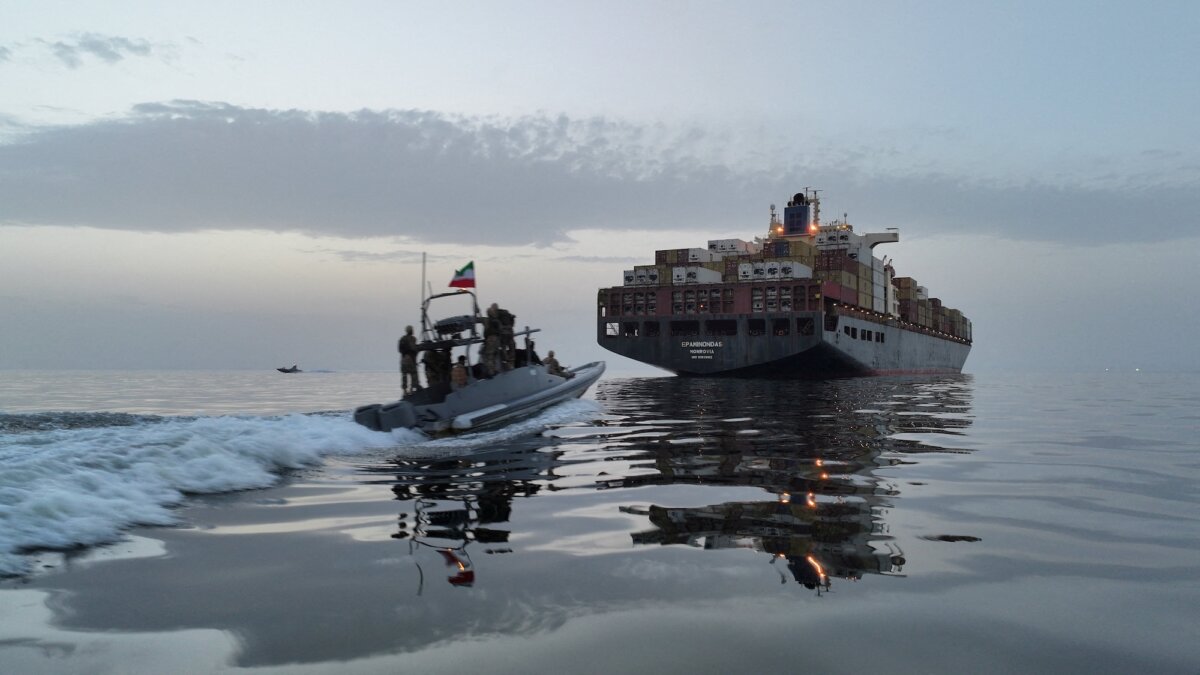
There are three primary reasons why, even without Iran threatening shipping, normal maritime traffic will not immediately resume: hesitancy among ship owners and crews that the shooting has truly stopped, an “imbalance” in global shipping traffic that has cargo freighters and tankers operating off standard schedules and routes, and the logistics of first allowing up to 600 commercial ships trapped in the Persian Gulf since late February to leave.
The U.N. International Maritime Organization (IMO) said the U.S.–Iran agreement will allow it to evacuate merchant sailors who have been stranded in the Gulf for months, which it and the International Chamber of Shipping (ICS) classify as a humanitarian crisis to be resolved first.
“This announcement comes as a relief to the 20,000 seafarers who have been caught in the middle of this war,” ICS Secretary-General Thomas Kazakos said in a June 15 statement. “Their safe departure from the region must be a top priority, but will take time.”
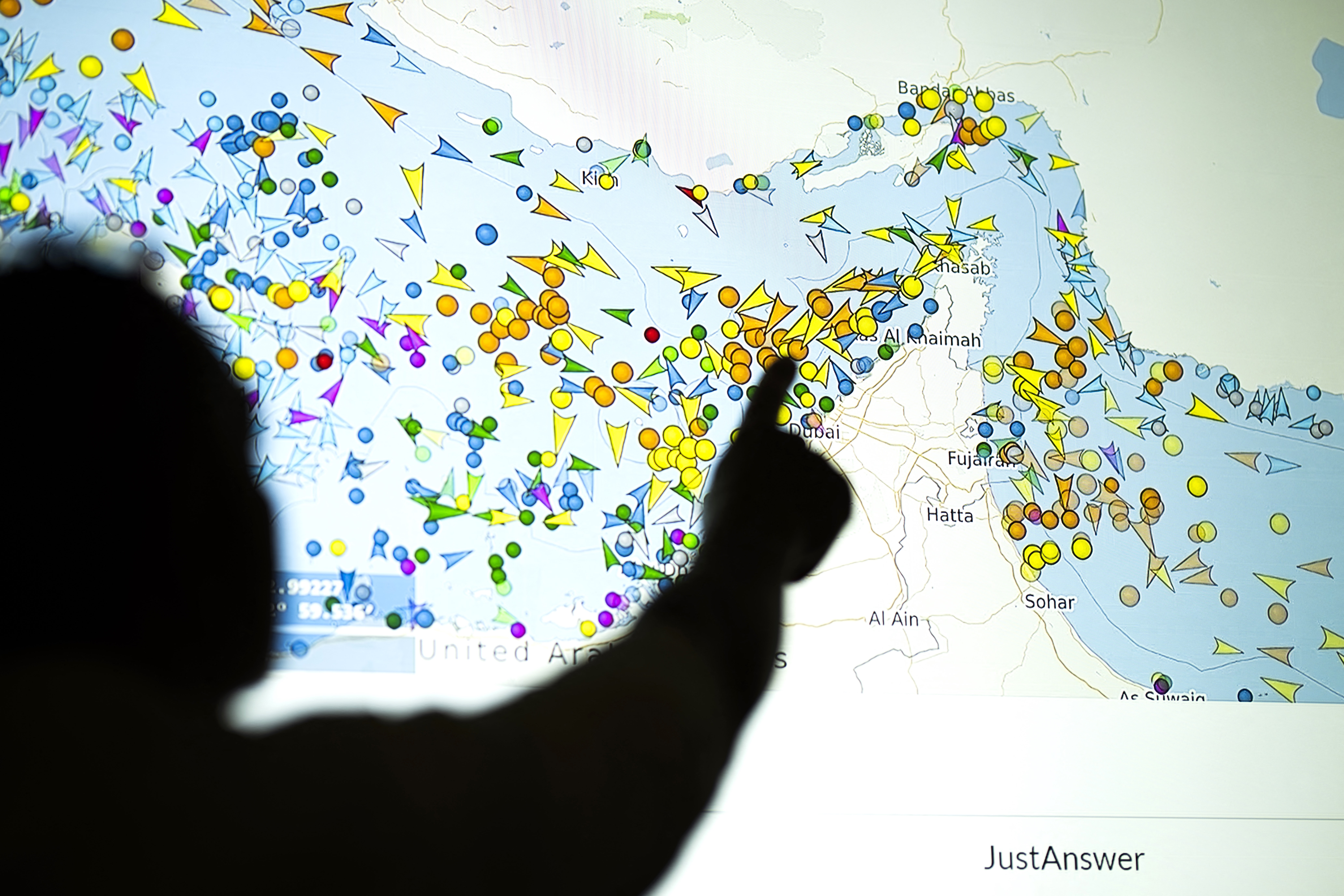
600-Ship Backlog
It could take up to 60 days to clear the 600-ship “vessel backlog” now in the Gulf, including more than 250 oil/gas tankers, according to a May joint advisory issued by ocean-shipping industry groups, including the ICS and Denmark-based Baltic and International Maritime Council—the world’s largest international shipping association.
The advisory, coordinated with the IMO, seeks to avoid congestion and collisions in the strait’s confined waters. Until those stranded ships can leave ports and transit out of the Gulf, few will be allowed to enter because there will not be adequate pier space to accommodate them.
“After more than 100 days of disruption, the Strait does not reopen onto normal trade; it reopens onto a backlog,” Matt Wright, lead freight analyst for data and analytics company Kpler, said in a June 15 analysis. “Laden vessels trapped inside the Gulf that were unable to exit will be the first to exit.”
Wright outlined two scenarios for how events may unfold: a fast-return path and a slow-return “base case.”
Under the fast-return path, there is an immediate return to maximum transits, Wright wrote.
“Average tanker transits (entry and exit) pre-war were between 50–60” per day, and that traffic volume would resume within weeks, he said.
The more likely scenario, according to Kpler, is that “staggered transits rise from 15 a day to around 40 a day by the end of June, with tankers accounting for around 60 percent of that traffic.” Most would be leaving rather than entering the Gulf, Wright said.
“At the end of the first 30 days, the number of tankers entering the Gulf could rise to 12 a day, which remains around 50 percent below pre-war levels,” Wright wrote, noting that 118 laden tankers could be cleared in 10 to 15 days.
The anticipated surge in traffic leaving the Gulf will be cheered as a sign that things are returning to normal. But Wright and others cautioned that the release of trapped ships is a “one-off” that does not reflect the war’s economic fallout.
“How quickly these [ships] clear, and in what order, will shape the first weeks of the recovery, and is easily mistaken for the underlying pace of normalization,” he wrote. “The true pace of re-entry will be the speed at which vessels re-enter the Mideast Gulf.”
Will Iran Honor the Deal?
This projection is similar to that arrived at by The Eurasia Group, a New York City-based consulting firm, which expects that up to 50 ships per day will be transiting the strait within 30 days of the agreement being formally installed.
All projections assume that the deal will be “honored cleanly,” Wright wrote, that mines will be cleared, that Iran will not impose new conditions, and that “a credible security presence reassures operators”—meaning that a robust U.S. Navy presence will likely remain in the Gulf of Oman.
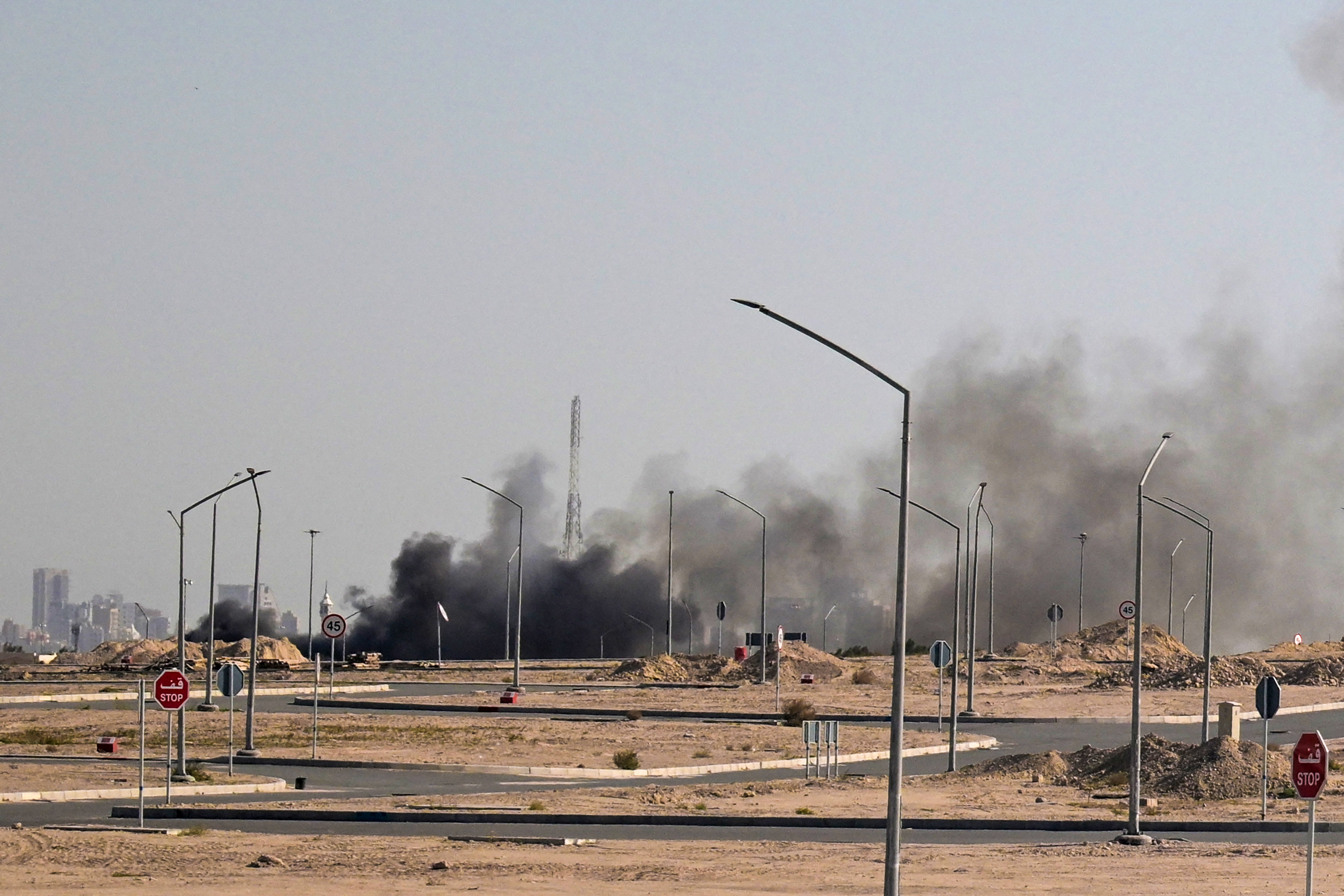
There is little faith that all goes well. According to the IMO, at least 46 attacks against commercial shipping by Iranian forces, killing 14 merchant sailors, have been verified in the strait since Feb. 28.
“There’s going to be some level of apprehension” among shipping companies and ship captains in proving that the threat of Iranian attack has truly receded, David Warrick, vice president of supply chain risk management and intelligence company Overhaul, said on a June 13 Forbes podcast.
“I fully believe everybody will still have some level of apprehension,” he said. “Will that [agreement] still be in place tomorrow? Will it still be in place next week?”
The Baltic and International Maritime Council, before details of the agreement were released on June 17, cited a “lack of details” about the deal “and a history of overly optimistic reassurances” in stating that its members consider the strait to be “volatile” and transit “very risky.”
Among major shipping lines in similar “wait-and-see” modes is Japan’s Mitsui OSK. It has no plans to test the waters for several weeks, it said in recent updates. Matsui operates 900 ships, including seven anchored inside the Gulf.
“Operationally, the [shipping] sector is not rushing back,” wrote Richard Meade, editor-in-chief of shipping data and analysis at London-based Lloyd’s List, noting in a June 15 analysis that the tentative agreement has not convinced insurers to lower insurance rates.
“Insurers—always the industry’s barometer of real risk—were unmoved,” he wrote. “One Singapore‑based underwriter captured the mood: premiums are ‘quick to go up, slow to go down’ and any improvement will come only after ‘solid evidence’ of lasting safety gains.”
The International Transport Workers’ Federation said in a statement: “A signature on 19 June is not the end. Recovery cannot be measured only by reopened ports, restored airspace, or resumed trade flows—it must also be measured by whether the workers who keep transport moving emerge safer, more protected, and with stronger rights than before.”
Restored, Rebuilt Production
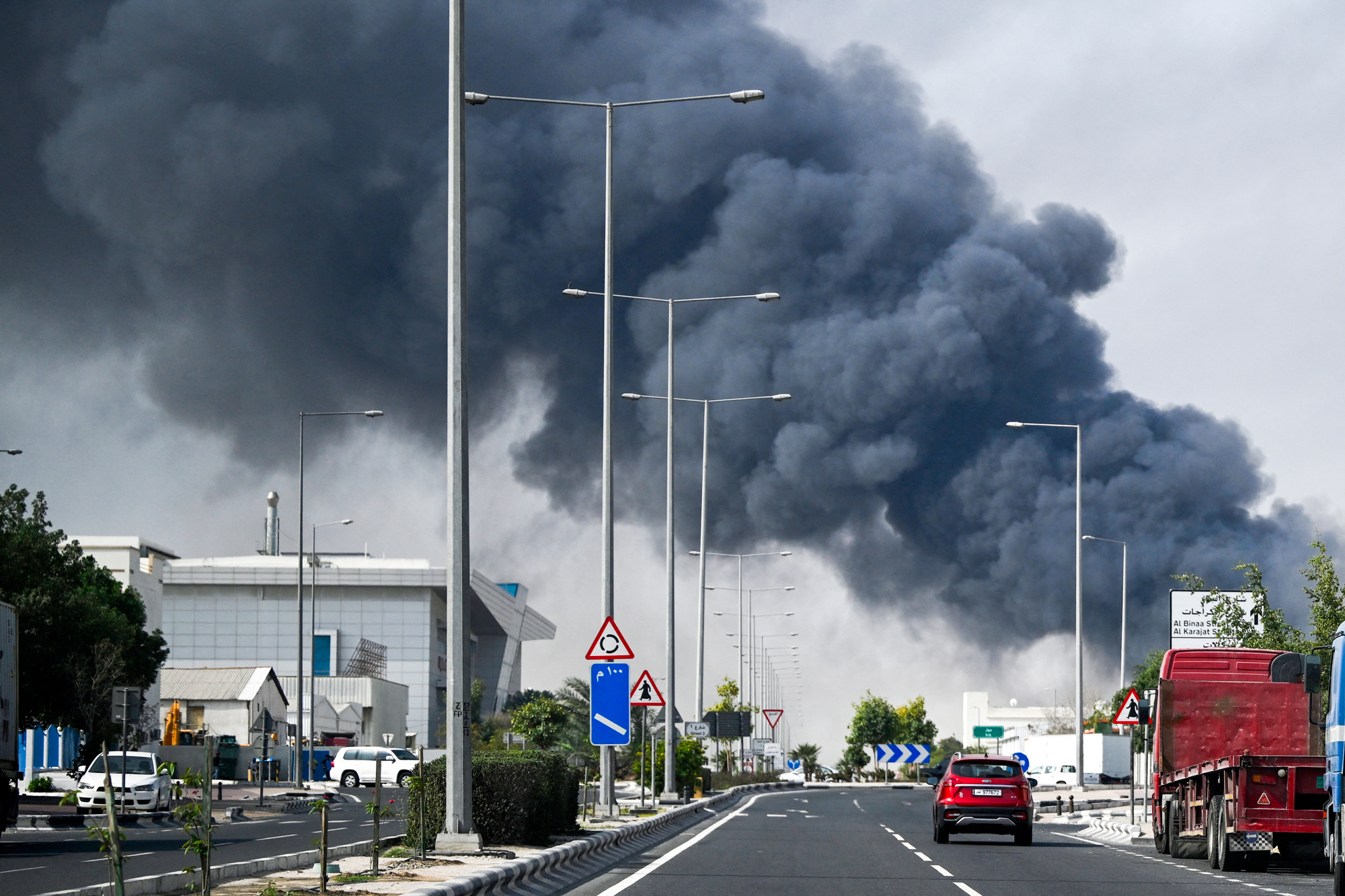
Far more difficult to assess is how crewing challenges and logistics will influence strait traffic and how the restoration of Gulf State production capacities will unfold. Most analysts say production will not approach prewar levels until at least September.
Saudi Arabia is producing 3 million barrels per day, compared with its average of 10.8 million, and Kuwait is producing one-fifth of its normal capacity, according to OPEC.
Qatar—which provides one-fifth of the world’s liquefied natural gas—will not restore production for three to five years.
Price Futures Group energy strategist Phil Flynn, Eurasia Group senior oil analyst Gregory Brew, and Bloomberg energy/commodities columnist Javier Blas are among those who see these timelines as worst-case scenarios.
“One hint that the Strait is actually going to open as part of this deal: all of the oil producers in the Persian Gulf are preparing for it to open,” Brew wrote on June 17. “It is reasonable to deduce they have reasons for being confident the Strait will, in fact, open,” and that production will rapidly be restored.
Oil prices have been dropping since the tentative pact was announced on June 13, and the International Energy Agency is projecting an “oil glut” by mid-2027. The markets are reacting as if reopening the strait will unleash a firehose of bunkered energy, like flipping a switch.
That is a mistake, Meade warned.
“Markets rarely wait for certainty,” he wrote. “The [shipping] sector sees this as a fragile reprieve rather than a return to normality, with elevated risk now embedded in long‑term decision‑making.”
“The message is unmistakable: the reopening may be real, but so is the leverage,” Meade said. “This is why the industry’s optimism remains tempered.”
The Merchant’s News founder Giacomo Prandelli wrote in a June 16 post: “The market wants to believe the crisis is over. The ships don’t.”
 Friends Read Free
Copy
Facebook
Tweet
Friends Read Free
Copy
Facebook
Tweet