
Crude prices fell below $78 per barrel on June 18 for the first time since the opening days of the Iran war, after the United States and Iran signed an interim agreement that lifts sanctions on Tehran’s oil exports and paves the way for the reopening of the Strait of Hormuz.
Brent crude futures were down $1.59, or 2 percent, at $77.96 per barrel in early trading on June 18, while the price of U.S. West Texas Intermediate fell $1.83, or 2.38 percent, to $74.96 per barrel.
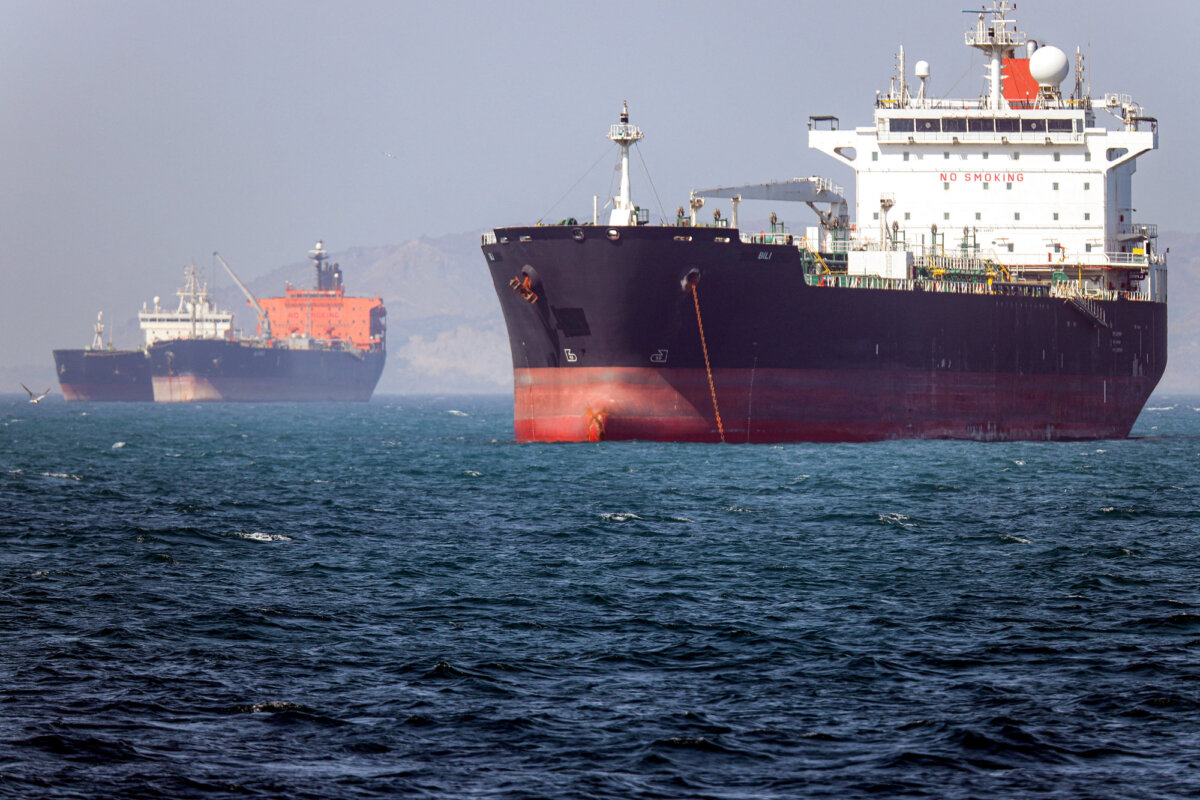
The decline in oil prices came as traders anticipated the return of Iranian crude to global markets and the release of tens of millions of barrels stranded in the Persian Gulf amid Tehran’s blockade of the Strait of Hormuz, which had sparked the largest energy supply disruption in modern history.
“The sell-off extended as energy markets continued to aggressively price in a faster-than-expected return of Iranian barrels following the recent U.S.–Iran memorandum of understanding,” IG market analyst Tony Sycamore said in a note.
The agreement, signed digitally by both U.S. President Donald Trump and Iranian President Masoud Pezeshkian, and later confirmed by officials in Washington and Tehran, establishes a 60-day negotiation period during which military hostilities are suspended, the Strait of Hormuz is reopened to commercial traffic, and Iran is allowed to resume oil exports under U.S. sanctions waivers.
Early shipping data suggested commercial traffic was beginning to recover following the agreement. Maritime analytics firm Windward said on June 18 that commercial transit out of the Strait of Hormuz was accelerating after the signing of the U.S.–Iran accord.
“Seven vessels stranded for 109 days since the war began are now underway, signaling a rapid reopening,” Windward said in a post on X.
The company said five of the first vessels to depart were Chinese-affiliated ships, and European operators also appeared to be resuming movements. Windward called the activity a potential sign of growing industry confidence in the agreement.
Iran Oil Returns to Market
A central provision of the memorandum signed by Trump and Pezeshkian immediately waives U.S. sanctions on Iranian crude exports, allowing Tehran to once again sell oil on international markets and access the banking, shipping, transportation, and insurance services needed to support those sales.
Iranian Foreign Ministry spokesman Esmaeil Baghaei said on June 18 in remarks cited by state-affiliated media outlet Mehr that the agreement had been fully signed by the highest-ranking officials of both countries and was already in effect.
“The lifting of Iran’s oil sanctions starts today and will continue during the negotiations,” he said, while also noting that the U.S. blockade of Iranian ports has been lifted.
“Our monitoring shows that our ships have entered and exited ports without any problems.”
Analysts say the reopening of the Strait of Hormuz could release a massive volume of crude trapped in the Persian Gulf during the conflict. Before the war broke out on Feb. 28, the waterway carried roughly one-fifth of the world’s traded oil and liquefied natural gas.
According to data from ship-tracking firm Vortexa, 54 supertankers carrying about 87 million barrels of crude remained stranded inside the Gulf as of June 18.
Kpler estimated that approximately 93 million barrels of non-Iranian crude could be released as traffic normalizes. The company also projected that another 72 million barrels of Iranian crude stored aboard tankers near Iranian ports could eventually return to market if sanctions relief is maintained, and even higher volumes are possible if Washington grants a broader easing of sanctions.
Goldman Sachs said it expects Gulf oil exports to return to pre-war levels by the end of July and for production to recover more fully by October.
The investment bank estimates that restoring flows through Hormuz could add roughly 13 million barrels per day of exports compared with current levels.
Although analysts broadly expect supplies to increase, many cautioned against assuming a collapse in prices.
“Whilst it does seem the worst is behind us, things are quite a long way off from being normal,” Kpler analyst Matt Stanley said, adding that much of the war-related risk premium had already been removed from prices.
Shippers in Asia and Europe have said that confidence in resuming vessel traffic through the Strait of Hormuz could take weeks to rebuild, signaling a shaky start to the restoration of oil flows.
Reuters contributed to this report.
 Friends Read Free
Copy
Facebook
Tweet
Friends Read Free
Copy
Facebook
Tweet