
Commentary
China’s infrastructure-driven growth model, once the engine of its economic rise, is now producing diminishing returns so severe that, without abandoning Beijing’s control in favor of genuine market reforms, China is unlikely ever to surpass the United States economically or in total gross domestic product (GDP).
For decades, the Chinese Communist Party (CCP) relied on a simple formula to generate economic growth and manage downturns. State-owned banks extended massive amounts of credit to state-owned enterprises, which then built infrastructure projects that boosted GDP growth.
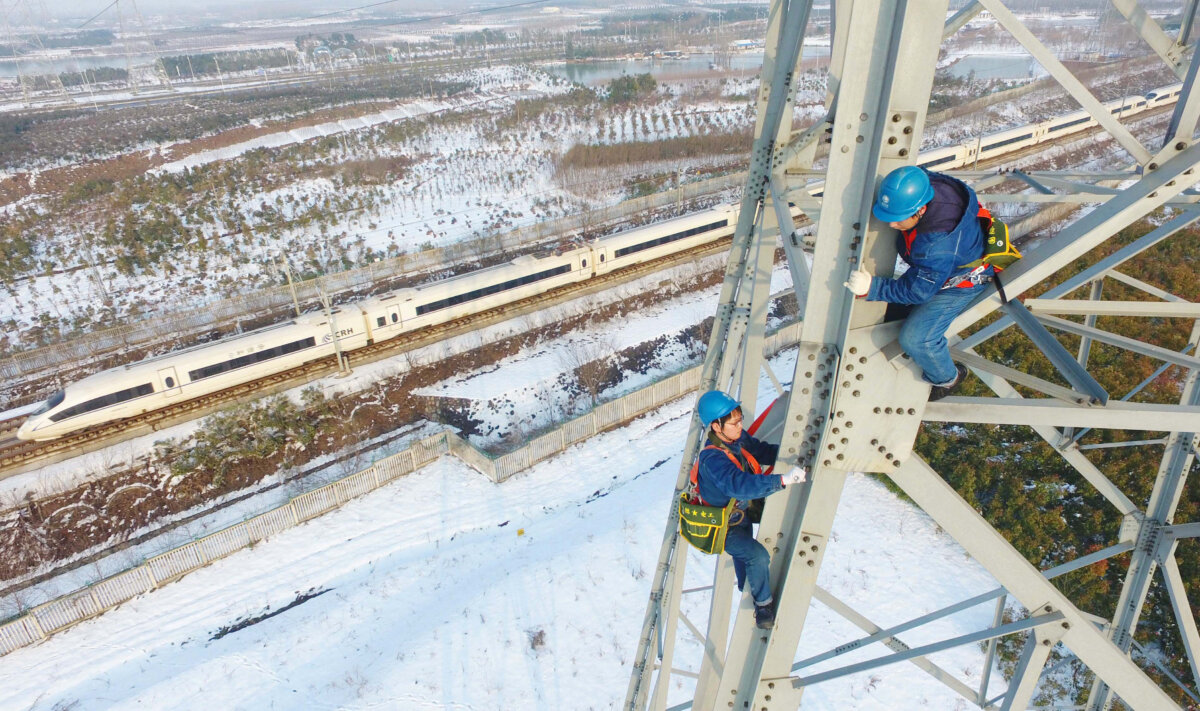
In the early stages of China’s development, this model produced substantial returns. The construction of the country’s original standard-rail network connecting major cities, the buildout of modern deepwater ports, the development of the Three Gorges Dam, and the expansion of electrical grids and paved roads into second- and third-tier cities all produced economic gains that far exceeded the original investment costs.
When a developing country has few or no highways, building highways can dramatically increase GDP. When cities lack reliable electricity, connecting them to the power grid enables industrial activity, commerce, and modern infrastructure that would otherwise be impossible.
The CCP has had a long history of investment-focused policies. CEIC historical data show that China’s average investment-to-GDP ratio reached approximately 43 percent in the late 1950s and peaked at 46.6 percent in 2011, while the World Bank recorded gross fixed capital formation at 40.45 percent of GDP in 2023.
But the returns from each successive wave of infrastructure investment were lower than the last. The Beijing-Shanghai high-speed rail line, opened in June 2011 at a cost of 220.9 billion yuan, had a smaller economic impact than the original standard rail system it supplemented. Empirical research also found that, in the short term, the line had a significant negative effect on per-capita GDP in smaller prefecture-level cities along the route, as the agglomeration effect concentrated economic activity in major urban hubs rather than distributing it more evenly across the region.
Connecting second-tier cities had less economic impact than connecting first-tier cities, while extending infrastructure to third-tier cities, smaller towns, and rural villages yielded lower returns despite ongoing construction and maintenance costs. As investment in transport projects increased, marginal returns declined. New infrastructure investment in the eastern coastal provinces could no longer yield the gains seen in earlier phases of development, while utilization rates in many western provinces remained low due to sparse populations and limited economic activity.
The CCP increasingly built rail lines, highways, and electrical grids that connected small, shrinking rural communities, despite the lack of any foreseeable economic gain. Construction costs remained comparable to the earlier infrastructure projects that linked China’s major urban and industrial centers and helped drive China’s economic expansion.
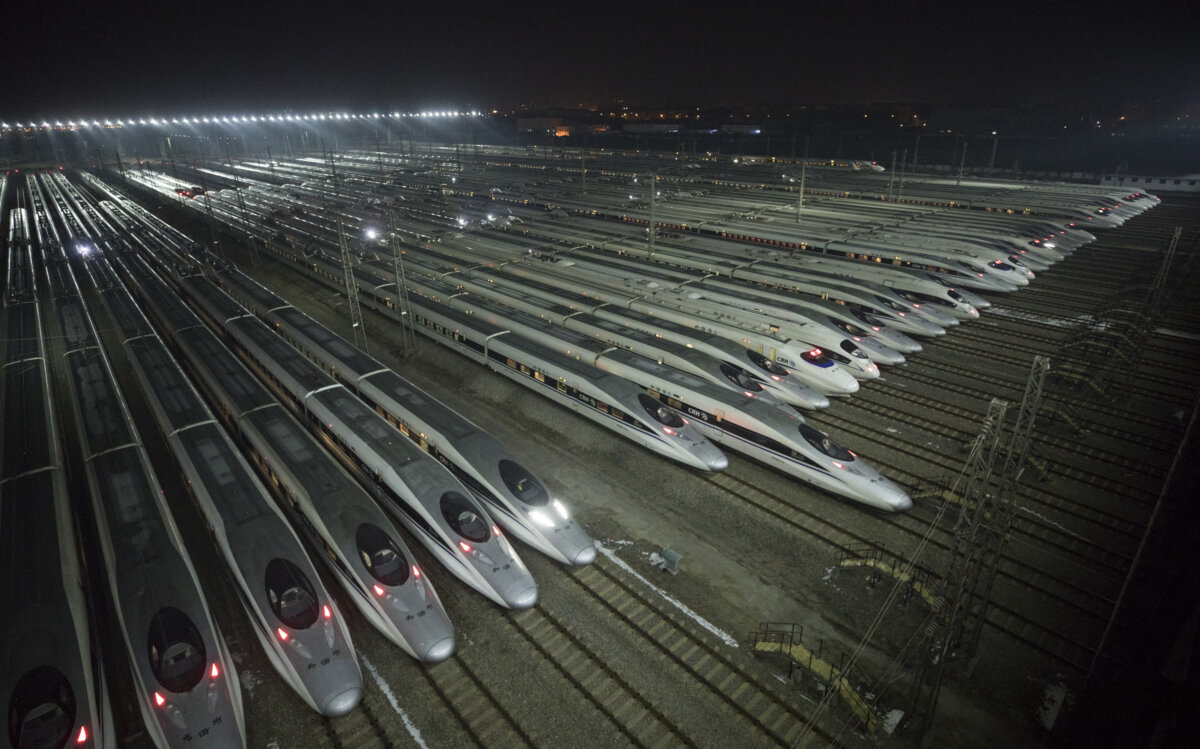
The first generation of high-speed rail projects connected densely populated corridors with strong passenger demand, but later expansion extended the network into sparsely populated regions with lower ridership. Infrastructure investment in roads and sewage systems has also remained concentrated in tier-3 cities despite their economic vulnerabilities, according to Stanford FSI China Briefs.
Economists use the Incremental Capital-Output Ratio (ICOR) to measure how much investment—whether in infrastructure, housing, industrial capacity, or government spending—is required to generate one additional dollar of GDP growth. China’s ICOR rose by 50 percent, to 4.0 during 1997–2013 from 2.6 during 1979–1996, meaning that China went from needing $2.60 in investment to generate $1 of GDP growth to requiring $4.
The same researchers found that the completion rate for capital projects fell below 60 percent, down from 74 percent to 79 percent in the late 1990s. The completion rate measures the share of approved and funded projects that are actually finished. Projects abandoned mid-construction, indefinitely stalled, or delivered too late to serve their intended purpose are counted as incomplete. A project that is partially built and then abandoned still consumes steel, concrete, labor, and land while generating no return.
The declining completion rate also explains part of the deterioration in ICOR. Total investment spending, including money spent on projects that were never completed, raises the ratio, while GDP growth reflects only the output of completed projects. China was not only building infrastructure with low returns; it was also spending full construction budgets on projects that were never finished. The researchers estimated that ineffective investment wasted $6.8 trillion from post-2009 stimulus programs alone.
China’s ICOR now stands at approximately 8.5 using official figures and between 14 and 17 using independent growth estimates, according to the Foundation for Defense of Democracies. Capital inputs now contribute less than 3 percentage points to annual GDP growth, down from nearly 6 percentage points earlier in the previous decade, according to the Federal Reserve Bank of New York.
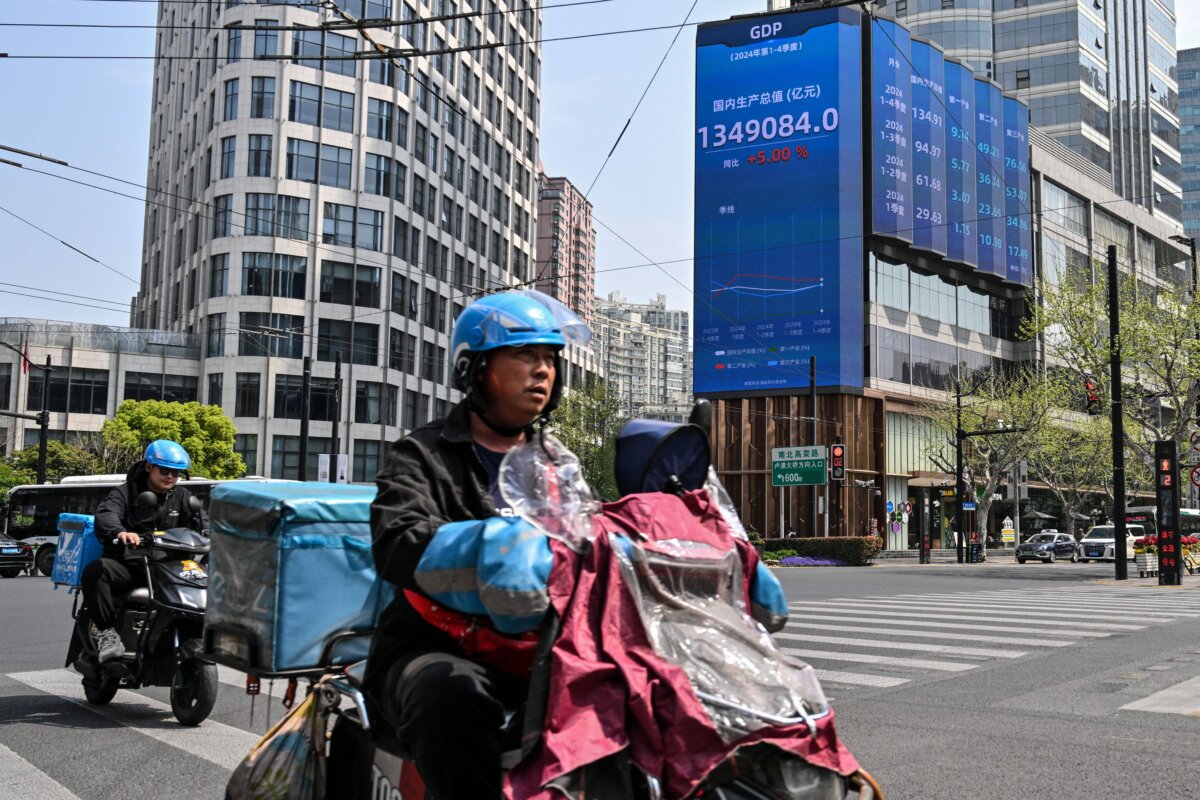
China’s nominal GDP stood at $18.74 trillion in 2024, per World Bank data, against the U.S. GDP of $29.18 trillion, making China’s economy roughly one-third smaller. The gap has been widening rather than narrowing since 2021. China’s economy was 76 percent the size of the United States in 2021. By 2024, that figure had fallen to approximately 65 percent, according to World Bank data.
Closing the gap through infrastructure investment is no longer a viable option. The model that drove China’s rise, in which state banks funded state enterprises to build infrastructure that buoyed GDP growth, has reached its limits. The projects that produced the largest returns have already been built. What remains are rail lines into depopulating villages, roads connecting shrinking towns, and housing developments in cities losing population.
The alternative, a consumption-driven, productivity-led economy based on enforceable property rights, independent courts, and market competition, has eluded the CCP for 75 years. From Beijing’s perspective, a system in which private entrepreneurs accumulate wealth and economic power independent of the party is not a solution but a threat. Chinese leader Xi Jinping has moved in the opposite direction, tightening the CCP’s control over private enterprise, reasserting state dominance over capital allocation, and reducing the market mechanisms that drove China’s most productive decades.
The investment model is failing, while the alternative remains ideologically unacceptable to the CCP. Consequently, the structural barriers that limit China’s ability to surpass the United States economically are unlikely to be resolved unless the CCP relinquishes control of the economy to the private sector. That appears unlikely to happen.
Views expressed in this article are the opinions of the author and do not necessarily reflect the views of The Epoch Times.
 Friends Read Free
Copy
Facebook
Tweet
Friends Read Free
Copy
Facebook
Tweet