Commentary
Florida’s political leaders are teasing to repeal Florida homesteaded property taxes. It sounds appealing at first glance, but are there unintended consequences? Gov. Ron DeSantis, gubernatorial candidates, and legislators say they can make up decreased revenues by taxing the 100 million-plus tourists who visit Florida each year to enjoy our warm, sunny weather.
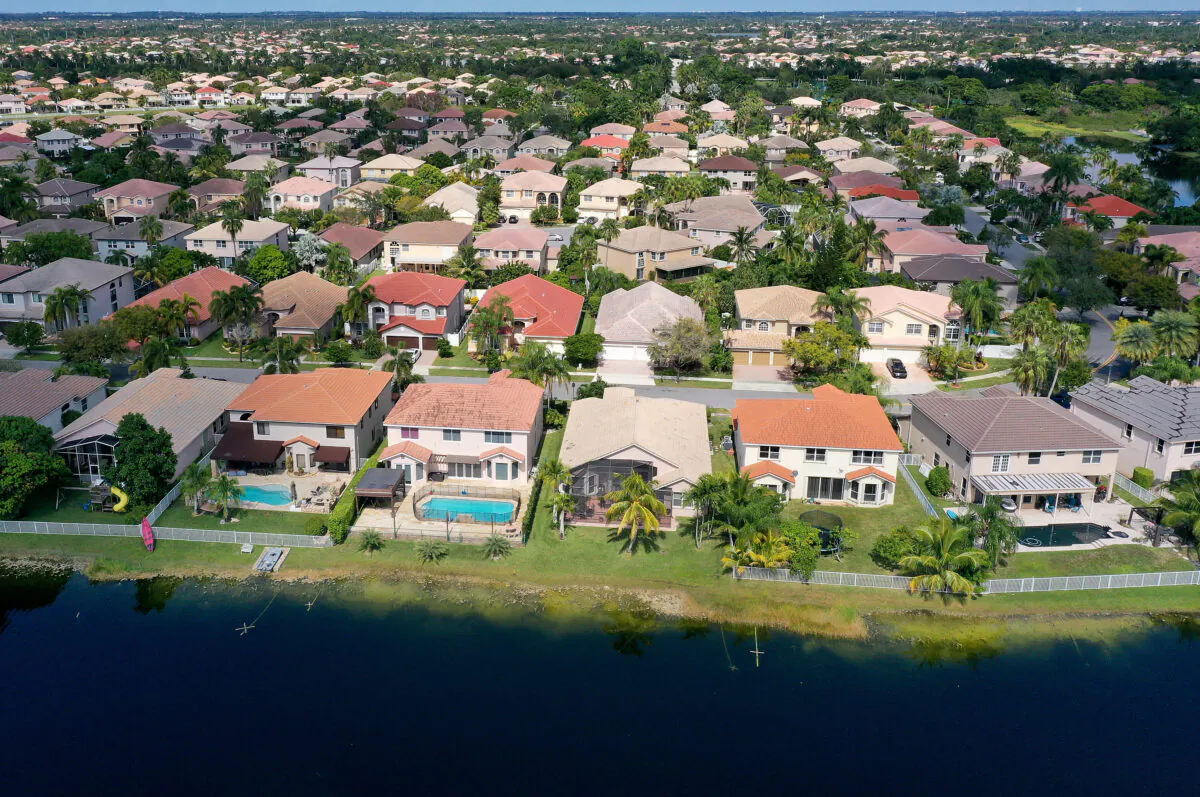
Florida property taxes generate about $55 billion annually. Homestead exemptions account for $18.5 billion, or about 30 percent of that. Other state revenues come from city, county, and federal taxes or grants. Property taxes keep all of government functioning, as we have come to expect in a civil society.
Sixty-four percent of Florida’s property tax revenue comes from properties that are not primary residences, preliminary 2025 data show.
As appealing as the elimination of homestead property taxes sounds, what happens when another COVID-19-type pandemic or natural disaster occurs? What if the economy crashes as it did in 2008? When the state runs short on funds, to whom does the tax collector turn for lost revenues? Will the tax collector increase sales taxes, add a consumption tax or value-added tax, bring back homeowner property taxes with increases, or increase business and commercial property taxes?
If the Legislature’s goal is to give relief to property owners—which I am all for—then it must change how taxes are assessed and lower the assessment with a more practical formula. Currently, homes and property are assessed using historical sales figures and guidelines to determine a taxable value. If taxes are collected to provide government services, why are taxes collected on fluctuating and subjective property values? Why not collect them with a certain, and predictable, formula? A better way to figure out taxes would be to base them on square footage or possibly a per capita basis.
Let me illustrate:
I owned a 4,519-square-foot, double-wide mobile home on the St. John’s River. It was assessed in 2024 at $240,690, and taxes were $4,039. The residents of the house were my wife and I and a dog.
We removed that home and built a new house on the same property with 2,452 square feet of living area. It was roughly one-half the size of the previous home. The new tax assessment is $775,000, and taxes are $17,000. The residents of the house are still my wife and I and, now, two dogs. We do not use any more government services in the new, 50 percent smaller house than we did in the larger structure, but we are taxed more than three times more.
Implying that a house with a higher value somehow justifies collecting more taxes to pay for more public services is not rational.
My experience is that the valuation process is extremely subjective in determining taxes owed. I am all for reducing property taxes. The thought of eliminating them totally, as I said earlier, sounds extremely attractive.
But I caution about real-life events that crippled the Florida and national economies in the past two decades. If such an event were to occur, Florida’s state revenues would be insufficient to run the government for an undetermined amount of time, requiring local and state governments to reduce services.
If the Florida Legislature wants to give homeowners tax relief, then it should change how taxes are determined and base that determination on something that is predictable, nonfluctuating, and not arbitrary. Use square footage or square footage and a per capita formula as a basis.
A family of two will likely have lower usage of government services than a family of five. This plan reduces the tax burden on the owner but does not eliminate 30 percent of the state’s revenue. If no minimum time of residency in Florida is required to qualify for the homestead tax break, more people will move to Florida to capitalize on this policy, leading to overcrowding of local and state infrastructure and stressing government services—which will then require more revenues.
Maybe the state could require a minimum amount of time as a Florida resident—perhaps five years—before exemptions occurs, or drop property taxes above a certain age—perhaps above 60–65 years—with a certain amount of time as a Florida resident.
Ending homestead property taxes and risking huge tax revenue shortfalls is both reckless and irresponsible, or a campaign gimmick by our elected representatives, like eliminating student debt. When an unpredictable event happens, it would necessitate reinstating property and other taxes, likely at a higher rate—or the ultimate sin, a Florida state income tax.
If the goal is to give property owners relief and give the government certainty and predictable sources of revenues that will not fluctuate with the economy, Florida is going to have to change how property is taxed.
Views expressed in this article are the opinions of the author and do not necessarily reflect the views of The Epoch Times.
 Friends Read Free
Copy
Facebook
Tweet
Friends Read Free
Copy
Facebook
Tweet