
Commentary
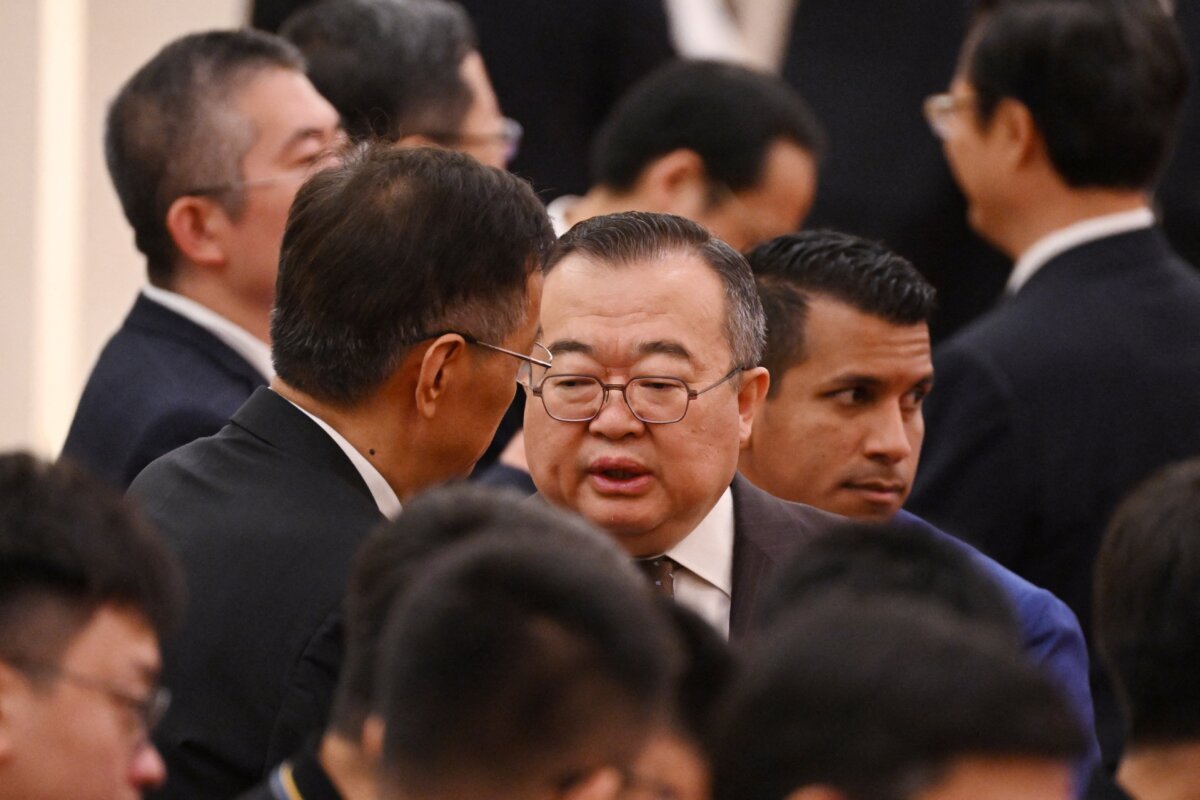
Recent days have seen significant reporting and much speculation on what is happening to Chinese Communist Party (CCP) heavyweight Liu Jianchao, who has been placed under investigation, alongside his deputy, by the Party’s internal police force.
It’s hard not to see why the China-sphere is rife with speculation and gossip, because while not famous like some others, Liu’s fall is poetic justice to say the least—especially for all those Chinese living around the world who are worried about their safety as the CCP expands its global policing and transnational repression. Liu was the Party’s lead in both overseas influence operations and its global campaign to chase down those wanted by the Party and bring them back to China.
Liu has not only held top Party posts; he has specifically led the reworked Party police, which in 2018 was massively expanded and given a new name, the National Commission of Supervision. The commission was empowered to implement a new nationwide system for extralegal, secret detention: “liuzhi.”
Moreover, Liu has been a zealous promoter of the system of disappearances and the use of liuzhi to disappear people without notice, often for up to half a year, without telling anyone.
As the leader of the CCP’s International Department, Liu—along with his deputy, Sun Haiyan, who has also been detained—was a key person responsible for expanding the Chinese regime’s influence abroad. Liu has been a frequent traveler across Europe, expanding the CCP’s influence there, as well as in the United States.
While wooing foreign parliaments, establishing support for united front groups abroad, and engaging with officials across the world, Liu has at the same time played a key part in tracking down overseas exiles and “persuading” them to return, using methods ranging from direct threats and intimidation, to threatening family members still in China, to outright kidnappings, as part of the regime’s Fox Hunt and Sky Net operations.
For all this, Liu was often tipped to be the next foreign minister. It’s hard not to see why. His resume and moves have been impressive, and his trajectory reads like a blueprint for power within the CCP. Rising through Zhejiang’s disciplinary ranks, he cemented his reputation as a relentless anti-corruption czar.
As head of the International Cooperation Bureau and later as commander of the International Fugitive Recovery Office, Liu oversaw global operations to bring corrupt cadres home, directed the liuzhi system, endorsed secret detentions, and shaped internal Party investigations with zero tolerance for dissent. He built the very mechanisms that now threaten his freedom.
Ironic, then, that now, like many of those forcibly returned to China against their will, Liu is currently under investigation by the same internal Party police. Given that his home was raided around the same time he was taken in in early August, it seems highly likely he is among the estimated 40,000 to 45,000 people to be disappeared into the liuzhi system this year.
As it’s an internal Party mechanism, liuzhi has nothing to do with the criminal justice system, and no legal rights apply. It’s part of the “beauty” of the system, and as Liu once said in public, “these are not criminal or judicial arrests and they are more effective.”
Those taken off the street and placed into liuzhi often disappear. The sites used are, by definition, secret. Authorities don’t need to alert victims’ families. It’s not a legal process, so there is no right to access legal counsel. Victims are kept for up to six months in solitary confinement and in suicide-padded cells under constant watch. In short, they disappear.
Investigators can do what they need to do to get what they want, which is a confession. Always a confession. And it always works. The system for state-sanctioned kidnapping—which is what it is in reality—means investigators can do whatever they want, break any bones they want, as there is no supervision of any kind, and they can hold the victim for half a year. Why would they not use the power they’ve been given? And so, Liu, like all the other heavyweights who’ve been through the system, will confess. How long it will take is anyone’s guess.
Liu has spent decades mastering the Party’s “discipline” apparatus, only to find himself at the mercy of the very system he has so zealously helped create. The hunter has become the hunted.
Yet again, the CCP’s system of governing China shows, with growing clarity, that the system eats its own.
Views expressed in this article are the opinions of the author and do not necessarily reflect the views of The Epoch Times.
 Friends Read Free
Copy
Facebook
Tweet
Friends Read Free
Copy
Facebook
Tweet