
Commentary
There is plenty of bad news regarding prices. The Consumer and Producer Price Indexes are running far hotter than most people anticipated. Not only that, the unadjusted price indexes look even worse. This makes lowering interest rates highly unlikely. Rates might even need to increase to forestall a second wave.
Consumers have been hit extremely hard over the last half-decade, dealing with prices that are two-thirds higher than they were in 2019 while the value of the dollar domestically continues to fall. Internationally, dollar-denominated debt is losing its cache as a store of value even if it remains the leading means of exchange. Gold—which J.M. Keynes called a “barbarous relic” nearly a century ago—is what central banks around the world want.
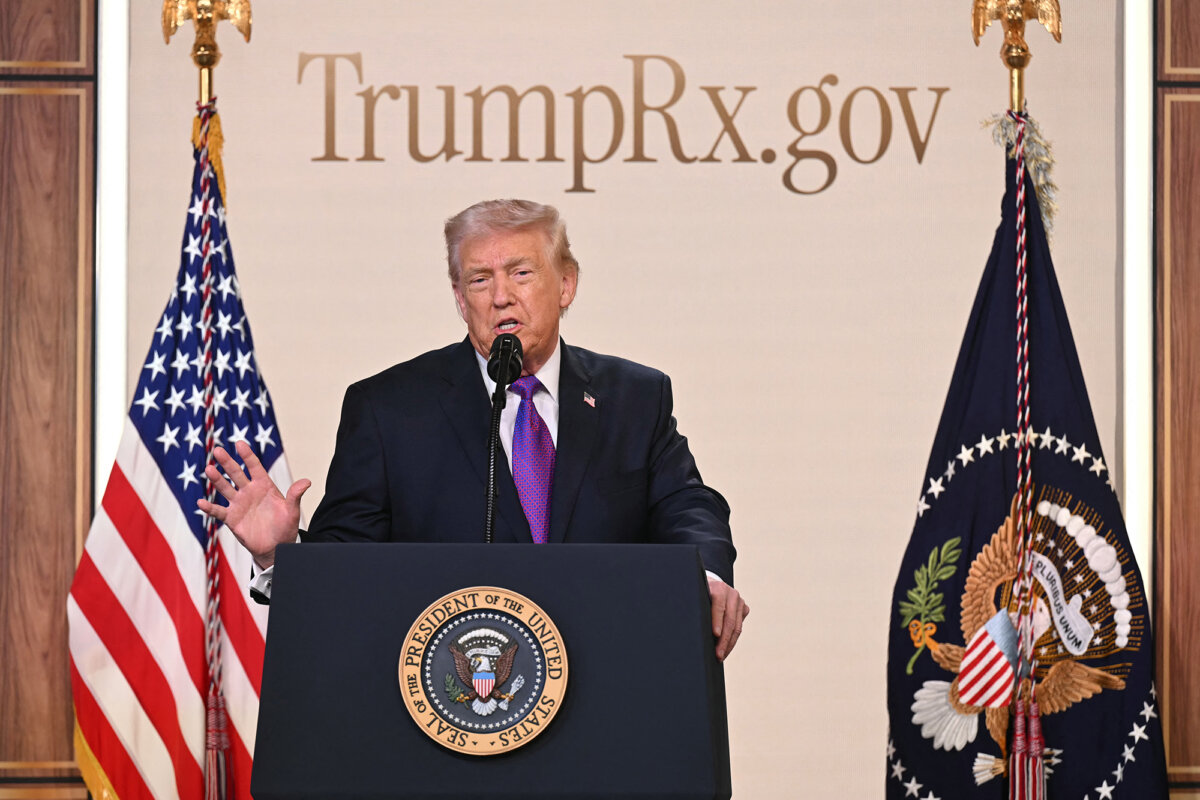
Amidst all this bad news, there is some good news. Prescription drug prices are falling precipitously thanks mostly to a wonderful innovation of the Trump administration. TrumpRx is the program in question. The government is acquiring drugs and selling directly to consumers, bypassing the intermediaries that have been responsible for huge price increases for decades.
The program started small, based on a Costco-style marketing plan. Government buys products in bulk and resells them at a much lower price. This is not about making money but rather saving consumers from high prescription prices using leverage that regular pharmacies and distributors simply do not have. Today, four in five prescriptions are affected.
I’m no fan of government intervention but this sector is already rife with it, from subsidies to patents to import controls. The point of TrumpRx was simply to make sure that the sellers could not gouge Americans while selling the same product outside the U.S. borders for far cheaper. Arguably, TrumpRx is a step toward market control and away from government control.
It launched in early 2026 with about 43 branded drugs (e.g., treatments for asthma, obesity like Zepbound/Wegovy, infertility, diabetes, and more from initial partners like Pfizer, Eli Lilly, Novo Nordisk, and AstraZeneca). It now includes over 800 medications in total. Recent additions: 160 more drugs (bringing branded “Presidential deals” higher), plus 600+ generics. This covers everyday medicines plus high-cost specialties.
Not everything is as low as can be found elsewhere but many items are much lower than is otherwise available. Many drugs see 50-95 percent off U.S. list prices. One in four Americans struggle with high drug prices. Right now, prescription drugs are actually and remarkably one of the only areas of the Consumer Price Index that is falling. Indeed, prices fell fully 1 percent in the latest report and perhaps 2 percent year to date.
That might not seem like much but when you consider overall price trends, this is very impressive.
It goes without saying that Trump is not getting credit for having achieved this.
No question that this is a highly unusual program to deal with a problem that is itself highly unusual. The United States had a free market in drugs in the 19th century but that began to change in 1902 with the Biologics Control Act. This was a law for which industry lobbied in order to assure the public of the safety and efficacy of its products.
This resulted in full government responsibility as time went on, even while manufacturing and distribution remained nominally private.
The intensification of the patent regime resulted in more market distortions. While patents might have incentivized research and development, it also created an incentive to move away from natural medicines toward manufactured ones. Since that time, the Food and Drug Administration has exercised enormous control over the entire sector.
As the medical insurance industry grew after World War II, so too did the role of intermediaries in paying for prescription drugs. The creation of the programs Medicare and Medicaid added to the levels of intervention. The prescription walls grew higher and higher over time to the point that a genuine free market became ever more elusive. As dependency on these drugs grew in the population, the most vulnerable populations were hit the hardest.
The entire sector grew ever less competitive as barriers to entry rose and distribution relied on massive systems that separate production and consumption.
Since the turn of this century, prices have gone up as much as 80 percent. The sector ballooned. Retail and outpatient spending is now around $467 billion per year, while total pharmaceutical expenditures (including hospitals and clinics) is $915 billion and projected to hit $1 trillion this year.
In this time, the power and reach of the industry itself has grown to the point that it exercises wildly outsized influence over medical schools, academia, professional associations, academic publishing, media, and government. One way to understand the pandemic period is as an elaborate exercise in seeking customers for new products from therapeutics to vaccines. This is more power than perhaps any industrial monopoly in human history.
Polls indicate overwhelming popular opposition to pharmaceutical power, which is one reason Trump took on the industries in this way. It’s a limited volley but it is something.
This growth of the industry reflects real medical advances but also the cumulative effects of heavy regulation, patents, insurance intermediaries, and government programs that distanced patients from true market signals. TrumpRx uses existing leverage (bulk negotiation power and voluntary manufacturer deals) to claw back some of that distortion. It pressures sellers to offer Americans prices closer to what the same drugs fetch abroad.
Critics will note that not every drug on the platform is the absolute cheapest option everywhere (generics or other discount sites may beat it in isolated cases), and adoption is still growing. But the trajectory is clear: rapid expansion from dozens of branded drugs to over 800 total, real aggregate savings in the hundreds of millions, and downward pressure on effective cash prices. It’s market-oriented reform in a heavily intervened sector, using transparency and negotiated competition rather than blunt price controls or new entitlements.
For the one in four Americans who struggle with drug costs, this delivers immediate, usable relief. A diabetic patient, someone managing obesity, asthma, or fertility challenges can now comparison shop and potentially cut hundreds or thousands from annual expenses. As awareness spreads and more manufacturers join, in exchange for considerations like tariff relief or expanded U.S. production, the program is positioned to scale further.
In a time of persistent inflation, TrumpRx is a rare piece of good news: a practical, results-driven innovation that puts money back in patients’ pockets and begins rebalancing power toward consumers. It deserves credit as a genuine step toward affordability without sacrificing innovation.
There is a long way to go, and the regulatory thicket desperately needs tackling with some clarity about objectives. At this point, it’s hard to know precisely how the FDA can succeed without a dramatic internal overhaul. In any case, TrumpRx is a start for which the administration deserves credit.
Views expressed in this article are the opinions of the author and do not necessarily reflect the views of The Epoch Times.
 Friends Read Free
Copy
Facebook
Tweet
Friends Read Free
Copy
Facebook
Tweet