
Commentary
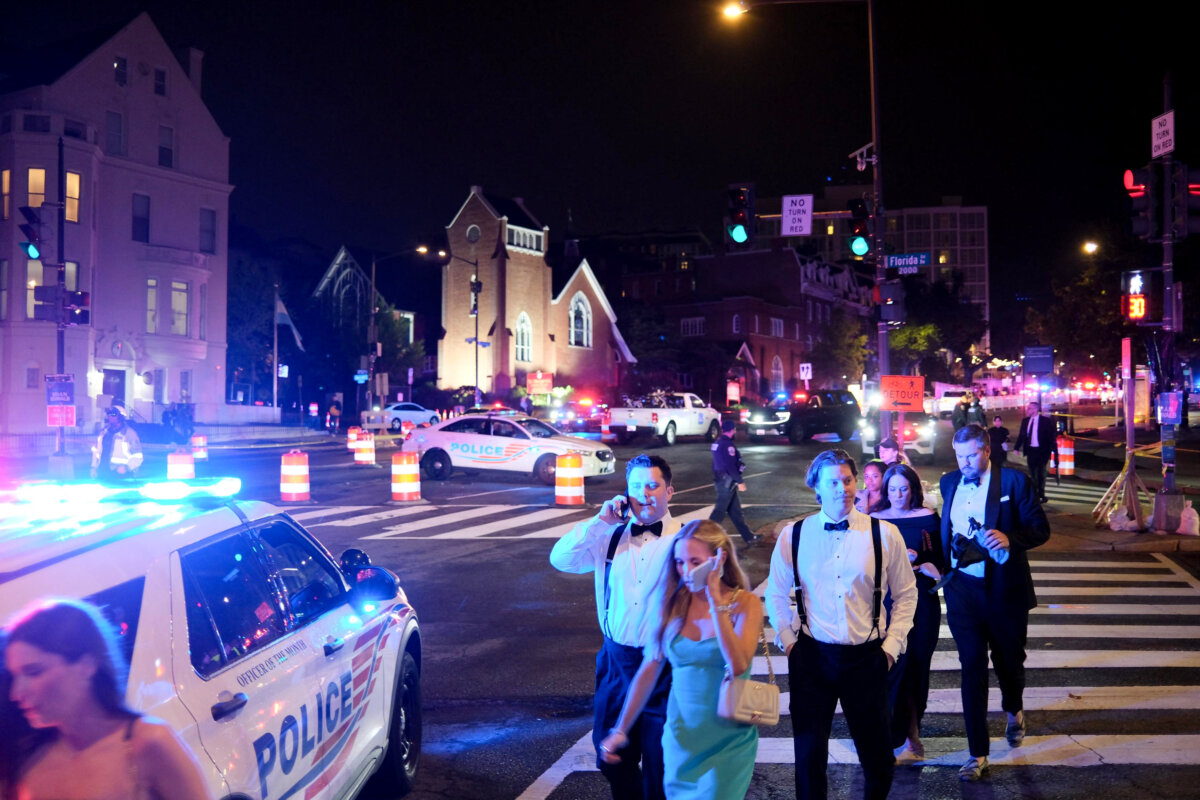
It was raining in Washington and I was hurrying down Connecticut Avenue in a gown and heels, hiking my skirt up to avoid puddles. I trailed slightly behind my colleague, who was moving at a brisk pace in his tux. We were rushing to the White House briefing room, where President Donald Trump had called an impromptu news briefing to address the shooting incident we just experienced.
We passed three teenage girls on their phones. One of them read a headline about the scene we were running from, to which another flippantly said, “Aw man, I wish they got him.” Her two friends giggled.
This episode conjured up an incident from earlier in the night on April 25. My colleagues and I had been making our way to the White House Correspondents’ Dinner at the Washington Hilton when a man walked past us and spat, “[Expletive] you!”
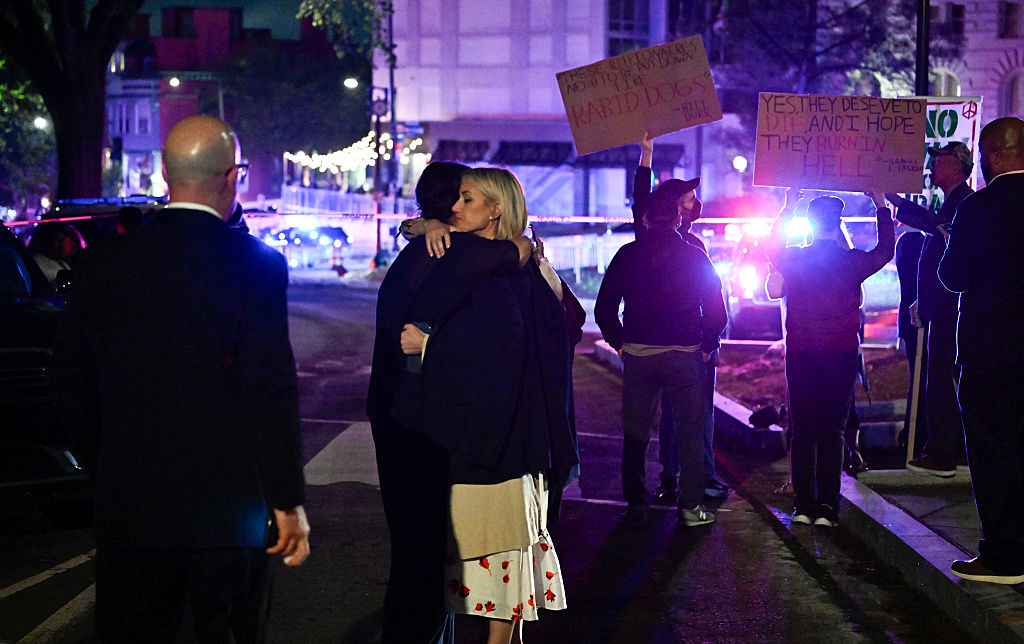
A few paces later, we pushed through protesters gathered outside the hotel roundabout. A mix of handmade signs on cardboard stood alongside crisp, uniform placards.
Some of the cardboard signs were scrawled with “DEATH TO ALL OF THEM,” “DEATH TO TYRANT,” and “THEY DESERVE TO DIE.” The mass-produced posters read, “TRUMP MUST GO NOW.”
A few hours later, a man stormed toward the Hilton ballroom in an apparent attempt to assassinate Trump, the guest of honor at the White House Correspondents’ Dinner.
Inside the ballroom, we were finishing up our spring pea and burrata salad, the densely packed room brimming with conversation and clinking glasses, when I heard several sharp cracks. I turned toward the back wall, saw commotion I couldn’t yet interpret, and then saw faces around me morph into terror.
People screamed. Some dropped instantly to the floor. A woman at my table bolted under it, curling herself into a ball. Others were crying, shaking, calling loved ones. I slid halfway beneath the table myself, the journalist in me still trying to keep my eyes just above its edge.
From there, I watched the Secret Service erupt into motion—running across tables, glass shattering beneath their feet as they fought their way through the sea of tightly clustered tables toward Trump. The president was rushed out, as were Cabinet members and members of Congress. The gunman was arrested.
Later, the James S. Brady Press Briefing Room at the White House was quite the sight, packed with journalists in black tie attire. Trump emerged solemnly, followed by members of his Cabinet and First Lady Melania Trump.
At the top of his briefing, the president described the White House Correspondents’ Dinner as an “event dedicated to freedom of speech,” meant to bring together members of both parties and reporters.
“In a certain way, it did,” he said. “I saw a room that was just totally unified. It was, in one way, a very beautiful thing to see.”
President Trump then implored all Americans, regardless of political belief, to put their differences aside.
“But in light of this evening’s events, I ask that all Americans recommit with their hearts in resolving our differences peacefully,” he said.
He praised White House Correspondents’ Association President Weijia Jiang for having done a “fantastic job” on a “beautiful evening,” and vowed that the event would be rescheduled within 30 days.
We are now learning that the suspect in the shooting appears to have steeped himself in a toxic online ecosystem, consuming content that likened Trump to Adolf Hitler and that portrayed the U.S. president as a fascist threat to be stopped at any cost. The suspect also aligned with No Kings, a movement that has framed Trump as a tyrannical king.
White House press secretary Karoline Leavitt, at 39 weeks pregnant, was supposed to be on maternity leave, but on April 27, she held a news briefing. She called for the toning down of the violent rhetoric about Trump by Democratic politicians and media figures, saying that such language inspires unstable individuals to attempt violence.
“This political violence stems from a systemic demonization of him and his supporters by commentators,” Leavitt said.
She likened the accused shooter’s alleged manifesto to that of rhetoric coming from lawmakers and the media, calling it indistinguishable.
Indeed, the environment in which the suspect allegedly immersed himself wasn’t that of an isolated fringe. The stories he appears to have imbibed echo language that has seeped into mainstream media coverage, in which the president is routinely framed not just as a controversial or dangerous political figure but as an existential threat to America.
The encounters that bookended my experience of the ballroom shooting—the man’s shouted expletive paired with protest signs wishing death upon the president and dinner guests, then the teenage girls casually expressing disappointment that the president wasn’t assassinated—are yet more indices of our toxic rhetorical climate, inextricably linked to the assassination attempt itself.
That evening at the Hilton was meant to celebrate free speech and a free press. In a somber way, it ended up doing just that by illustrating just how high the stakes are now to get the story right.
The April 25 shooting didn’t begin with a gunshot. It began with stories—the ones we tell ourselves, the metaphors we normalize, and the enemies we conjure in people’s hearts and minds.
Will we, as members of the press, take the turn of events on the night of April 25 as a portent, transforming it into an inflection point to improve the standards of our journalism?
What if it was not a mere coincidence that the shooter opened fire at a press event dedicated to celebrating the free speech enshrined in our Constitution, but rather a new opportunity for us in the press to inspect ourselves, to hold a mirror up to how we’ve done covering this president and his administration?
Have we as journalists at every moment truly upheld our Constitution with dignity and protected the values upon which America was founded?
Have we reported on Trump fairly and justly, or are we partially to blame for the emotionally charged, hostile environment surrounding this White House?
It was certainly a grace from the heavens that everyone in the ballroom emerged physically unscathed.
On the night of April 25, Trump said in the wake of the shooting that he must move forward, show up, do his job, celebrate America, and do what he knows is right.
Maybe it’s time we in the media do the same and take the weekend’s turn of events as a hint to choose grace over rage.
Views expressed in this article are the opinions of the author and do not necessarily reflect the views of The Epoch Times.
 Friends Read Free
Copy
Facebook
Tweet
Friends Read Free
Copy
Facebook
Tweet